
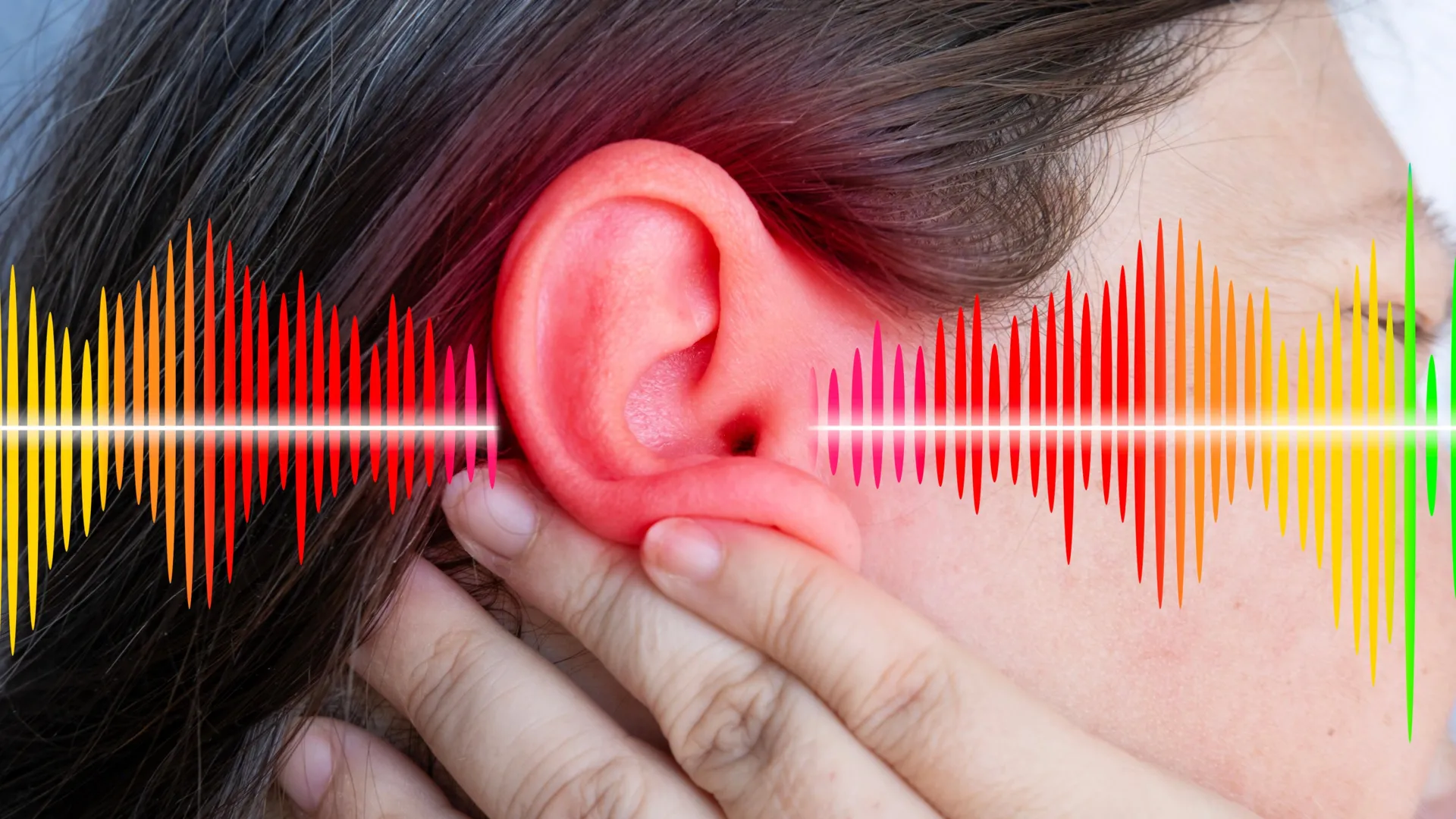
Tinnitus is a complex neurological condition rather than a disease of the ear itself. It affects approximately 14% of the global adult population, translating to hundreds of millions of individuals worldwide. For many, the condition is a minor nuisance, but for millions of others, it is a debilitating affliction that leads to severe sleep deprivation, cognitive interference, and clinical anxiety. By pinpointing the specific neural pathways involved in serotonin-induced tinnitus, researchers are opening the door to more refined pharmacological treatments that could potentially treat depression without triggering or worsening auditory distress.
The Neurological Mechanism: How Serotonin Interacts with the Auditory System
For decades, the medical community has recognized a high correlation between tinnitus and psychological distress. Patients with chronic ringing in their ears are significantly more likely to suffer from depression and anxiety. Because serotonin is the primary target for treating these mood disorders, it was long suspected that the chemical played a role in the auditory system. However, the precise "wiring" of this connection remained a mystery until this recent breakthrough.
The research team, led by co-senior author Laurence Trussell, Ph.D., a professor of otolaryngology at the OHSU School of Medicine, focused on a specific region of the brain known as the dorsal cochlear nucleus. This area serves as the first station in the brain where auditory information from the ears is processed. The researchers discovered that certain neurons in this region, known as fusiform cells, become hyper-excitable when exposed to serotonin.
Using advanced mouse models, the scientists employed a technique called optogenetics. This method involves the use of light-sensitive proteins and fiber optics to control the activity of specific neurons with extreme precision. By activating the neurons that produce serotonin, the researchers observed a direct increase in the firing rate of the fusiform cells in the dorsal cochlear nucleus. This heightened activity mimics the neural signatures of tinnitus, essentially "tricking" the brain into perceiving sound where none exists.
The SSRI Paradox: Balancing Mental Health and Auditory Comfort
The study’s findings have immediate and profound implications for clinical psychiatry and audiology. Selective serotonin reuptake inhibitors (SSRIs), such as fluoxetine (Prozac) and sertraline (Zoloft), work by preventing the reabsorption of serotonin, thereby increasing its availability in the brain. While this is highly effective for stabilizing mood, the OHSU and Anhui University study suggests that for some individuals, this surplus of serotonin acts as a "volume knob" for tinnitus.
"People with tinnitus should work with their prescribing physician to find a drug regimen that gives them a balance between relief of psychiatric symptoms like depression and anxiety, while minimizing the experience of tinnitus," stated Dr. Trussell. He emphasized that the goal of the research is not to discourage the use of antidepressants, which are life-saving medications for many, but to encourage a more nuanced approach to patient care.
The researchers noted that the study validates the lived experiences of many patients. Historically, when patients reported increased ear ringing after starting an SSRI, the feedback was often dismissed as a secondary symptom of their underlying anxiety. This study provides the empirical evidence needed for clinicians to recognize these reports as a direct physiological side effect of the medication’s impact on the auditory brainstem.
Chronology of Research and Experimental Data
The path to this discovery was paved by years of incremental progress. In 2017, members of the same research team published preliminary findings suggesting that the dorsal cochlear nucleus was sensitive to chemical changes in the brain. That earlier work established the foundation for the current study, which sought to map the specific circuit involving serotonin.
Dr. Zheng-Quan Tang, a co-author from Anhui University who began the project during his tenure as a postdoctoral scholar in Dr. Trussell’s laboratory, explained the transition from theory to proof. "We’ve suspected that serotonin was involved in tinnitus, but we didn’t really understand how," Tang said. "Now, using mice, we’ve found a specific brain circuit involving serotonin that goes straight to the auditory system."
The experimental data was gathered through a modified auditory startle test. In this test, mice are placed in a chamber where a constant background noise is played. A sudden, loud sound is then introduced, causing a startle response. If a mouse has tinnitus, it has difficulty detecting a brief "gap" or silence in the background noise because its own internal ringing fills that gap. When the researchers stimulated the serotonin-producing neurons, the mice showed a decreased ability to detect these gaps, a behavior that is widely accepted in the scientific community as a proxy for experiencing tinnitus.
Broader Implications for Global Health and Audiology
The scale of tinnitus as a public health issue cannot be overstated. Data from the American Tinnitus Association indicates that nearly 50 million Americans experience some form of the condition. Globally, the prevalence is rising, partly due to aging populations and increased exposure to loud environments. Furthermore, the economic impact is staggering, with billions of dollars lost annually in productivity and healthcare costs associated with managing the condition.
The overlap between tinnitus and mental health creates a "double-edged sword" in treatment. Approximately 45% of patients with chronic tinnitus also meet the criteria for an anxiety disorder at some point in their lives. If the primary treatment for that anxiety—SSRIs—potentially worsens the tinnitus, it can create a feedback loop where the patient’s distress increases, further exacerbating the perception of the ringing.
Medical analysts suggest that this research may lead to a shift in how "precision medicine" is applied to neurology. Instead of broad-acting antidepressants, the future of treatment may lie in "region-specific" pharmacology.
The Future of Tinnitus Treatment: Toward Precision Pharmacology
The ultimate goal of the OHSU and Anhui University researchers is to decouple the positive effects of serotonin on mood from its negative effects on hearing. Dr. Trussell suggests that the discovery of this specific circuit points toward the possibility of developing new drugs that are more selective in where they act in the brain.
"Our study suggests a delicate balance," Trussell noted. "It may be possible to develop cell- or brain region-specific drugs that steer the elevation of serotonin in some brain regions but not others." Such a breakthrough would allow patients to receive the mental health benefits of increased serotonin in the prefrontal cortex or hippocampus while preventing the chemical from over-stimulating the dorsal cochlear nucleus.
In the short term, the research provides a roadmap for audiologists and psychiatrists to collaborate more closely. When a patient presents with both depression and tinnitus, clinicians may now consider alternative medications that do not primarily target the serotonin system, or they may monitor the patient’s auditory symptoms more closely during the initial weeks of SSRI therapy.
Conclusion and Scientific Consensus
The study, supported by the National Institutes of Health (NIH), represents a significant leap forward in our understanding of how the brain processes "phantom" sensory information. While the research was conducted on mice, the fundamental structure of the auditory brainstem is highly conserved across mammalian species, making these findings highly relevant to human physiology.
As the scientific community continues to digest these findings, the focus will likely shift toward human clinical trials to determine if specific serotonin receptor antagonists could be used to "turn off" the tinnitus circuit without affecting a patient’s overall mood. For the millions of people who live with the relentless sound of ringing in their ears, this research offers more than just an explanation—it offers the hope of a future where silence is once again a possibility.
The authors of the study concluded that while serotonin is a vital component of a healthy brain, its role in the auditory system highlights the complexity of neural signaling. As science moves forward, the integration of audiological health into the broader conversation of mental wellness will be essential for improving the quality of life for a significant portion of the global population.