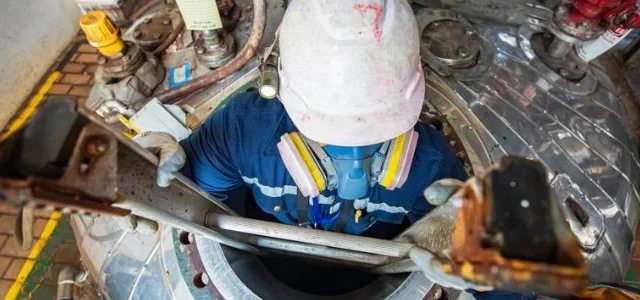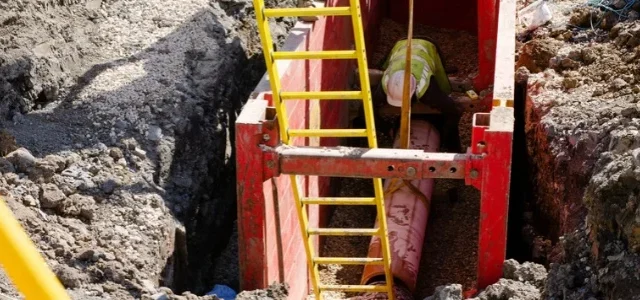
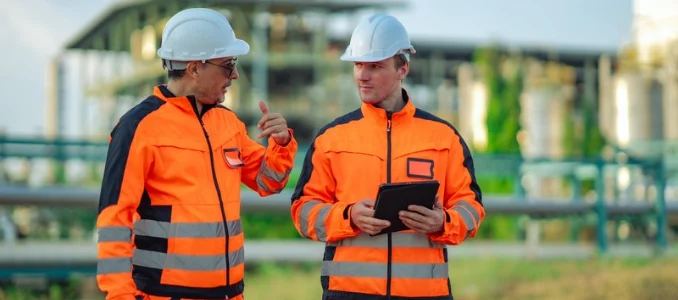
Data center infrastructure is inherently characterized by dense configurations of cooling systems, backup power modules, and intricate cabling networks. These features often create environments that, while not traditionally categorized as confined spaces, can quickly transition into "permit-required" areas as construction progresses, equipment is installed, and air circulation patterns are altered.
The Evolution of the Data Center Landscape
The current construction boom is unprecedented in scale. According to industry analysis, global data center capacity is projected to double within the next five years, with multi-billion-dollar investments pouring into regions such as Northern Virginia, Phoenix, and Dublin. These projects represent massive architectural undertakings that demand the simultaneous coordination of thousands of skilled tradespeople.

The timeline of a typical data center project follows a high-pressure trajectory. Phase one focuses on site preparation and structural steel; phase two involves the installation of heavy mechanical equipment, including chillers and industrial-grade HVAC units; and phase three centers on the "fit-out," where electrical rooms, server halls, and power distribution units (PDUs) are energized. It is during this final, accelerated phase that confined space risks often peak. A space that was perfectly safe to walk through during the structural phase may become a high-risk environment once the mechanical cooling pipes and electrical enclosures restrict airflow or create "engulfment" and entrapment hazards.
Defining the Hazard: OSHA Standards and Interpretation
A common misconception among construction managers is that any enclosed area, such as an electrical room or a cable vault, is automatically a "confined space." Under the OSHA construction standard, this is not necessarily the case. A confined space is defined by three specific criteria: it is large enough and so configured that an employee can bodily enter; it has limited or restricted means for entry or exit; and it is not designed for continuous employee occupancy.

However, the designation that keeps safety directors awake at night is the "permit-required confined space." This applies when the space contains—or has the potential to contain—a hazardous atmosphere, a material that has the potential for engulfing an entrant, an internal configuration such as inwardly converging walls or a floor that slopes downward and tapers to a smaller cross-section which could trap or asphyxiate an entrant, or any other recognized serious safety or health hazard.
In the context of a modern data center, the "other recognized serious safety hazard" often involves high-voltage electrical exposure or the discharge of fire suppression gases. If an electrical room is configured in such a way that a worker could be trapped during an emergency, or if the ventilation system has been disabled to facilitate the installation of sensitive IT infrastructure, the space must be treated with the rigorous protocols mandated by a permit system.

Chronology of Risk: Why Early Identification Matters
Safety protocols in the construction sector are most effective when they are proactive rather than reactive. The most successful projects utilize a "lifecycle safety assessment" model.
- Pre-Construction Planning: Competent persons identify potential confined spaces based on architectural drawings. At this stage, engineers can often modify designs—such as widening access points or improving ventilation pathways—to remove the "confined" designation entirely.
- The Mid-Construction Audit: As walls go up and mechanical systems are installed, the environment changes. A room that previously had two points of egress may be blocked by a new chiller unit, suddenly creating a restricted exit scenario.
- The Commissioning Phase: This is the most dangerous period. As systems go live, the atmosphere may change due to the presence of cleaning chemicals, fire suppression agents, or heat buildup. The site must be re-evaluated for atmospheric hazards during this transition.
Supporting Data and Industry Trends
The Bureau of Labor Statistics (BLS) has historically noted that while confined space fatalities are statistically less frequent than falls or equipment-related accidents, they are significantly more likely to be fatal when they do occur. Because these environments often involve "victim-rescuer" scenarios, where a second worker enters a space to help a colleague and subsequently succumbs to the same hazard, the ripple effect of a single failure can be catastrophic.

Data center projects often involve multi-employer worksites. When a general contractor, mechanical subcontractor, and electrical contractor are all operating in the same confined corridor, communication gaps become the primary driver of risk. OSHA mandates that host employers and controlling contractors coordinate entry operations to ensure that one employer’s activities do not endanger the workers of another.
Official Responses and Best Practices
Industry safety experts emphasize that "competent person" training is the cornerstone of regulatory compliance. A competent person is defined as one who is capable of identifying existing and predictable hazards in the surroundings and who has authorization to take prompt corrective measures to eliminate them.

In a recent industry forum regarding critical infrastructure safety, a lead safety consultant noted, "The goal is not just to have a permit program, but to have an active, dynamic hazard identification process. If your permit program is static, you are likely missing the reality of the construction site."
Recommended best practices for data center projects include:

- Dynamic Signage: Utilizing digital, real-time warning systems at the entrances of electrical rooms that reflect current hazard levels.
- Integrated Communication: Establishing a shared digital platform where all subcontractors must log their entry and exit times, as well as any chemical or electrical work being performed in restricted areas.
- Mechanical Ventilation: Utilizing portable ventilation equipment to ensure air exchange rates remain within safe limits, particularly when welding or using solvents in enclosed electrical vaults.
- Rescue Drills: Conducting site-specific rescue rehearsals that account for the unique geometry of server aisles and equipment cabinets.
Broader Impact and Implications
The long-term implication of these safety challenges is a potential shift in how data centers are designed and regulated. As the industry moves toward "modular" data centers—where large components are built off-site and dropped into place—the construction phase is becoming more compressed. This compression leaves less room for error.
Furthermore, as insurance underwriters and regulators take a closer look at the risks associated with hyperscale construction, firms that prioritize rigorous, data-driven confined space programs are finding competitive advantages. They suffer fewer project delays due to safety incidents, experience lower workers’ compensation premiums, and maintain better relationships with labor unions concerned about site safety.

Ultimately, the goal for the data center industry is to build the digital infrastructure of the future without incurring the human cost of the past. By treating confined space safety as a fluid, evolving element of project management rather than a static administrative requirement, contractors can protect their workforce while meeting the insatiable global demand for connectivity. The complexity of these spaces is not going to diminish; therefore, the sophistication of our safety systems must continue to accelerate in lockstep with the technology housed within these massive facilities.