The incident has triggered an immediate review of fall prevention measures at the site. Mine operators are now facing heightened scrutiny regarding their adherence to workplace safety regulations, particularly concerning the identification and mitigation of fall hazards in areas where routine maintenance or construction occurs.
Chronology and Circumstances of the Incident
While the specific date of the accident was not immediately disclosed, reports confirm the fatal fall occurred within the upper levels of a surface hoist facility. The victim, a contractor tasked with maintenance or construction duties, was operating on the fifth floor of the number three hoist structure. Preliminary reports indicate the individual stepped through an unsecured or unguarded floor opening, resulting in a free-fall of approximately 18 feet.
Emergency response teams were dispatched to the site following the incident. Despite medical intervention, the contractor later died from the trauma sustained during the impact. The facility is currently cooperating with safety regulators to reconstruct the events leading to the fall, focusing on whether the opening was clearly marked, barricaded, or if the individual had been properly briefed on the specific site hazards present on that floor.
Understanding the Risks of Elevated Work in Mining
Mining environments are inherently complex, often requiring workers to navigate vertical shafts, multi-level structures, and cramped, elevated platforms. According to data from the Mine Safety and Health Administration (MSHA) and the Bureau of Labor Statistics (BLS), falls from heights remain a leading cause of preventable workplace fatalities in the mining and construction sectors.

In the United States, falls account for a significant percentage of "lost-time" injuries. When a worker operates 18 feet above the ground, the force of impact is sufficient to cause catastrophic injury or death, regardless of the surface composition. The risk is amplified in industrial settings like hoist facilities, where heavy machinery vibration, potential debris, and complex floor layouts can distract personnel from situational awareness.
Regulatory Frameworks and Safety Protocols
The investigation into this fatality will likely center on compliance with federal safety standards regarding fall protection. Regulations mandate that all floor openings must be covered, or if the cover is not practical, protected by a standard railing system. Furthermore, when work is conducted near an exposed edge or opening, secondary fall protection—such as personal fall arrest systems (PFAS)—is typically required.
Safety experts emphasize that the "Hierarchy of Controls" is the gold standard for fall prevention. This framework prioritizes the elimination of the hazard—such as securely fastening floor covers—over administrative controls, such as warning signs or training. In many cases, accidents occur when temporary covers are removed for work and not replaced, or when guardrails are dismantled for material transport and left open.

The Role of Personal Protective Equipment (PPE)
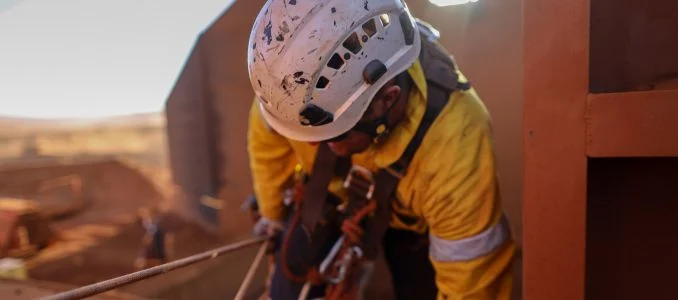
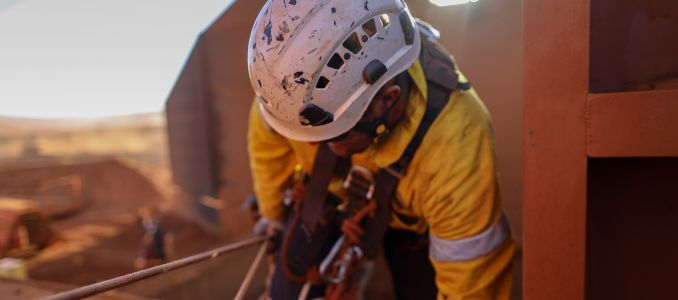
When structural barriers are insufficient to prevent a fall, the use of personal protective equipment becomes the last line of defense. A complete fall arrest system consists of three primary components: an anchor point, a full-body harness, and a connecting device such as a lanyard or a self-retracting lifeline (SRL).
In this specific case, investigators will likely examine whether the contractor was provided with adequate anchorage points and whether they were instructed to tie off while working in the vicinity of the open floor section. The effectiveness of this equipment is entirely dependent on the existence of a secure, load-rated anchorage point capable of sustaining the force generated by a falling worker.
Industry Implications and Workplace Examinations
This tragedy serves as a catalyst for a broader industry-wide assessment of "workplace examinations." Under federal law, operators are required to examine work areas for hazardous conditions before personnel begin their shifts. The failure to identify an unguarded hole in a floor—an obvious hazard—suggests a breakdown in the safety inspection process.

Moving forward, mine operators are expected to implement more rigorous oversight of third-party contractors. Contractors often operate with different safety cultures or internal protocols compared to the primary mine operator. Bridging this gap through mandatory site-specific safety orientations and continuous monitoring is essential for preventing future occurrences.
Human Factors and Situational Awareness
Beyond physical barriers, human factors play a significant role in workplace safety. Situational awareness—the ability to perceive environmental cues and anticipate hazards—can be degraded by fatigue, repetitive tasks, or over-familiarity with a workspace. When workers perform duties on the same floor day after day, there is a risk of "hazard normalization," where the danger posed by an open shaft is subconsciously minimized or ignored.
Training programs are currently being emphasized to combat this phenomenon. By incorporating "Stop Work Authority" into company policy, organizations empower employees and contractors alike to halt operations if they identify an unsafe condition, regardless of their rank or employer.

Official Responses and Future Outlook
Safety authorities have issued a series of reminders to the mining industry following this incident. Key directives include:
- Verification of Barriers: All floor openings must be protected by substantial covers or guardrails that meet regulatory load-bearing requirements.
- Mandatory Tie-Off Zones: Clearly delineated areas where fall protection is mandatory must be communicated to all personnel through signage and briefings.
- Audit of Contractor Safety: Operators must conduct thorough audits of their contractors’ safety records and ensure that all on-site personnel are adequately trained in site-specific fall hazards.
- Emergency Rescue Planning: In the event that a worker does fall, a rapid rescue plan must be in place. Suspension trauma, which occurs when a worker is left hanging in a harness for too long, can be just as lethal as the fall itself.
The loss of a worker at a hoist facility is not merely a statistical anomaly but a signal that current safety protocols require re-evaluation. As the industry moves toward more automated and technologically advanced mining practices, the fundamental requirement of providing a safe walking and working surface remains the baseline for all operations.
Conclusion
The death of the contractor is a sobering reminder of the volatility of the mining environment. While investigation into the specific mechanical or procedural failures of the number three hoist structure continues, the broader message to the industry is clear: vigilance cannot be compromised. Safety is an active process that requires constant oversight, structural integrity, and a culture that prioritizes the lives of workers over the expediency of operational tasks.

As the industry processes this loss, the focus will undoubtedly shift to how such gaps in safety can be closed permanently. Through the strict application of guardrails, the mandatory use of fall arrest systems, and a renewed commitment to comprehensive site examinations, operators can work toward an environment where such tragedies become a thing of the past. The legacy of the deceased must be a safer workplace for those who continue to labor in the demanding conditions of the surface mining sector.
For contractors and facility managers, the directive is simple: if an opening exists, it must be guarded. If a worker is at height, they must be tied off. These are not merely suggestions but the fundamental tenets of life-safety in the construction and mining trades. Failure to uphold these standards carries the ultimate cost, a reality that the mining community is now forced to confront once again.