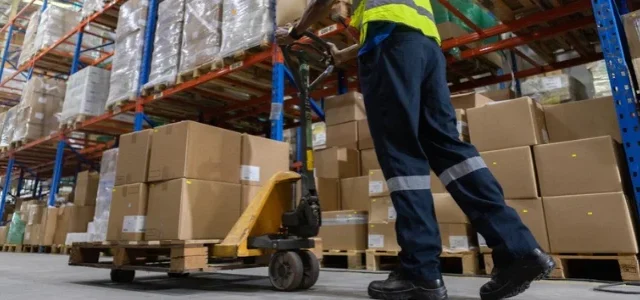


The survey, which polled 1,053 U.S. safety professionals, indicates that while the vast majority of organizations have moved past the "no-plan" phase, the depth of this integration varies wildly. Only 20% of respondents identified themselves as having achieved widespread, enterprise-level AI integration across their EHS functions. Meanwhile, the middle-market—comprising 62% of respondents—reported moderate or limited application, often relegated to specific departments or singular pilot projects. A final 16% remain in the embryonic stages of exploration, while a negligible 2% have opted out of AI entirely. These figures underscore a reality where the "digital divide" in workplace safety is determined less by desire and more by existing infrastructure and data maturity.
A Chronology of the Safety Shift
The trajectory of AI in EHS has evolved rapidly over the last three years. In 2023, the industry was characterized by a "wait-and-see" approach, with most safety managers viewing generative AI and computer vision as experimental toys. By 2024, the focus shifted toward data collection, with companies rushing to digitize paper-based safety logs and incident reports to feed nascent machine learning models.
By the end of 2025, the industry saw a surge in specialized EHS software platforms incorporating AI-driven predictive modeling. Now, in late 2026, the current report captures a market in the middle of a "practicality audit." Organizations are no longer asking if AI can identify a safety hazard; they are asking whether that identification provides a measurable return on investment in terms of incident reduction, insurance premium stabilization, and regulatory compliance.
Sector-Specific Adoption Trends
The data provides a clear hierarchy of industrial preparedness. High-risk, high-capital sectors have naturally gravitated toward AI as a primary means of mitigating the significant costs associated with workplace injuries and operational downtime.

The energy and chemical sectors lead the charge, with 76% of respondents reporting moderate to extensive AI usage. This is largely attributed to the highly regulated nature of these environments and the existing presence of industrial Internet of Things (IIoT) sensors that provide the high-quality data necessary for AI to function effectively. Similarly, the oil and gas industry reports a 71% adoption rate, driven by the need for remote monitoring in hazardous extraction environments where human presence is inherently dangerous.
Information technology firms follow closely at 70%, leveraging their inherent technical expertise to implement software-based safety solutions. Manufacturing remains a dominant force at 68%, where computer vision and robotics have become the standard for preventing worker interaction with heavy machinery.
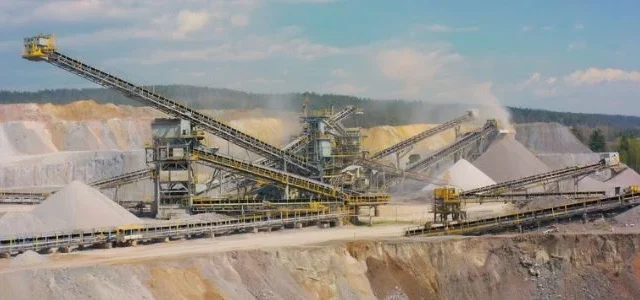
Conversely, sectors with more decentralized or mobile workforces lag behind. The mining and metals sector, despite its high-risk profile, reports only 39% adoption, likely due to the geographical dispersion of sites and the difficulty of maintaining the high-bandwidth connectivity required for real-time AI processing. Similarly, the construction and engineering sector (51%) and pharmaceuticals (46%) continue to grapple with fragmented workflows that make the implementation of unified AI safety platforms a significant logistical hurdle.

The Barriers to Seamless Integration
The research highlights three primary inhibitors that prevent companies from moving beyond "limited" use: data quality, technical talent, and organizational inertia.
Data quality remains the most persistent barrier. AI models are only as robust as the data sets they are trained on. In many legacy industries, safety records are still maintained in silos or digitized in formats that are not machine-readable. Safety managers often find that before they can deploy an AI tool to predict an accident, they must first spend months cleaning and standardizing years of disparate, historical data.
Furthermore, the talent gap continues to loom large. Safety leaders are typically experts in human health and regulatory law, not data science. The inability to bridge the communication gap between EHS professionals and internal IT departments often leads to stalled pilot programs. Without a clear translation of safety objectives into algorithmic requirements, many projects never leave the "sandbox" environment.

Implications for the Future of Workplace Safety
The shift toward AI-driven safety is not merely a technological upgrade; it represents a fundamental change in the philosophy of risk management. Historically, safety has been reactive: an incident occurs, an investigation is conducted, and a policy is updated. AI shifts this paradigm to a proactive, predictive model. By analyzing patterns in employee behavior, environmental conditions, and equipment performance, AI can alert supervisors to a "near miss" or a heightened risk state before an injury occurs.
The economic implications are equally profound. With insurance premiums rising and the cost of regulatory non-compliance reaching record highs, organizations that successfully integrate AI are positioned to secure a competitive advantage. Lower incident rates directly correlate to lower overhead, higher employee retention, and a stronger brand reputation—a crucial metric in an era where environmental, social, and governance (ESG) reporting is increasingly scrutinized by investors.
Expert Perspectives and Strategic Recommendations
Industry analysts suggest that the next phase of AI adoption will be defined by "interoperability." As companies move away from standalone safety apps toward unified EHS ecosystems, the ability for different software platforms to communicate will become the primary driver of success.

"The organizations that will succeed are not necessarily those with the most complex AI models, but those that have integrated safety into the core of their operational data," notes a senior researcher involved in the study. "If you cannot integrate your safety software with your payroll, your maintenance logs, and your training databases, you will never achieve a holistic view of your risk profile."
For safety managers currently feeling the pressure to modernize, the report suggests a tiered approach:
- Foundation First: Focus on digitizing workflows and ensuring data integrity before deploying complex algorithms.
- Targeted Pilot Programs: Rather than an enterprise-wide rollout, implement AI for specific, high-frequency hazards, such as forklift-pedestrian proximity alerts or repetitive motion monitoring.
- Cross-Functional Collaboration: Create internal task forces that pair EHS managers with data analysts and IT stakeholders to ensure that safety goals are technically feasible.
A New Standard of Duty of Care
The research suggests that the "AI-enabled workplace" is no longer a futuristic goal but an emerging standard of the duty of care. As courts and regulatory bodies begin to recognize the potential of AI to prevent foreseeable harm, the failure to adopt available safety technologies may eventually become a liability in itself.

While the 2026 data shows that the industry is still navigating the "trough of disillusionment"—the phase where the initial hype of a technology meets the reality of its implementation hurdles—the long-term trend is clearly pointing toward a more automated, data-centric future. The transition will not be uniform, and it will certainly not be easy, but for companies operating in high-risk environments, the integration of AI is increasingly being viewed as a necessary evolution rather than an optional enhancement. As the technology continues to mature and the cost of implementation decreases, the gap between the "digital leaders" and the "digital laggards" is expected to widen, forcing a consolidation of safety standards across the global industrial landscape.