
The move represents a concerted effort by state legislators to address a rising trend of vehicular accidents in areas where infrastructure maintenance and construction crews are exposed to high-speed traffic. By introducing both punitive measures and educational incentives, the bill aims to change driver behavior through a dual-track approach: immediate financial consequences for negligence and a pathway for improvement through mandated safety training.
The Legislative Genesis of House Bill 82
The momentum behind the Trenton Gallaway Work Zone Safety Act is rooted in a broader movement to prioritize the lives of frontline transportation workers. The bill is named in honor of Trenton Gallaway, a tragic reminder of the dangers inherent in highway maintenance. While the legislative process for this bill has moved through the House committees over the past several months, its passage represents the culmination of advocacy from labor groups, transportation officials, and families affected by work zone fatalities.
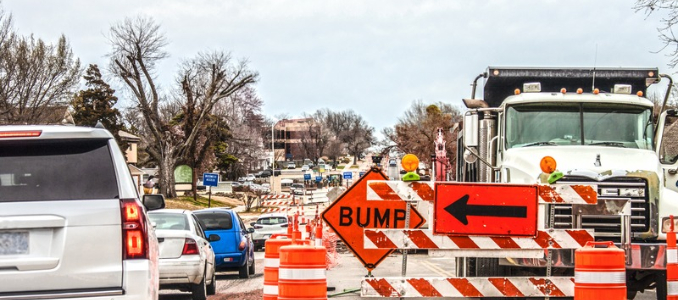
State Representatives Gary Click and Mark Johnson, who spearheaded the bill’s advancement, have framed the legislation as a vital tool for civil engineering safety. During floor debates, supporters argued that current traffic laws have proven insufficient in deterring aggressive driving in construction zones. The bill, as currently drafted, creates a clear, enforceable framework that ties financial liability directly to the presence of human life on the roadway.
Mechanics of the Proposed Penalties
Under the provisions of House Bill 82, the legal landscape for drivers in construction zones would undergo a meaningful transformation. The legislation introduces a tiered system of consequences designed to discourage reckless behavior.
The most notable feature is the imposition of an additional $100 fine for reckless driving within a marked construction zone, provided that at least one worker is physically present at the site. Recognizing that the goal of the legislation is behavioral modification rather than merely revenue generation, the bill includes a "safety valve" provision: drivers cited under this section may avoid the additional $100 fine if they successfully complete an approved driving safety course within 90 days of the violation.
This educational component is intended to address the root causes of dangerous driving, such as distracted operation or lack of awareness regarding speed limits in narrow, high-risk corridors. Should a driver fail to complete this course within the allotted timeframe, the fine is not only enforced but, according to the bill’s current language, could lead to further escalating penalties, ensuring that the consequences for non-compliance remain significant.

Furthermore, the bill grants local courts the discretionary authority to double standard speeding fines in these zones. This provision gives judges and magistrates the ability to tailor penalties based on the severity of the infraction, effectively increasing the "cost" of speeding in environments where even a minor loss of vehicle control can have fatal consequences for a worker.
The Data Driving the Legislation
The push for this legislation is backed by sobering statistics regarding highway safety. According to data provided by the Ohio Department of Transportation (ODOT) and national traffic safety organizations, work zone crashes remain a persistent public health challenge. Despite the use of high-visibility signage, orange barrels, and flashing arrow boards, human error continues to be the primary driver of incidents.
National data from the Federal Highway Administration (FHWA) indicates that while the majority of people injured in work zone crashes are drivers and their passengers, the risk to workers is disproportionately high due to their proximity to moving traffic. In Ohio, the sheer volume of infrastructure projects—driven by ongoing initiatives to modernize highways, bridges, and local road networks—means that more workers are stationed in harm’s way than in previous decades.
Legislative analysts noted during the committee review process that the efficacy of "double fine" laws has been studied in several other states. While data is mixed, many jurisdictions report a psychological impact on drivers who perceive a higher risk of being pulled over and fined, leading to a measurable reduction in average speeds through construction zones. By combining this deterrent with the educational requirement, Ohio hopes to create a more effective model that focuses on long-term safety habits.

Official Responses and Stakeholder Perspectives
The passage of the bill in the House has drawn praise from labor unions representing construction workers and highway maintenance crews. Representatives from these organizations have long lobbied for stronger protections, noting that workers often report feeling vulnerable to distracted drivers who fail to slow down or move over, even when traffic patterns are clearly delineated.
"Every worker deserves to return home at the end of their shift," one representative noted following the House vote. "This bill sends a message that the lives of those building our roads are worth more than the few seconds a driver might save by speeding."
However, the bill has also faced scrutiny from some legal advocacy groups who raise concerns about the "doubling" of fines, questioning whether it disproportionately impacts low-income drivers. Legislative sponsors have countered that the safety course provision provides an equitable alternative for those who demonstrate a willingness to learn from their mistakes, rather than simply paying a penalty and repeating the behavior. The debate highlights the delicate balance lawmakers must maintain between punitive enforcement and rehabilitative justice.
Broader Implications for Infrastructure Safety
The enactment of the Trenton Gallaway Work Zone Safety Act would represent a significant shift in Ohio’s traffic enforcement philosophy. As the state continues to allocate record levels of funding toward road and bridge repairs, the density of construction zones is expected to remain high for the foreseeable future.

If the bill passes the Senate and is signed into law, the Ohio Department of Public Safety will likely undertake a comprehensive outreach campaign to inform motorists of the new penalties. This will likely involve updated signage, public service announcements, and increased coordination with local law enforcement agencies to ensure consistent application of the law across different jurisdictions.
The implications extend beyond just fines. There is a broader cultural shift at play, where the state is attempting to formalize the "respect the zone" mentality. By creating a legal framework that treats construction zones as unique environments requiring a different set of behavioral standards, the state hopes to lower the frequency of emergency responses, vehicle repairs, and, most importantly, the loss of life.
A Timeline of Legislative Progress
The path to this moment has been methodical. The initial drafting of the Trenton Gallaway Work Zone Safety Act began in response to a series of high-profile accidents that underscored the inadequacy of existing traffic laws. After several months of committee hearings, where testimony was heard from traffic engineers, law enforcement officers, and families of victims, the bill was refined to include the specific provisions regarding the $100 fine and the 90-day safety course.
The House’s approval marks the end of the first major phase of the legislative journey. The focus now shifts to the Ohio Senate, where the bill will undergo another round of scrutiny. Observers expect the Senate to consider amendments, potentially focusing on the administrative burden placed on local courts to track the completion of safety courses. Should the Senate approve the bill, it will be sent to the Governor’s desk for final signature, at which point a timeline for implementation would be established.

Analyzing the Potential Impact
From a policy analysis standpoint, the effectiveness of the Trenton Gallaway Work Zone Safety Act will be measured by its ability to reduce the number of citations issued over time. If the law works as intended, the total number of speeding and reckless driving incidents in work zones should decline as drivers become aware of the heightened stakes.
However, the success of the law will depend heavily on enforcement. For the $100 penalty to act as a meaningful deterrent, law enforcement agencies must be consistently present and empowered to cite offenders. This presents a logistical challenge, as construction zones are often temporary and shifting, requiring police to move their patrols accordingly.
Furthermore, the integration of the safety course requirement creates an administrative loop that requires cooperation between the judiciary and the Department of Public Safety. If this system is streamlined and accessible, it could serve as a national model for how to combine enforcement with education. Conversely, if the process is overly burdensome, it may lead to low compliance rates.
Conclusion
The advancement of House Bill 82 reflects a proactive response to the persistent dangers of roadway construction. By centering the legislation on both the financial reality of traffic violations and the necessity of driver education, the Ohio House has moved to protect the lives of those tasked with maintaining the state’s critical infrastructure.

As the bill proceeds to the Senate, the discourse will likely continue to center on the balance between public safety and fair enforcement. Regardless of the final form the legislation takes, the focus remains clear: creating a safer environment for workers who operate in the most dangerous, high-traffic conditions. The Trenton Gallaway Work Zone Safety Act stands as a testament to the fact that, in the realm of public policy, the protection of human life remains the highest priority for the state. As Ohio continues to invest in its future infrastructure, it is also investing in the safety of the people who make that future possible.