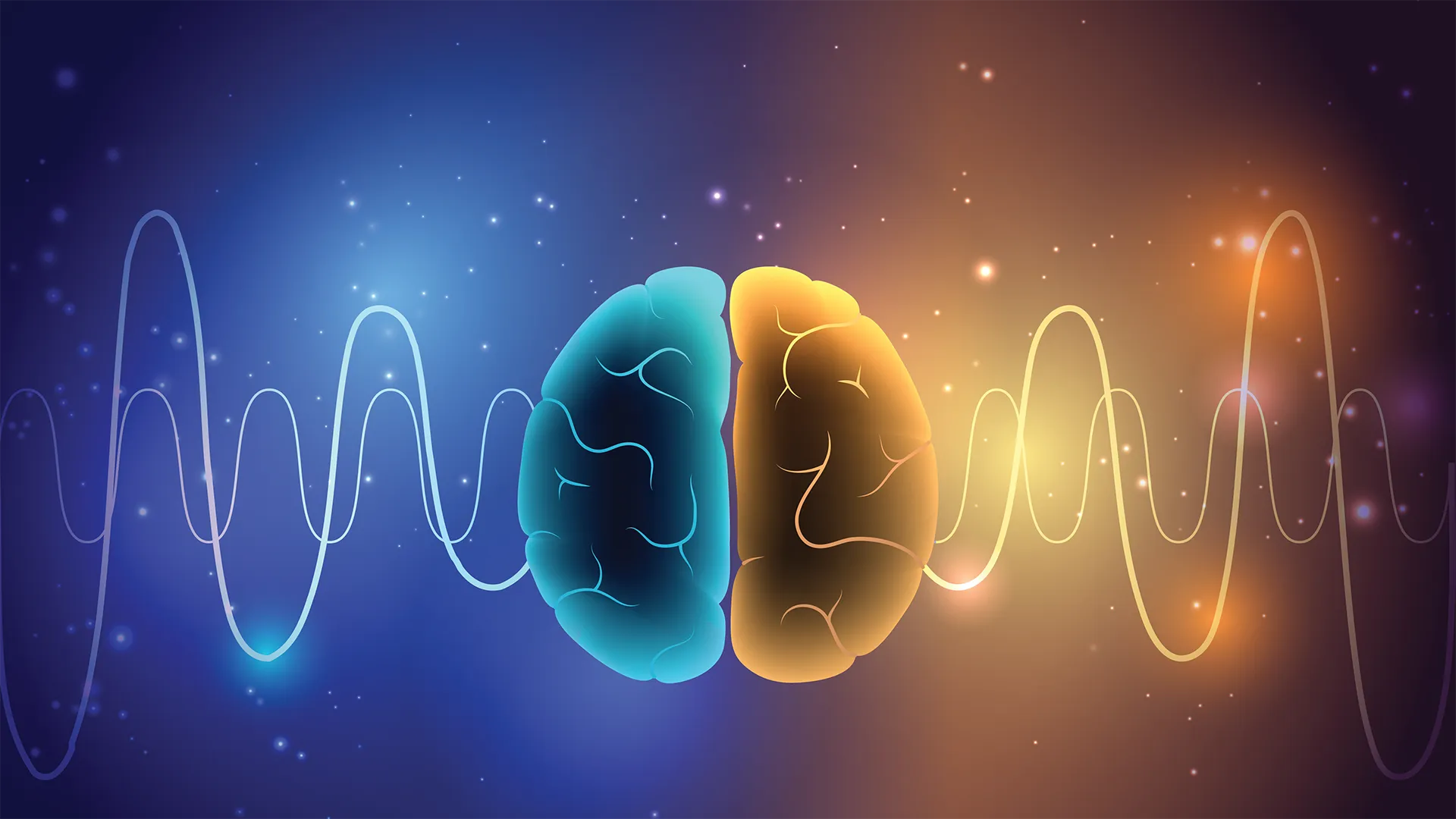
For decades, the scientific community has understood that sound travels from the ear to the primary auditory cortex, where it is registered and processed. However, the internal "wiring" or functional connectivity of the brain during continuous auditory streams remained largely opaque. The research team, led by Dr. Mattia Rosso and Associate Professor Leonardo Bonetti of the Center for Music in the Brain (MIB) at Aarhus University, has now demonstrated that the brain’s response is far more complex than simple registration. Instead, the brain orchestrates a sophisticated interplay of brainwaves across multiple, overlapping networks, shifting its configuration to match the frequency and rhythm of the environment.
The Evolution of Neuroimaging: Introducing FREQ-NESS
At the heart of this discovery lies a novel neuroimaging method developed by the research team known as FREQ-NESS, an acronym for Frequency-resolved Network Estimation via Source Separation. To understand the significance of FREQ-NESS, one must first look at the limitations of traditional neuroimaging. Conventional methods, such as standard Electroencephalography (EEG) or Magnetoencephalography (MEG), often struggle to distinguish between overlapping signals. In a typical brain scan, activity from various regions and at various frequencies—such as alpha, beta, and gamma waves—often blends together, making it difficult to pinpoint which specific network is driving a particular cognitive function.
Traditional analysis usually relies on predefined frequency bands or specific "regions of interest" (ROIs). While useful, this approach is inherently biased by what scientists expect to find. In contrast, FREQ-NESS is a data-driven approach. It utilizes advanced mathematical algorithms to "disentangle" these overlapping signals based on their dominant frequencies. Once a specific network is identified by its unique frequency signature, the method can trace its propagation in space across the entire brain.
Dr. Rosso explains that the prevailing view of brainwaves as fixed "stations" is an oversimplification. "We are used to thinking of brainwaves like fixed stations—alpha, beta, gamma—and of brain anatomy as a set of distinct regions," he noted. "But what we see with FREQ-NESS is much richer. It has long been known that brain activity is organized through activity in different frequencies, tuned both internally and to the environment. Starting from this fundamental principle, we’ve designed a method that finds how each frequency is expressed across the brain."
Chronology of the Research and Methodology
The journey toward the development of FREQ-NESS and the subsequent findings regarding brain reorganization followed a rigorous multi-year timeline of data collection, algorithmic refinement, and cross-institutional collaboration.
- Initial Hypothesis (2020-2021): Researchers at the Center for Music in the Brain hypothesized that the brain’s response to music and rhythm was not a localized event but a global network phenomenon. They theorized that the brain’s "internal clock" must synchronize with external rhythms through a process of rapid structural reconfiguration.
- Data Acquisition: Using high-density Magnetoencephalography (MEG) at the Aarhus University Hospital, the team recorded the neural activity of participants as they were exposed to varying auditory stimuli, ranging from simple rhythmic beeps to complex musical sequences. MEG was chosen for its superior temporal resolution, capable of capturing changes occurring in milliseconds.
- Algorithm Development (2022): Dr. Rosso and Professor Bonetti worked on the source separation algorithms that would eventually become FREQ-NESS. The goal was to move beyond the "blur" of traditional scans to achieve high spectral and spatial precision simultaneously—a feat previously considered a major hurdle in computational neuroscience.
- Validation and Testing (2023): The method was tested across multiple datasets to ensure reliability. The researchers found that the FREQ-NESS method consistently identified the same networks across different subjects and experimental conditions, proving its robustness as a tool for individualized brain mapping.
- Publication and Peer Review (2024): The findings were submitted to Advanced Science, where they underwent rigorous peer review before being shared with the global scientific community.
Technical Analysis: How the Brain Reconfigures
The study’s data reveals a fascinating "orchestration" of neural resources. When a subject hears a steady rhythm, the brain does not simply fire neurons in the auditory cortex. Instead, the FREQ-NESS analysis showed that different frequency-specific networks begin to "hand off" information across the frontal, parietal, and temporal lobes.
Specifically, the research highlighted that neural oscillations—the rhythmic electrical activity of the brain—act as a carrier for information. When an external rhythm is introduced, the brain’s internal oscillations "entrain" or synchronize with that rhythm. However, the breakthrough in this study is the observation that this entrainment causes a spatial shift. A network that was dormant may suddenly become the primary pathway for information flow, while others are suppressed. This real-time reorganization suggests that the brain is constantly optimizing its architecture to process the most relevant environmental information with maximum efficiency.
This "dynamic reshaping" is particularly evident in music cognition. Music requires the brain to predict what comes next. The study suggests that the reorganization of networks is the physical manifestation of this predictive processing. By shifting its network configuration, the brain prepares itself for the next beat or note, effectively "tuning" itself to the future.
Supporting Data and Scientific Reliability
One of the most compelling aspects of the FREQ-NESS study is its high degree of reliability. In neuroimaging, results can often vary significantly between individuals or even between different sessions for the same individual. However, the data-driven nature of FREQ-NESS produced remarkably consistent maps of brain organization.
The researchers applied the method to large-scale datasets, including both rhythmic stimuli and resting-state brain activity. They found that the identified frequency-resolved networks were not random; they corresponded to known functional systems—such as the default mode network and the attentional network—but with a new layer of detail regarding how these systems interact through frequency-specific channels. This level of precision allows scientists to see not just where the brain is active, but how different parts of the brain communicate via specific "dialects" of frequency.
Implications for Clinical Diagnostics and Neuroscience
The development of FREQ-NESS and the discovery of real-time brain reorganization have profound implications for several fields, ranging from basic science to clinical medicine.
1. Precision Psychiatry and Neurology
Traditional diagnostic tools for neurological disorders often look for structural damage (via MRI) or gross electrical abnormalities (via standard EEG). However, many conditions—such as ADHD, schizophrenia, and early-stage dementia—are thought to be disorders of "connectivity" rather than structure. FREQ-NESS could allow clinicians to identify subtle "mismatches" in how a patient’s brain reorganizes itself in response to stimuli. For instance, if a patient’s brain fails to reconfigure its networks efficiently when processing rhythm, it could serve as a biomarker for cognitive decline long before physical symptoms appear.
2. Brain-Computer Interfaces (BCIs)
The field of BCIs relies on translating brain signals into commands for external devices, such as prosthetic limbs or computers. One of the biggest challenges in BCI technology is "noise"—the difficulty of isolating the user’s intent from the background hum of brain activity. Because FREQ-NESS is designed specifically for source separation and frequency resolution, it could significantly improve the accuracy and speed of BCIs, allowing for more seamless integration between human thought and machine action.
3. Understanding Consciousness and Mind-Wandering
Professor Leonardo Bonetti, a co-author of the study, emphasized the broader philosophical and psychological implications. "The brain doesn’t just react: it reconfigures. And now we can see it," says Professor Bonetti. "This could change how we study brain responses to music and beyond, including consciousness, mind-wandering, and broader interactions with the external world."
By mapping how the brain reconfigures during "mind-wandering"—the state where our thoughts drift away from the present task—researchers may finally be able to quantify the neural basis of creativity and internal reflection.
Official Responses and the Future of the Research Program
The announcement of the FREQ-NESS method has been met with enthusiasm by the international neuroscience community. A large-scale research program is already underway to expand the use of this methodology. This program is supported by an international network of neuroscientists who aim to build a "global atlas" of frequency-resolved brain networks.
Dr. Rosso and Professor Bonetti’s work at the Center for Music in the Brain, in collaboration with the Centre for Eudaimonia and Human Flourishing at the University of Oxford, signifies a shift toward a more holistic view of brain function. The collaboration bridges the gap between the hard sciences of physics and mathematics and the humanistic study of music and well-being.
"Because of the high reliability across experimental conditions and across datasets, FREQ-NESS might also pave the way for individualized brain mapping," Professor Bonetti explained. This means that in the future, a "brain map" could be as unique and identifiable as a fingerprint, providing a personalized blueprint of how an individual processes the world.
Conclusion: A New Era of Cognitive Discovery
The revelation that the brain dynamically reshapes its organization in real time in response to sound is more than just a technical achievement; it is a fundamental shift in our perspective on human cognition. We are no longer viewed as biological machines with fixed circuits, but as fluid, adaptive systems capable of instantaneous self-transformation.
As the research program at Aarhus and Oxford continues to evolve, the FREQ-NESS method will likely be applied to a diverse array of stimuli beyond sound, including visual patterns and social interactions. The ability to "see" the brain reconfigure itself opens a window into the very essence of human experience, promising a future where we can not only map the mind but truly understand the rhythmic dance of consciousness that defines our existence. For now, the "rhythmic symphony" of the brain is no longer a metaphor—it is a visible, measurable reality.