
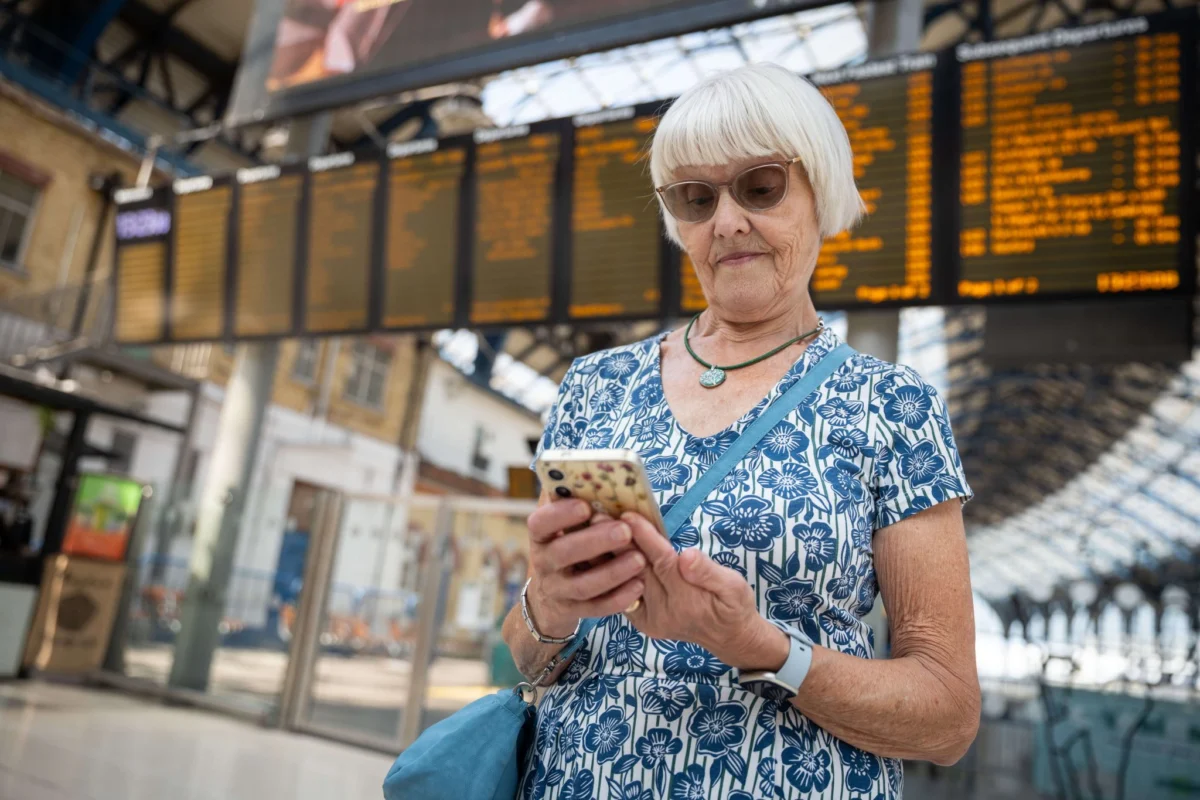
Addressing a Persistent Challenge: Navigating Noisy Public Transport
The struggle to hear clearly in noisy public environments is a familiar and frustrating reality for individuals with hearing loss. Train stations, airports, and other large public halls present a unique confluence of acoustic challenges: reverberant architecture, a cacophony of background noise, and competing announcements through often suboptimal public address systems. For the estimated 18 million people in the UK who are deaf or have hearing loss – a figure comprising roughly one in four adults – missing a crucial announcement can transcend mere inconvenience, leading to stress, confusion, and even significant safety concerns, especially in dynamic environments like a bustling railway station.
Audiologists and hearing aid dispensers routinely hear patient complaints about these "difficult listening environments." Traditional public address systems, while designed for broad reach, often fail to deliver the clarity required for comprehension amidst the hustle and bustle. The result is often social isolation, anxiety about travel, and a reduced sense of independence for those who rely on public transport.

Brighton Station: A New Era of Accessibility with Auracast
In a groundbreaking move, Southern, Thameslink, and Gatwick Express have completed the permanent installation of Auracast technology at Brighton Station. This makes Brighton the inaugural location on the UK rail network to offer this advanced broadcast audio solution. The system leverages Bluetooth LE Audio to transmit station announcements directly from the public address system to compatible personal listening devices, including hearing aids, cochlear implant sound processors, earbuds, and headphones. This direct-to-device streaming bypasses the environmental noise and acoustic distortions inherent in large public spaces, delivering crystal-clear audio straight to the listener.
Unlike conventional Bluetooth pairing, Auracast allows compatible devices to locate and access the broadcast seamlessly, akin to tuning into a radio station, but with superior digital audio quality. This eliminates the often cumbersome one-to-one pairing process, making accessibility instantaneous and user-friendly. The technology behind this innovative deployment was manufactured and installed by Ampetronic and Listen Technologies, as part of their collaborative Auri system. This Brighton deployment follows a successful earlier trial at Bristol Temple Meads railway station, where the system demonstrated its efficacy in delivering public address announcements across diverse areas, including ticketing halls, platforms, and connecting passageways. The Bristol trial provided invaluable insights into the practical application and benefits of Auracast in a complex transportation hub.
A Chronology of Innovation: From Trial to Permanent Integration
The journey to Brighton’s permanent Auracast installation reflects a deliberate progression in adopting advanced assistive listening technologies. The initial trial at Bristol Temple Meads railway station served as a critical testing ground. Conducted in late 2024 and early 2025, this trial showcased Auracast’s potential to significantly improve speech clarity and passenger experience in a large, acoustically challenging environment. Discussions, such as the 2025 This Week in Hearing interview with Jonathan Hoskin, Division Sales Manager at Ampetronic | Listen Technologies, explored the technical intricacies and the broad implications of Auracast for hearing accessibility. The conversation highlighted not only the immediate benefits for speech clarity and freedom of movement within a station but also hinted at future possibilities, such as support for multiple language streams, simplified broadcast access mechanisms, and integration with live captioning services.
Building on the success and learnings from Bristol, the decision was made to implement a permanent system at Brighton Station. This transition from a temporary trial to a full-scale, permanent deployment underscores the confidence in Auracast’s capabilities and its long-term viability as a solution for public accessibility. The installation at Brighton, completed in early 2026, solidifies the UK’s position at the forefront of adopting this next-generation assistive listening technology. This phased approach, from rigorous testing to strategic implementation, ensures that the technology is robust, reliable, and genuinely beneficial for end-users.

Auracast: The Technical Edge and User Experience
Auracast operates on the foundation of Bluetooth LE Audio, a revolutionary broadcast audio standard. Unlike older Bluetooth versions that primarily support point-to-point connections (one device to another), Bluetooth LE Audio enables a single audio stream – or indeed, multiple independent streams on different channels – to be simultaneously accessed by an unlimited number of compatible receivers. This fundamental shift from a "private" connection to a "public" broadcast model is what gives Auracast its transformative power.
The user experience is designed for simplicity and immediacy. Passengers with compatible hearing aids, cochlear implants, earbuds, or headphones can detect available Auracast broadcasts, often displayed on a connected smartphone app, and simply select the desired audio stream. There is no need for complex pairing codes or manual connections; the process is as intuitive as selecting a Wi-Fi network. This ease of access is critical for public environments where quick and stress-free interaction is paramount.
To fully appreciate Auracast, it is helpful to compare it with the more familiar induction hearing loop system. Induction loops, widely installed in public buildings across the UK, rely on a telecoil (T-coil) present within a hearing aid or cochlear implant processor and a physical loop of cable installed around a listening area. While effective, loops have limitations: they can be susceptible to signal spillover between adjacent loops, often cannot provide multiple discrete audio streams within the same space, and require a specific hardware component (the telecoil) in the hearing device. Auracast, by contrast, does not require a telecoil. It supports multiple independent broadcasts, offering greater flexibility (e.g., different languages or types of announcements). Crucially, Auracast is accessible through a growing number of compatible mainstream consumer audio products, such as the latest earbuds and headphones, significantly broadening its reach beyond specialized hearing devices. As more hearing aids, cochlear implant processors, and mobile devices integrate Bluetooth LE Audio and Auracast support, the number of individuals who can benefit from these systems is set to expand exponentially.
It is important to note that Brighton Station has an existing induction loop system, and there are no immediate plans for its removal. This dual-system approach is strategic, ensuring continued accessibility for passengers whose hearing devices may not yet be Auracast-compatible, thus bridging the transition period effectively.

Transformative Impact: Voices from the Frontline
The real-world impact of Auracast is best articulated by those who stand to benefit most. Jenny Sarling, a hearing aid user and leader of Brighton & Hove Hearing Loss, shared a powerful testimony: "Without Auracast, I can go to a platform and suddenly hear a muffled announcement, see everyone run off and be left standing there not knowing what’s happened. Now announcements such as platform changes go direct into my ears. As a person with severe hearing loss, it’s a complete game-changer – a life-changer in fact. I’m aware that people can use it with earbuds or headphones as well, but for those of us with hearing loss, it’s the difference between hearing and not hearing. It’s the difference between feeling isolated on the station and worried about your journey and being able to relax knowing that if anything changes you will hear it." Her words vividly underscore the profound psychological and practical relief Auracast provides, transforming a source of anxiety into an experience of confidence and inclusion.
Carl Martin, Accessibility Lead for Southern, Thameslink, and Gatwick Express, echoed this sentiment, emphasizing the technological leap: "This fabulous technology will have a huge impact, overcoming the difficulty of hearing announcements in our beautiful but acoustically very challenging, noisy station at Brighton. As people upgrade their devices, more will steadily find they have access to crystal clear announcements. And the way it is used in public spaces will also steadily evolve, making it even easier to use." His perspective highlights the forward-looking nature of the initiative, anticipating broader adoption as device compatibility increases and user interfaces become even more streamlined. The minimal impact on Brighton Station’s Grade II-star listed building during installation, thanks to the system’s single broadcast point, also demonstrates how modern accessibility solutions can be integrated sensitively into historic structures.
Alastair Moore, Technology Lead at RNID (Royal National Institute for Deaf People), framed the Brighton installation within a broader vision for accessibility: "Public transport is an essential service, enabling people to live, work, and participate fully in everyday life. However, for the 18 million people in the UK who are deaf or have hearing loss, announcements can remain a major barrier. Places like stations often have high levels of reverberation and background noise making important information hard to understand." He further articulated the hope that Brighton’s precedent would inspire widespread adoption: "We hope this will encourage more places across public transport, education, healthcare, performing arts and places of worship, to adopt Auracast and help make public spaces accessible for deaf people and people with hearing loss." This call to action emphasizes the potential for Auracast to foster a truly inclusive society, moving beyond isolated installations to a ubiquitous standard.
Implications for Hearing Care Professionals
The permanent installation of Auracast at Brighton is more than just a public infrastructure upgrade; it represents a significant shift in the landscape of assistive listening technology, demanding attention from hearing care professionals. Bluetooth LE Audio and Auracast are transitioning from theoretical concepts and controlled trials to tangible, everyday public infrastructure. This rapid evolution raises a critical practical question for audiologists and hearing aid dispensers: how soon should Auracast compatibility become an integral part of their patient counseling, hearing aid selection, and fitting discussions?

Historically, connectivity conversations in hearing care have centered on direct streaming from personal devices like smartphones and televisions. However, as broadcast audio becomes increasingly available in public venues, professionals must broaden their scope. Patients will require guidance on how to identify an Auracast broadcast, access it through their personal hearing devices, and understand the geographical availability of the technology. This necessitates that hearing care professionals stay current with these technological advancements and proactively educate themselves and their patients.
Furthermore, professionals will need to navigate and explain the current transition period. While Auracast’s availability is growing, compatibility remains dependent on several factors: the specific hearing device’s hardware and software, the connected smartphone or accessory, and the precise implementation of the broadcast system at a given venue. This complexity means that a one-size-fits-all approach to counseling will not suffice; personalized guidance tailored to each patient’s devices and typical environments will be essential.
Paul Surridge, Chair of the British and Irish Hearing Instrument Manufacturers Association (BIHIMA), underscored this evolving role: "This is an important time for audiologists and dispensers, who often need to broach the subject of connectivity with patients and clients to improve how they utilize assistive listening systems. Being well versed in technology development is a growing part of the role performed by hearing care professionals and the availability of Auracast is certainly one to watch. The landscape of hearing technology is constantly evolving, and we are excited for the future, as the roll out of Auracast systems along with the availability of Bluetooth enabled hearing devices will significantly improve the experience of many people with hearing loss." His statement highlights the imperative for continuous professional development and proactive engagement with emerging technologies.
Future Outlook and Broader Rollout
The Brighton installation is described by the operators as a "permanent pilot." This designation signifies a commitment to the technology while also indicating a strategic approach to its wider adoption. The operators, Southern, Thameslink, and Gatwick Express, are hopeful that robust passenger usage and positive feedback will generate the necessary momentum and evidence to secure funding for a broader rollout across the UK rail network. The success of Brighton could serve as a blueprint for other transport hubs, public spaces, and institutions aiming to enhance their accessibility.

The long-term vision for Auracast extends beyond just clear announcements. As explored in earlier discussions, the technology holds promise for multi-language broadcasts, offering international travelers information in their native tongues, and seamless integration with live captioning for a truly multimodal accessibility experience. These future applications underscore Auracast’s potential to become a foundational layer for inclusive public communication.
However, challenges remain. Widespread adoption will depend on several factors: the rate at which hearing device manufacturers integrate Bluetooth LE Audio and Auracast into their products, the public’s awareness and understanding of the technology, and the significant investment required for infrastructure deployment across numerous locations. The ongoing coexistence of Auracast with established systems like induction loops will be crucial during this transition, ensuring that no segment of the hearing loss community is left behind.
Ultimately, what Brighton Station provides is a visible, permanent example of broadcast audio being successfully incorporated into a complex, high-traffic public environment. For hearing care professionals and their patients, it may be an early, yet definitive, indication that Auracast compatibility is swiftly moving from a niche, future-facing feature toward a practical and essential consideration for enhancing everyday life and fostering true inclusion. This initiative sets a powerful precedent, paving the way for a more accessible and connected future for all.