
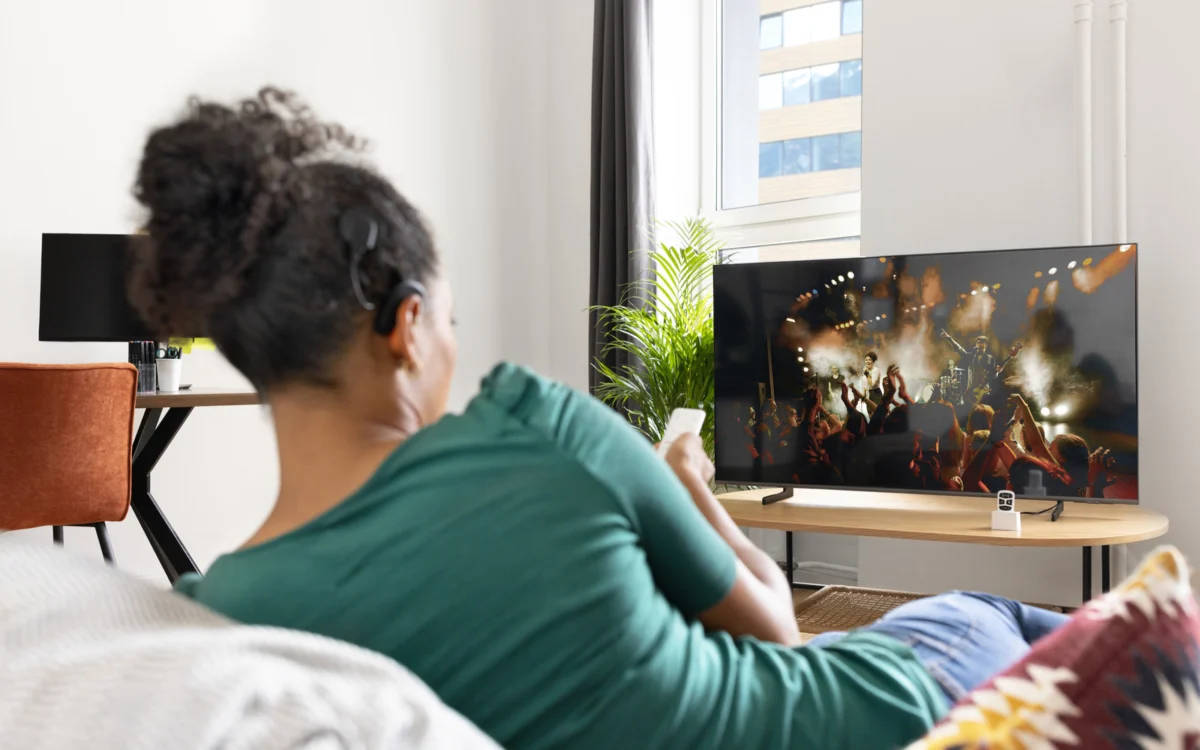
The transition from AudioLink to AudioLink XT is more than just a simple upgrade; it signifies a strategic enhancement of MED-EL’s accessory ecosystem, designed to integrate more deeply with its latest hearing rehabilitation technologies. While the original AudioLink served as a universal connectivity device, compatible with SONNET, SONNET 2, and RONDO 3, the AudioLink XT has been engineered with direct compatibility for the SONNET 3 at its core. This ensures an optimized and integrated experience for users of MED-EL’s most advanced cochlear implant system.
Expanding Connectivity Horizons: Key Innovations in AudioLink XT
The AudioLink XT introduces several novel features that significantly broaden its functionality and appeal. One of the most notable additions is the availability of an FM Adapter. This compact adapter, when plugged into the AudioLink XT, unlocks the capability to receive FM broadcasts directly. Previously, FM broadcast reception with the AudioLink required the use of a dedicated FM cover that attached to the audio processor itself. The integration of this functionality through the AudioLink XT, coupled with the small size of the adapter, offers a more discreet and lightweight solution. This is particularly beneficial for younger users, where minimizing weight and bulk on the ear is a critical consideration for comfort and wearability. The development of this adapter addresses a long-standing need for more integrated and less obtrusive FM solutions within the MED-EL product line.
Beyond FM connectivity, the AudioLink XT boasts an integrated telecoil. This feature is particularly valuable in large, reverberant environments such as lecture halls, theaters, or public transportation hubs. A telecoil allows the audio processor to connect directly to induction loops present in these venues, bypassing ambient noise and echoes to deliver a clearer, more direct audio signal. This enhancement is a significant advantage for users seeking to improve their listening experience in challenging acoustic settings, offering a more immersive and less fatiguing auditory experience. The inclusion of an integrated telecoil represents a move towards greater self-sufficiency and reduced reliance on external adapters for essential connectivity features.
Enduring Strengths: Tried and True Features Persist
While the AudioLink XT introduces exciting new capabilities, it retains the core functionalities that made the original AudioLink a trusted accessory for many users. Both devices are capable of acting as a remote microphone, allowing users to place the device closer to a sound source, such as a speaker in a classroom or during a conversation in a noisy environment, thereby improving speech clarity and comprehension. This feature is crucial for enhancing communication in situations where distance or background noise would otherwise be a significant barrier.
Furthermore, both AudioLink and AudioLink XT facilitate streaming from non-smart televisions. This allows users to enjoy television programs with improved audio quality, directly streamed to their hearing implants without the need for complex setups or intermediary devices. This feature underscores MED-EL’s commitment to enabling users to participate fully in everyday activities and enjoy entertainment with greater ease and clarity.
A Comparative Look: AudioLink vs. AudioLink XT
To fully appreciate the advancements, a direct comparison of key features highlights the evolution:
| Feature | AudioLink | AudioLink XT |
|---|---|---|
| FM Connection | No | Yes, with FM Adapter |
| Transmission Range | 3 meters | 10-15 meters |
| Bimodal Compatibility | No | Yes, with ASHA-compatible hearing aids |
| SONNET 3 Compatibility | No | Yes |
| Integrated Telecoil | No | Yes |
The expanded transmission range of the AudioLink XT, from 3 meters to an impressive 10-15 meters, is another significant upgrade. This increased range allows users greater freedom of movement while maintaining a stable and clear audio connection, whether using it as a remote microphone or for other streaming applications. This enhanced range can be particularly beneficial in larger rooms or outdoor settings, providing more flexibility and convenience.
Bridging the Bimodal Gap: Enhanced Connectivity for Dual Hearing Devices
A particularly impactful development with the AudioLink XT is its support for bimodal connectivity. This feature is specifically designed for users who have a cochlear implant in one ear and an ASHA (Audio Streaming for Hearing Aids)-compatible hearing aid in the other. The AudioLink XT enables direct streaming to both the cochlear implant and the compatible hearing aid simultaneously. This streamlined approach to bimodal streaming simplifies the user experience, eliminating the need for multiple devices or complex pairing processes. For individuals utilizing bimodal hearing, this integration promises a more cohesive and effective listening experience, allowing for better sound localization and improved speech understanding in various listening environments. The development of this feature reflects the growing trend and importance of bimodal hearing solutions in the field of auditory rehabilitation.
Empowering Users Through Education and Support
MED-EL recognizes that the adoption of new technology is often enhanced by readily available educational resources. To facilitate a smooth transition and maximize the benefits of AudioLink XT, the company has produced a series of hands-on video tutorials. These videos offer step-by-step guidance on utilizing the device’s various functions, including its operation as a remote microphone. This commitment to user education extends beyond introductory guides, with a comprehensive playlist of videos available to help users master all features of the AudioLink XT.
For those seeking a deeper understanding of the technological underpinnings of AudioLink XT, MED-EL offers further resources. An episode of the MED-EL podcast delves into the intricacies of direct audio streaming with SONNET 3 and AudioLink XT, featuring insights from MED-EL professionals, including a bilateral cochlear implant user. This provides a valuable perspective on the device’s practical applications and benefits.
Complementing these resources, MED-EL provides a dedicated support page for AudioLink XT, offering additional assistance and troubleshooting guidance. Furthermore, the AudioKey 3 app is presented as a complementary tool for cochlear implant users, working in conjunction with SONNET 3 and AudioLink XT to further optimize the hearing experience. Discovering the capabilities of this app, as highlighted in related MED-EL blog posts, empowers users to personalize their settings and gain greater control over their auditory environment.
Background and Context: The Evolution of Cochlear Implant Accessories
The development of accessories like AudioLink and AudioLink XT is a critical aspect of the broader cochlear implant ecosystem. As hearing loss technology advances, so too does the need for seamless integration with everyday digital life. The introduction of the original AudioLink marked a significant step in enabling cochlear implant users to connect wirelessly to various audio sources, moving beyond the limitations of older, tethered assistive listening devices. This evolution reflects a broader industry trend towards miniaturization, enhanced wireless connectivity, and user-centric design in assistive listening technologies.
The timeline of these advancements can be broadly understood as a progression from basic audio transmission to more sophisticated, multi-functional devices. The original AudioLink, released in tandem with earlier generations of MED-EL audio processors, focused on establishing reliable wireless streaming and remote microphone capabilities. The subsequent introduction of SONNET 3 and the development of AudioLink XT represent a leap forward, driven by advancements in Bluetooth technology, ASHA protocols, and the increasing demand for integrated solutions that cater to complex hearing needs, such as bimodal hearing.
Analysis of Implications: Enhanced Quality of Life and Independence
The introduction of AudioLink XT carries significant implications for the quality of life and independence of individuals with hearing loss. By offering enhanced connectivity, improved audio clarity in challenging environments, and streamlined bimodal capabilities, the device directly addresses common barriers to communication and social participation. The ability to stream audio directly from smartphones, televisions, and other devices, coupled with the remote microphone function, empowers users to engage more fully in conversations, enjoy entertainment, and participate in educational and professional settings.
The integrated telecoil, in particular, has the potential to unlock access to public spaces that were previously difficult to navigate auditorily. For younger users, the lighter and more integrated FM solution reduces the burden of assistive listening devices, promoting greater comfort and encouraging consistent use. The seamless bimodal connectivity further enhances the auditory experience for a growing segment of the cochlear implant user population, potentially leading to improved speech perception, sound localization, and overall auditory awareness.
MED-EL’s continued investment in accessories like AudioLink XT underscores a commitment to a holistic approach to hearing rehabilitation. These devices are not merely add-ons but integral components that enhance the performance of their audio processors and broaden the scope of potential auditory experiences for their users. The availability of comprehensive support materials, including video tutorials and podcasts, further reinforces this commitment by empowering users to fully leverage the capabilities of their technology, fostering greater confidence and independence in their daily lives. As technology continues to evolve, the trend towards increasingly integrated, intuitive, and powerful connectivity solutions for hearing implant users is set to continue, promising even greater advancements in the years to come.