Contextualizing the Leadership Search
The search for a new CEO began following a period of institutional reflection and structural assessment within the NAD. As the nation’s premier civil rights organization for deaf and hard-of-hearing individuals, the NAD requires a leader capable of balancing complex legislative advocacy with the internal management of a diverse, multi-state nonprofit infrastructure.
The search committee, composed of board members, community stakeholders, and human resources experts, initiated a comprehensive nationwide recruitment process in late 2025. The objective was to identify candidates who possess not only the necessary administrative acumen but also a profound connection to the values and history of the American deaf community. The transition follows years of growth for the NAD, during which the organization expanded its influence in federal policy, legal litigation, and educational reform.
The Finalist Selection Process
The announcement of Michelle Cline and Nicholas Kiego as the two finalists follows an exhaustive multi-stage vetting process. According to NAD internal guidelines, the selection committee utilized a rigorous rubric to evaluate applicants on key metrics, including:
- Strategic Vision: The ability to articulate a clear, actionable roadmap for the next decade of the organization’s growth.
- Advocacy Experience: A demonstrated history of success in navigating federal agencies, Congress, and legal frameworks impacting disability rights.
- Organizational Management: Proven capability in managing nonprofit finances, fundraising campaigns, and staff development.
- Community Engagement: Evidence of strong, collaborative relationships with diverse factions within the deaf and hard-of-hearing communities.
Both candidates were required to undergo extensive interviews and background screenings before being presented to the membership. The virtual town hall was designed as a mechanism for the community to assess the candidates’ communication styles, their ability to handle high-pressure inquiries, and their capacity to articulate the nuanced mission of the NAD.
Event Overview: The Virtual Town Hall
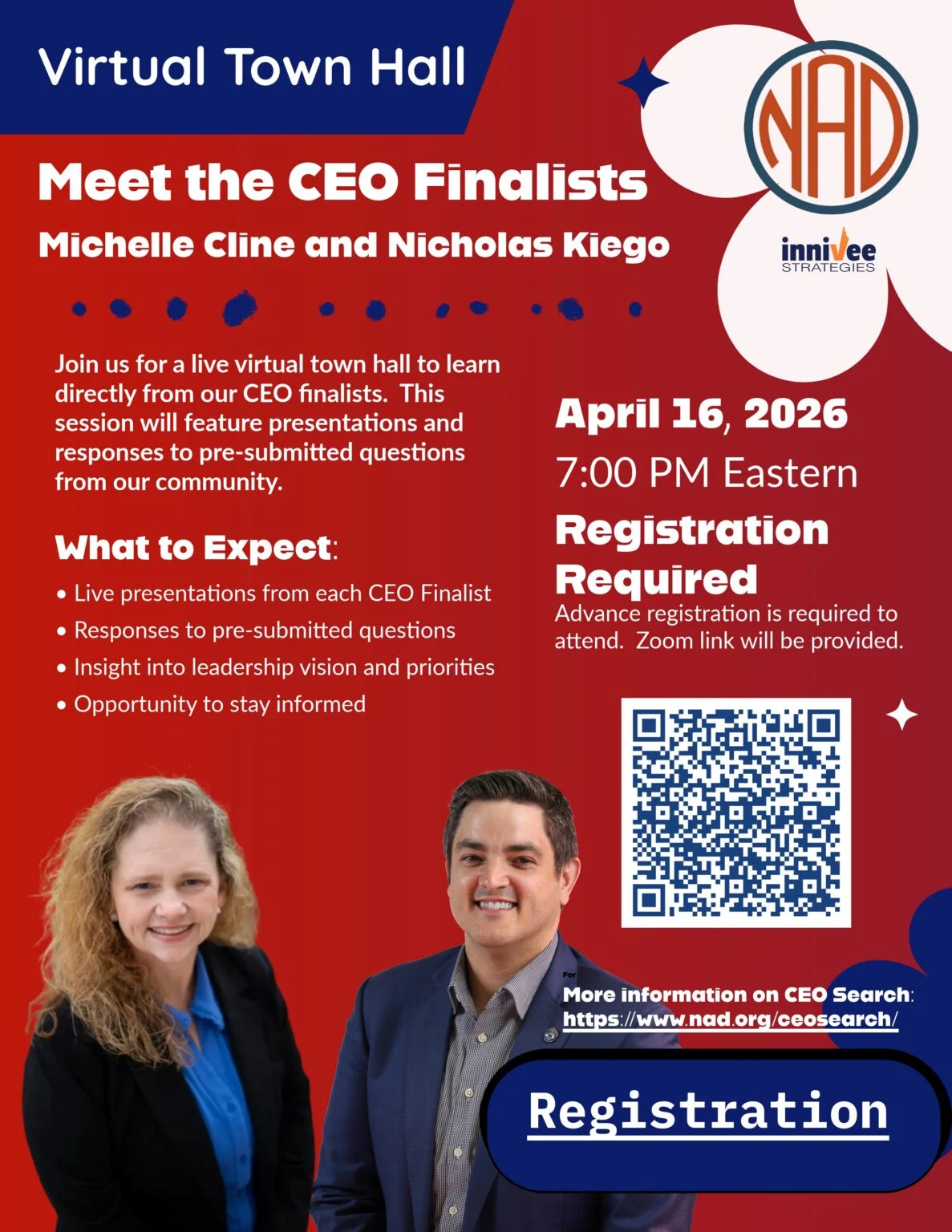
The virtual town hall, held on April 16, 2026, served as a digital bridge between the candidates and the organization’s constituents. The event was structured to provide equitable airtime to both Cline and Kiego, ensuring that the community could compare their platforms directly.
The session was divided into three primary segments:
- Opening Presentations: Each candidate provided an overview of their professional background and their specific "vision statements" for the NAD.
- Community Q&A: The candidates addressed a series of pre-submitted questions curated by the search committee. These questions covered topics ranging from the future of American Sign Language (ASL) in education to the challenges of digital accessibility in an era of rapid AI development.
- Prioritization Discussion: The candidates outlined how they would manage the organization’s limited resources to address the most pressing needs of the deaf community, such as employment parity and healthcare access.
Analysis of the Candidates’ Platforms
While both candidates share a common commitment to the foundational principles of the NAD, their individual backgrounds offer different potential trajectories for the organization.
Michelle Cline has built a reputation based on her extensive experience in policy analysis and systemic reform. Her platform focuses heavily on the institutionalization of civil rights protections, advocating for stronger federal oversight of accommodations and services. Her approach is often characterized as data-driven, prioritizing the legislative wins that provide legal standing for the community across the United States.
Nicholas Kiego, by contrast, brings a focus on grassroots mobilization and community-driven innovation. His background suggests a commitment to expanding the reach of the NAD into underserved and rural deaf populations. Kiego’s vision emphasizes the importance of community partnerships and the integration of emerging technologies to bridge communication gaps that remain prevalent in the modern workforce.
The Broader Impact on the Deaf Community
The appointment of a new CEO carries significant weight for the millions of deaf and hard-of-hearing Americans who rely on the NAD for representation. The organization currently faces several critical challenges that the incoming leader will be tasked with resolving:
- Technological Displacement: As artificial intelligence and automation change the nature of communication and labor, the NAD must ensure that these tools are developed with accessibility as a primary requirement rather than an afterthought.
- Educational Equity: Despite long-standing advocacy, disparities in deaf education continue to persist across various states. The next CEO will be expected to lobby for increased federal funding and better standardization of educational quality.
- Membership Growth: To maintain its relevance, the NAD must continue to appeal to younger generations of deaf professionals and activists who operate in a digital-first environment.
Chronology of the Search
The search for a successor has been a long-term project for the NAD board. The following timeline outlines the major milestones leading up to the final decision:
- October 2025: The NAD formalizes the search committee and publishes the executive job description.
- December 2025: The closing date for applications; the search committee begins the initial round of interviews.
- February 2026: Semi-finalists undergo psychological assessments and leadership scenario testing.
- March 2026: The NAD board of directors narrows the pool to the two final candidates, Cline and Kiego.
- April 10, 2026: Official announcement of the virtual town hall event to the public.
- April 16, 2026: The Virtual Town Hall is conducted, allowing for community input and candidate visibility.
Official Stance and Community Reception
The NAD has emphasized that the town hall was not intended to be a debate, but rather a collaborative exercise in democratic selection. Board members have stated that the community’s feedback from the town hall will be a vital component of their final deliberation. While the search committee holds the ultimate authority to appoint the CEO, the sentiment expressed by members through email, social media, and direct feedback during the event serves as a critical pulse-check for the board.
"The goal is to ensure that our next leader is not just qualified on paper, but truly resonates with the needs of the individuals we serve," a spokesperson for the NAD noted during the lead-up to the event. The organization has maintained a dedicated portal on its website to keep the public updated on the search, ensuring that no stakeholder feels sidelined during this transition.
Implications for the Future
The decision facing the board is emblematic of the broader shifts within the disability rights movement. The NAD is at a crossroads where the tradition of civil rights advocacy must merge with the agility required of a 21st-century digital organization. Whoever is selected will inherit an organization with significant cultural capital and the responsibility to represent a highly diverse constituency.
As the NAD moves toward the final appointment, the focus remains on ensuring a seamless transition of power. The organization has committed to providing a full orientation and onboarding period for the successful candidate, ensuring that they are prepared to hit the ground running upon their official commencement.
The conclusion of this CEO search will effectively close one chapter of the organization’s history and open another. For observers of the disability advocacy sector, the choice between Cline and Kiego will provide insight into whether the NAD intends to lean into a more traditional, legislative-heavy model of influence or a more aggressive, tech-forward, and community-centric strategy. As of April 2026, the final decision remains pending, with the community waiting to see who will step into the role to lead the NAD into its next era of impact.
For those who missed the live event, the NAD has provided documentation and summaries on their official search page, allowing all members to remain informed and engaged in the final steps of this historic selection process. The commitment to such a transparent process underscores the NAD’s enduring belief that its strength lies in the active participation and oversight of its members.