

The Evolution and Purpose of Hearing Implants
The development of hearing implants is a testament to decades of research and innovation in audiology and biomedical engineering. The primary goal has always been to address hearing loss that is too severe for traditional hearing aids to manage effectively. While hearing aids amplify sound waves that travel through the ear canal and are processed by the inner ear, hearing implants work on fundamentally different principles. They are not simply more powerful amplifiers; rather, they are designed to overcome specific anatomical or physiological barriers within the hearing pathway.
The need for such advanced solutions is substantial. According to the World Health Organization (WHO), over 430 million people worldwide have disabling hearing loss, and this number is projected to rise to over 630 million by 2050. Sensorineural hearing loss, which affects the inner ear or the auditory nerve, accounts for the majority of these cases. In these situations, the hair cells within the cochlea, responsible for converting sound vibrations into electrical signals, are damaged, making amplification by hearing aids ineffective. This is where hearing implants become a crucial intervention.

Hearing Implants vs. Hearing Aids: A Fundamental Distinction
Understanding the difference between hearing aids and hearing implants is paramount for anyone exploring hearing solutions.
Hearing Aids: These devices function by amplifying external sounds, which then travel through the ear canal to the cochlea. They are highly effective for individuals with mild to moderate hearing loss, where the auditory pathway remains sufficiently functional to process amplified sound. Hearing aids work by increasing the volume of sounds, making them audible to the wearer.
Hearing Implants: In contrast, hearing implants are designed to bypass damaged or non-functional parts of the auditory system. They involve a surgically implanted component and, in most cases, an external audio processor. The implanted part directly interfaces with the auditory nerve or brainstem, or stimulates the inner ear through alternative pathways. This direct stimulation bypasses the need for the outer and middle ear to function normally for sound transmission.
A table summarizing these differences highlights their distinct roles:

| Solution | How They Work | When They May Be Considered |
|---|---|---|
| Hearing Aids | Amplify sound, sent through the ear canal. | Mild to moderate hearing loss where amplified sound can still be processed effectively. |
| Hearing Implants | Bypass, stimulate, or directly activate hearing pathways. | When hearing aids do not provide adequate benefit, are unsuitable, or are not appropriate for the type of hearing loss. |
The Spectrum of Hearing Implant Technologies
The field of hearing implants encompasses several distinct types, each tailored to address specific types and severities of hearing loss. A thorough audiological evaluation is essential to determine which implant type, if any, is the most suitable.
Cochlear Implants (CIs)
Cochlear implants are the most widely recognized type of hearing implant. They are designed for individuals with severe to profound sensorineural hearing loss who experience limited benefit from conventional hearing aids.
- How they work: A cochlear implant system consists of an external audio processor and an internal implanted device. The external processor captures sound, converts it into digital signals, and transmits these signals wirelessly to the internal implant. The internal implant then converts these digital signals into electrical impulses, which are delivered directly to the cochlea via a surgically placed electrode array. These electrical impulses stimulate the auditory nerve, which then sends signals to the brain, where they are interpreted as sound.
- Who they help: Individuals with severe to profound sensorineural hearing loss who have not achieved sufficient benefit from powerful hearing aids.
- Key Considerations: Cochlear implantation requires surgery, followed by a period of healing, activation of the implant, regular fitting and programming sessions, and comprehensive auditory rehabilitation. Rehabilitation is crucial for individuals to learn to interpret the new auditory signals and maximize their understanding of speech. MED-EL, a leading manufacturer, emphasizes a "closest to natural hearing" philosophy, utilizing technologies like long electrode arrays and individualized fitting to support natural pitch representation and enhance sound quality.
Bone Conduction Implants
Bone conduction implants offer a different approach, leveraging the bone’s natural ability to conduct sound vibrations.
- How they work: Instead of relying on the outer or middle ear, these implants transmit sound through vibrations conducted via the skull bone directly to the inner ear (cochlea). This effectively bypasses any conductive or mixed hearing loss components related to the outer or middle ear.
- Who they help: They are particularly beneficial for individuals with conductive hearing loss (problems in the outer or middle ear), mixed hearing loss (a combination of conductive and sensorineural loss), or single-sided deafness (profound hearing loss in one ear).
- Key Considerations: While bone conduction hearing aids are non-surgical, bone conduction implants involve a surgically placed component for a more permanent and robust solution. This type of implant is distinct from cochlear implants and is not interchangeable, as it addresses different aspects of the auditory system.
Middle Ear Implants
Middle ear implants offer a solution for specific types of hearing loss by mechanically stimulating the structures of the middle ear.
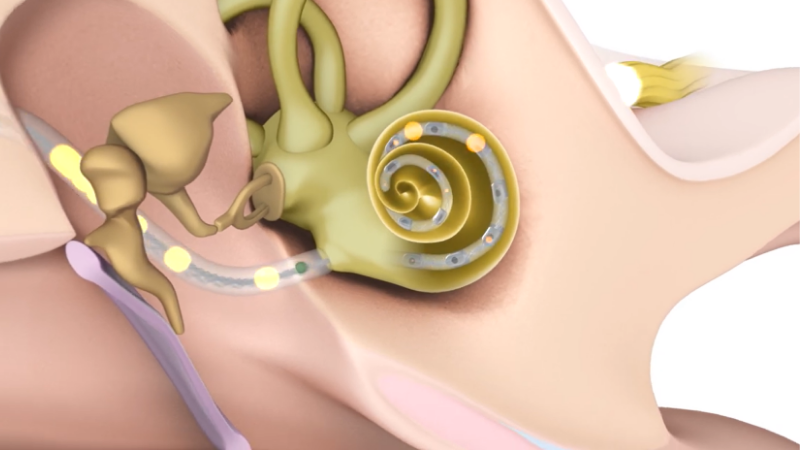
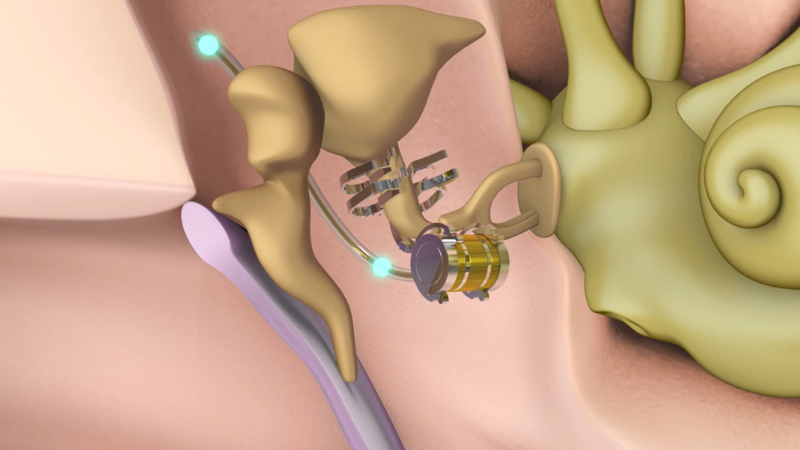
- How they work: These implants are designed to convert sound into mechanical vibrations that are then transmitted to the middle ear ossicles (malleus, incus, stapes) or the round window. This direct mechanical stimulation bypasses issues in the outer or middle ear.
- Who they help: They can be considered for individuals with conductive, mixed, or even certain types of mild-to-severe sensorineural hearing loss, especially when conventional hearing aids are not well-tolerated or do not provide adequate benefit.
- Key Considerations: There are both active and passive middle ear implant systems. The choice depends on the specific hearing needs and the surgeon’s recommendation. These implants are often chosen when hearing aids are not a viable option due to anatomical or physiological reasons.
Auditory Brainstem Implants (ABIs)
Auditory Brainstem Implants are the most specialized type of hearing implant, reserved for very specific and rare clinical scenarios.
- How they work: Unlike other implants that stimulate the cochlea, ABIs directly stimulate specific nuclei within the brainstem. This bypasses the auditory nerve entirely.
- Who they help: ABIs are typically used when the auditory nerve is absent, severely damaged, or non-functional, often as a result of tumors (like acoustic neuromas) or certain congenital conditions affecting the auditory nerve.
- Key Considerations: This is a highly complex surgical procedure and is only considered after extensive evaluation by a multidisciplinary team of specialists. It represents a last resort for individuals who cannot benefit from cochlear implantation.
Candidacy for Hearing Implants: A Personalized Assessment
Determining candidacy for a hearing implant is a rigorous and individualized process, undertaken by audiologists and otolaryngologists (ENT specialists). There isn’t a one-size-fits-all profile. Key factors influencing candidacy include:
- Type and Degree of Hearing Loss: The specific nature of the hearing impairment is paramount. For instance, cochlear implants are generally for severe to profound sensorineural hearing loss, while bone conduction implants address conductive or mixed loss.
- Benefit from Hearing Aids: For cochlear implants, candidates typically demonstrate limited benefit from even the most powerful hearing aids.
- Auditory Nerve Function: For cochlear implants, the auditory nerve must be present and functional to transmit signals to the brain.
- Anatomical Structures: The integrity of the cochlea and other auditory structures plays a role in determining implant suitability.
- Overall Health: General health and the absence of contraindications for surgery are important considerations.
- Communication Goals and Lifestyle: A candidate’s desire to improve communication, engage in social activities, and their overall lifestyle are discussed to ensure realistic expectations and commitment to the rehabilitation process.
- Commitment to Rehabilitation: Success with hearing implants, particularly cochlear implants, heavily relies on active participation in auditory training and rehabilitation programs.
The evaluation process typically involves:
- Comprehensive Audiological Testing: This includes pure-tone audiometry, speech audiometry, and specialized tests to assess the function of different parts of the hearing system.
- Medical Examination: An ENT specialist evaluates the ear’s physical condition and overall health.
- Imaging Studies: CT or MRI scans may be used to visualize the anatomy of the ear and assess the condition of the cochlea and auditory nerve.
- Counseling: Discussions with audiologists and surgeons to explain the procedure, potential outcomes, risks, and rehabilitation requirements.
The Surgical Journey and Beyond
The surgical procedure for hearing implant insertion varies depending on the type of implant. Generally, it involves:
- Pre-operative Evaluation: Thorough assessments and consultations.
- Anesthesia: The surgery is typically performed under general anesthesia.
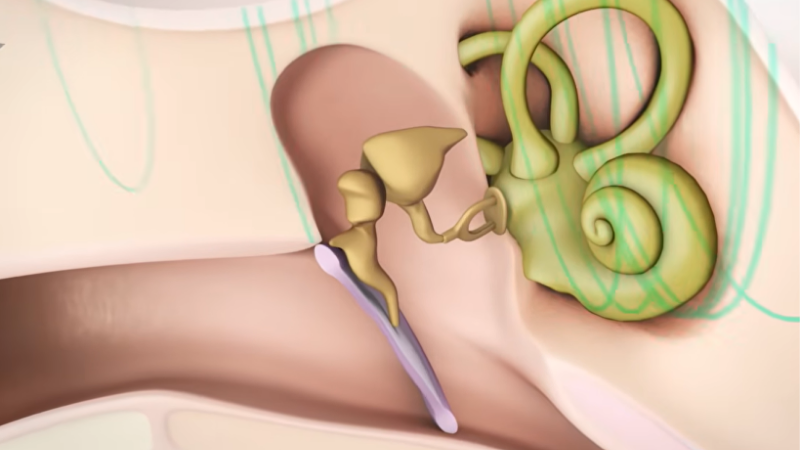
- Incision and Implantation: A small incision is made behind the ear. The internal component of the implant is then surgically placed beneath the skin and in the appropriate anatomical location (e.g., the cochlea for CIs, the bone for bone conduction implants).
- Placement of Electrodes/Components: For CIs, an electrode array is carefully inserted into the cochlea. For other implants, specific components are positioned to facilitate sound transmission.
- Closure: The incision is closed.
Post-Surgery and Activation: Following surgery, there is a recovery period, typically a few weeks, during which the surgical site heals. The external audio processor is usually not fitted or activated until the internal implant has fully healed. This activation is a crucial step, where the external processor is connected and the device is turned on for the first time.
Fitting and Rehabilitation: After activation, the external processor is programmed and adjusted by an audiologist to optimize sound quality and speech understanding. This process, known as fitting, is iterative and may involve several sessions. Crucially, auditory rehabilitation follows. This involves therapy and exercises designed to help the brain learn to interpret the new sound signals and improve communication abilities. Rehabilitation is an ongoing process that can last for months or even years, and its intensity often depends on the individual’s progress and goals.
Benefits and Potential Outcomes
The benefits derived from hearing implants can be transformative, significantly improving a person’s quality of life. These benefits may include:
- Improved Speech Understanding: Many recipients experience a marked improvement in their ability to understand spoken language, even in noisy environments.
- Enhanced Awareness of Sounds: A greater appreciation of everyday sounds, such as doorbells, telephones, and environmental cues, can increase safety and comfort.
- Better Communication: Facilitates more effective and enjoyable conversations with family, friends, and colleagues.
- Increased Social Engagement: The ability to participate more fully in social activities, leading to reduced feelings of isolation.
- Improved Quality of Life: Greater independence, confidence, and overall well-being.
- Potential for Language Development in Children: Early implantation in children with severe to profound hearing loss is crucial for optimal speech, language, and cognitive development.
It is important to note that hearing implants do not restore "normal" hearing. Instead, they provide access to sound and improve communication abilities. The degree of benefit varies among individuals, influenced by factors such as the duration and severity of hearing loss prior to implantation, the health of the auditory system, the specific implant technology used, the quality of rehabilitation, and the individual’s commitment to the process.
MED-EL’s commitment to natural sound quality is reflected in technologies designed to adapt to changing sound environments. Features like automatic sound management, advanced microphone directionality, and sophisticated noise reduction algorithms aim to enhance listening experiences across diverse situations, from quiet conversations to bustling public spaces.
Making an Informed Choice
Selecting the most appropriate hearing implant option requires a collaborative effort between the patient and their healthcare team. Key considerations for choosing the right implant include:
- Type and Degree of Hearing Loss: This is the primary determinant.
- Audiological Evaluation Results: Detailed test results guide the selection process.
- Anatomical Suitability: The physical structure of the ear and auditory pathways.
- Individual Communication Goals: What does the patient hope to achieve with the implant?
- Lifestyle and Activity Level: Does the chosen implant align with the patient’s daily life?
- Commitment to Rehabilitation: A willingness to engage in post-operative therapy.
Helpful questions to ask during consultations include:
- What are the specific risks and benefits of each implant option for my condition?
- What is the expected outcome in terms of speech understanding and sound quality?
- What does the rehabilitation process entail, and what is the expected duration?
- What are the long-term maintenance and potential future upgrade possibilities?
- What support services does the manufacturer and clinic offer?
Frequently Asked Questions About Hearing Implants
Are hearing implants permanent?
The internal component of a hearing implant is designed for long-term use, often lasting many years. The external sound processor is removable and can be upgraded as technology advances.

Can children receive hearing implants?
Yes, children with severe hearing loss are often excellent candidates for hearing implants. Early implantation can significantly support their development of speech, language, and communication skills. Eligibility is determined by a medical and audiological evaluation.
Do hearing implants restore normal hearing?
No, hearing implants do not restore natural hearing. They provide access to sound by stimulating the auditory system in ways that differ from natural hearing, significantly improving speech understanding and communication for many recipients. Individual results vary.
How long does hearing implant surgery take?
The surgery typically lasts between one and three hours, depending on the implant type and the complexity of the procedure. Patients often return home the same day or after a brief hospital stay.
Can you have an MRI with a hearing implant?
Many modern hearing implants are MRI compatible under specific conditions. It is crucial to inform healthcare providers and imaging teams about the presence of an implant before any MRI scan, as safety depends on the implant model and scanner strength.

Conclusion
Hearing implants represent a remarkable medical achievement, offering renewed access to the world of sound for individuals with significant hearing loss. The journey with a hearing implant is a comprehensive one, involving careful evaluation, surgical intervention, ongoing programming, and dedicated rehabilitation. By understanding the different types of implants, the candidacy criteria, and the benefits they offer, individuals can engage in informed discussions with their healthcare providers to determine the most suitable path toward improved hearing and a richer, more connected life. For those considering these advanced solutions, reaching out to specialists and manufacturers like MED-EL can provide invaluable guidance and support throughout the process.