The selection of these candidates arrives at a critical juncture for the organization. With evolving legislative landscapes regarding the Americans with Disabilities Act (ADA), advancements in assistive technology, and an increasing focus on inclusive education, the incoming CEO will be tasked with steering a complex mission that balances grassroots advocacy with high-level federal policy engagement.
Chronology of the Executive Search Process
The search for a new CEO began following the announcement of leadership transition plans, which initiated a multi-month period of vetting and evaluation. The Board of Directors established a search committee composed of diverse stakeholders, including board members, community leaders, and subject matter experts, to ensure that the selection process remained representative of the broad constituency the NAD serves.
Throughout late 2025 and the first quarter of 2026, the search committee conducted a rigorous review of applications, utilizing a series of preliminary interviews and competency-based assessments. This phase was designed to identify candidates who possess not only the administrative acumen required to manage a national non-profit but also a deep, lived understanding of the linguistic and cultural nuances of the American Deaf community.
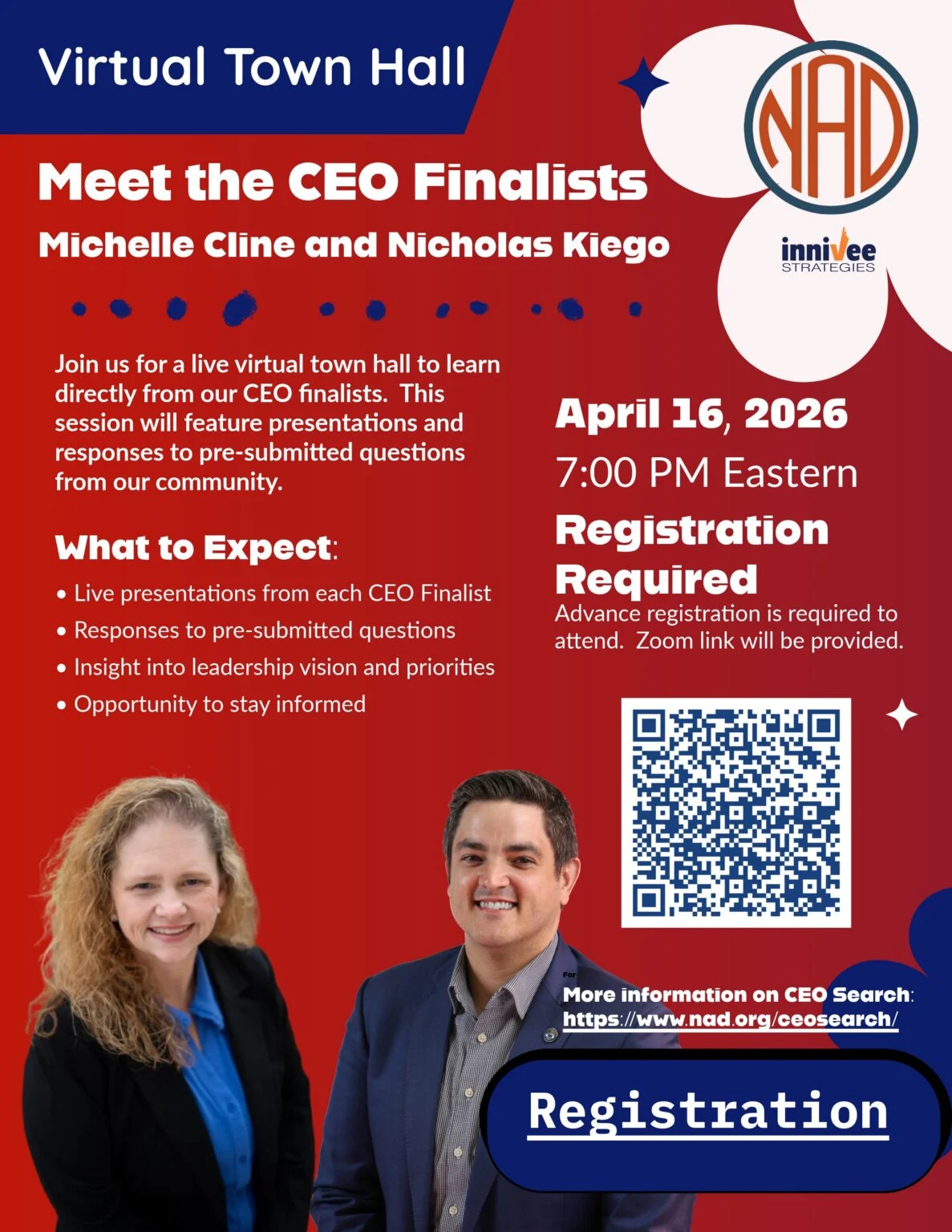
By April 2026, the field was narrowed to the two finalists: Michelle Cline and Nicholas Kegio. The announcement of these candidates was coupled with the scheduling of a virtual town hall event, held on April 16, 2026, to ensure that the membership base had an opportunity to engage with the candidates’ visions before the Board’s final vote. This transparency initiative was intended to mitigate the disconnect that often exists between organizational leadership and the community during executive transitions.
Professional Backgrounds and Candidate Profiles
The two finalists bring distinct professional histories to the selection process, each reflecting different aspects of the NAD’s multifaceted mission.
Michelle Cline has long been recognized for her extensive experience in non-profit management and advocacy. Her career has been marked by a focus on systemic change and institutional development. Observers of her work within the advocacy sector note her ability to navigate complex stakeholder landscapes and her consistent emphasis on long-term sustainability for community organizations. Her track record suggests a candidate who prioritizes organizational stability and the strengthening of existing frameworks to better serve the deaf community.
Nicholas Kegio enters the process with a background rooted in community engagement and strategic outreach. His professional trajectory has often intersected with the technological and educational sectors, emphasizing the need for accessible infrastructure and digital inclusion. Kegio’s supporters point to his forward-thinking approach to modernizing organizational outreach and his focus on leveraging technology to broaden the reach of advocacy initiatives. His candidacy is often viewed through the lens of innovation and the expansion of the NAD’s influence in the digital age.
Data and Context: The Role of the NAD CEO
The National Association of the Deaf operates as a federal non-profit organization with a significant footprint in Washington, D.C. As the primary advocate for the rights of 48 million deaf and hard-of-hearing Americans, the CEO role carries substantial weight. According to recent organizational reports, the NAD manages a diverse portfolio of programs, ranging from legal defense funds and youth leadership camps to policy analysis and national biennial conferences.
The incoming CEO will inherit an organization that has seen an increase in its federal lobbying activity, particularly regarding communication access and equitable healthcare access. Data from the 2025 annual organizational report indicates that the NAD has seen a 12% increase in legislative engagement compared to the previous five-year average. This surge in activity necessitates a leader capable of sustaining high-level relationships with government agencies, private sector partners, and diverse disability rights coalitions.
Furthermore, the organization must manage a complex funding structure, relying on a blend of individual donations, grants, and partnership agreements. Maintaining the financial health of the organization while ensuring that advocacy remains the primary objective is a central challenge for any incoming executive. The Board of Directors has emphasized that the selection process was weighted heavily toward candidates who could demonstrate a robust plan for donor stewardship and fiscal transparency.
Community Engagement and the Virtual Town Hall
The virtual town hall event held on April 16 served as a primary mechanism for democratic input. By allowing members to submit questions in advance, the Board of Directors aimed to address the most pressing concerns of the membership, including the future of American Sign Language (ASL) rights, the status of deaf education, and the organization’s stance on emerging biotechnology.
The format of the town hall—featuring live presentations from both Cline and Kegio—provided a platform for the candidates to articulate their priorities. The presentations centered on three main pillars: strategic growth, internal organizational culture, and external advocacy. For the community, the event provided the first direct opportunity to observe how each candidate addresses, in real-time, the diverse and sometimes competing interests of the deaf and hard-of-hearing population.
The use of a virtual format for the town hall is reflective of the organization’s commitment to accessibility. By providing high-quality captioning and ASL interpretation, the NAD ensured that the event was inclusive, mirroring the very principles that the organization fights to uphold in the broader society.
Implications for the Future of Advocacy
The selection of a new CEO is not merely an internal administrative matter; it is a signal of the organization’s strategic direction for the next several years. If the board selects a candidate with a primary focus on legal advocacy, the NAD may see an increase in litigation-based strategies to secure rights. Conversely, a candidate with a background in corporate or technological partnership might signal a pivot toward collaborative, industry-led accessibility initiatives.
Regardless of the final choice, the incoming leader faces a rapidly changing technological landscape. The integration of Artificial Intelligence (AI) in communication, the refinement of speech-to-text algorithms, and the ongoing debate surrounding cochlear implants and linguistic diversity represent issues that require sophisticated, nuanced leadership.
Furthermore, the NAD must maintain its position as the moral compass of the community. As the organization navigates a post-pandemic world, it is tasked with addressing the systemic inequalities that were exacerbated during the last five years, particularly in educational and medical settings. The CEO must be a figure who can command respect both on Capitol Hill and within the grassroots organizations that constitute the backbone of the NAD.
Conclusion and Next Steps
The NAD Board of Directors has set a high bar for the incoming executive. By inviting the community to participate in the vetting process, the organization has reinforced its commitment to a transparent governance model. As the Board moves toward a final decision, the collective focus remains on which candidate is best positioned to lead the NAD through a period of sustained advocacy, organizational growth, and community empowerment.
The outcome of this search will be documented in the coming weeks as the Board finalizes its deliberations. For the membership and the broader disability rights community, the transition represents a critical opportunity to reaffirm the mission of the NAD and to ensure that the organization remains a formidable force for equality in the United States. Following the conclusion of the formal search process, the Board of Directors is expected to release a comprehensive statement detailing the appointment and the roadmap for the transition period, ensuring that the legacy of the NAD continues to evolve in tandem with the needs of the community it serves.