The Origin and Philosophical Foundations of the Project
The inception of VOZ SOS CAAPAZ in October 2025 was not merely a logistical endeavor but a calculated response to a growing body of criticism regarding traditional speech therapy models. For decades, the standard approach to AAC intervention has been highly individualized, occurring primarily within sterile clinical settings. Ordóñez identified several critical shortcomings in this model, questioning whether it sufficiently serves the neurodivergent community.
Her inquiry was rooted in several key pedagogical and ethical challenges: Is traditional speech therapy, which often centers on oral production, inherently exclusionary to those for whom speech is not a primary modality? Furthermore, does a weekly one-hour session with a speaking communication partner provide enough authentic exposure to multimodal language systems? These questions led to a shift toward a "Relationship-Based Learning" model, which emphasizes horizontal interaction between users and partners, ensuring that communication is treated as a fundamental human right rather than a clinical milestone.
Timeline of Key Developments
The formation of the project was catalyzed by three distinct milestones that occurred between 2024 and 2025:
- Participation in the CAAmigos Angelman Initiative (2024): Collaborating with Claudia Marimón and the Fast Latam organization, Ordóñez gained insight into a neuro-affirmative framework that prioritizes "Comprehensive Literacy." This experience allowed her to move away from the traditional, ableist paradigms that often dominate speech pathology training.
- Engagement with ISAAC Research (2025): The publication of the article "Nothing About AAC Users Without AAC Users" in the ISAAC journal provided the intellectual framework for the project. By highlighting the necessity of involving non-speaking individuals in the development of their own technology and training, the article acted as a blueprint for the collaborative nature of the VOZ SOS CAAPAZ gatherings.
- Establishment of the Pilot Program (October 2025): The first official in-person gathering took place at the Parque Comfama in Rionegro, coinciding with AAC Awareness Month. This event marked the transition from theoretical research to community-based application.
Community Impact and Data Breakdown
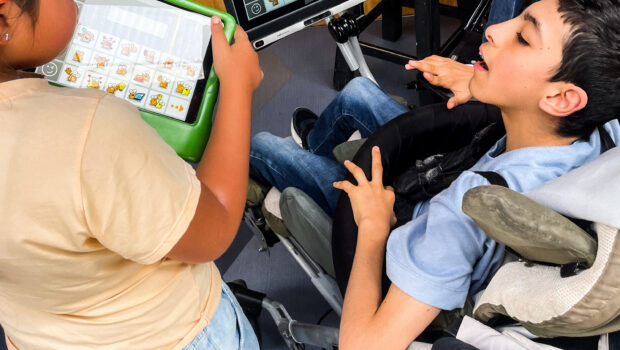
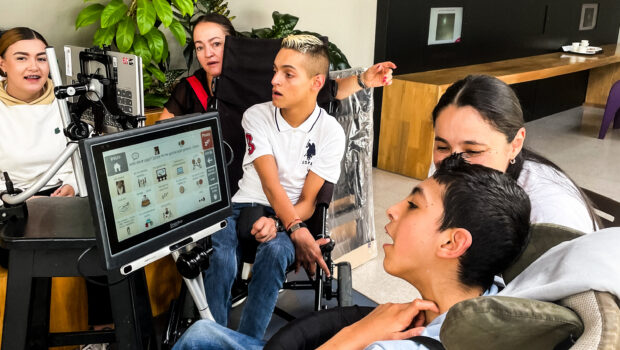
The efficacy of the VOZ SOS CAAPAZ model is evidenced by the diversity of its participants and the specific technologies utilized. During the October 2025 pilot, the group consisted of six primary AAC users, ten family members, and specialized clinical staff. The technological distribution highlighted the necessity of accessibility:
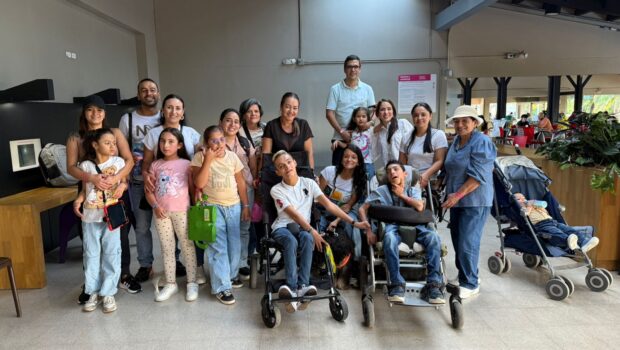
- Two participants utilized eye-tracking systems (Grid 3).
- Two participants utilized tablet-based applications (Proloquo2go).
- One participant utilized Td Snap.
- One participant utilized Grid for iPad.
This variety underscores the reality that AAC is not a "one-size-fits-all" solution. The presence of both eye-tracking and touch-interface systems demonstrates the project’s commitment to supporting individuals across different physical ability levels, ensuring that no user is excluded due to the nature of their access method.
The Role of Comprehensive Literacy
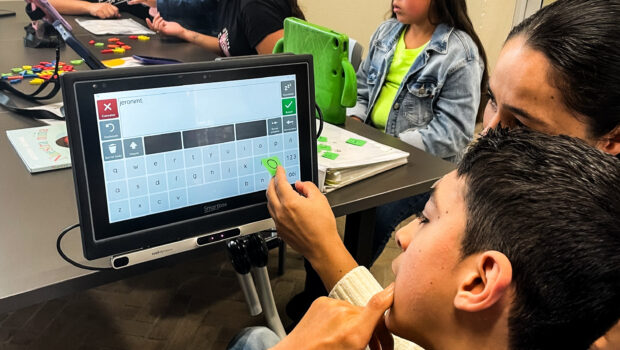
In February 2026, the project expanded its scope to include structured literacy sessions. Held in a public library in Rionegro, the initiative adopted the Comprehensive Literacy model as defined by expert Erin Sheldon. This model focuses on the development of print knowledge through meaningful, social interaction rather than repetitive rote learning.
For many participants, the library setting provided a necessary, normalized context for language development. Three AAC users, all categorized at an "emergent" level of literacy, participated alongside their families. By removing the clinical environment, the project forces a redesign of how these individuals interact with the world, shifting the focus from "fixing" a speech deficit to "empowering" a communication process.
Expert Analysis: Implications for Global AAC Standards
The implications of the VOZ SOS CAAPAZ model are substantial. By questioning the "ceiling" often placed on non-speaking individuals by traditional therapists, the project mirrors global trends in neuro-affirmative care. Experts in the field of disability rights have long argued that therapy-based models often perpetuate a hierarchy of communication, where oral speech is positioned as the gold standard.
The feedback from participants suggests a strong desire for systemic change. Pablo Andrés Calderón Gómez, an AAC user who participated in the pilot, noted the lack of opportunities for individuals with complex communication needs to engage with peers. His statement—"We need more people with this Right to Communication"—serves as a call to action for the broader medical community.
Furthermore, the project highlights the role of the communication partner. In this model, the partner is not an instructor, but a co-learner. This requires a significant shift in professional development for speech-language pathologists, who must learn to facilitate rather than direct, and to value the autonomy of the user over the clinical output.
Future Projections and Sustainability
As the project moves into the remainder of 2026, the goal is to standardize the monthly frequency of these meetings. The logistical challenges—finding inclusive public spaces, ensuring accessibility, and coordinating with families—remain the primary hurdles. However, the success of the first two gatherings provides a template for replication in other Colombian departments and potentially across Latin America.
The "VOZ SOS CAAPAZ" (Voice, You Are Capable) branding is intentional. It asserts that every individual possesses a voice and that the role of the specialist is to provide the tools for that voice to be heard. As the initiative grows, it faces the challenge of scalability. Can a localized, highly personal model be expanded without losing its core principles of horizontal connection?
The data collected thus far indicates that when AAC users are provided with a community of peers and a literacy-rich environment, their engagement levels significantly increase. This suggests that the future of AAC intervention may lie less in the clinic and more in the public square, the library, and the park.
Conclusion
The VOZ SOS CAAPAZ project represents a pivot in how society views and supports non-speaking individuals. By dismantling the "ableist" framework that has historically limited the potential of AAC users, Ángela Marcela Ordóñez and her team are establishing a new standard for inclusion. The project’s commitment to "presuming competence"—the idea that every person is capable of learning and communicating regardless of their physical or neurological status—is a radical departure from traditional methods that often underestimated the capacity of those who do not use speech.
For families, the message is clear: the current clinical limitations are not the ceiling for their loved ones. As the project continues to hold its monthly meetings in Rionegro, it serves as a beacon for what is possible when communication is viewed as a social, rather than a clinical, phenomenon. The long-term success of this initiative will likely depend on the continued integration of user-led research and the willingness of the professional community to "unlearn" the practices of the past in favor of a more inclusive, accessible, and human-centric future.