The findings were a central topic of discussion on the "This Week in Hearing" podcast, where host Shari Eberts, who lives with hearing loss, spoke with Dr. Patrick D’Haese, Corporate Director of Awareness and Public Affairs at MED-EL. Eberts articulated a long-held personal conviction that the challenges associated with hearing loss are often exacerbated by a general lack of societal comprehension regarding its impact on communication, relationships, and daily life. The survey results, she noted, provide compelling evidence that her experience is far from isolated, highlighting a widespread recognition among the general public that knowledge about hearing loss is insufficient.
The Invisible Epidemic: Understanding the Survey’s Genesis
MED-EL, primarily known for its advanced hearing implant technology, initiated this extensive survey with a clear objective: to gain a deeper understanding of how the general public, not just the hearing health community, perceives hearing, hearing loss, and contemporary hearing solutions. Dr. D’Haese emphasized that despite being one of the world’s most common health conditions, affecting hundreds of millions globally, hearing health often fails to command the same public attention and resources as other health topics. The World Health Organization (WHO) estimates that over 1.5 billion people worldwide experience some degree of hearing loss, with 430 million having disabling hearing loss. This staggering figure underscores the urgency of understanding public perceptions to drive more effective interventions.
The company’s mission extends beyond technological innovation; it aims to mitigate hearing loss as a barrier to communication and overall quality of life. To achieve this, a foundational understanding of public attitudes is essential. The survey was designed to uncover where awareness is robust, identify persistent knowledge gaps, and pinpoint factors that deter individuals from seeking timely help. Insights gleaned from such research are crucial for developing targeted awareness campaigns, educational programs, and advocacy efforts that resonate with the broader population. It helps to demystify the journey before an individual even considers entering a clinic, addressing the common delay—often 7 to 10 years—between the onset of hearing loss and seeking professional intervention.
Methodology and Scope: A Global Snapshot
To ensure impartiality and representativeness, MED-EL commissioned an external market research partner to conduct the survey. This approach ensured that respondents were not pre-selected based on existing hearing loss or a particular interest in hearing health, thereby capturing a genuine cross-section of public opinion. The survey engaged over 10,000 adults across ten diverse countries, with a significant sample of more than 1,000 respondents in the United States.
Participants were asked five key questions designed to gauge fundamental perceptions:
- How important is hearing in people’s lives?
- Would they consider a hearing device (e.g., hearing aid or implant) if needed?
- Does stigma around hearing devices still exist?
- Does society know enough about hearing loss?
- How familiar are people with cochlear implants?
The results painted a nuanced picture: while a strong appreciation for hearing and general openness to solutions were evident, a pervasive feeling that society’s understanding of hearing loss remains inadequate stood out prominently. This global consensus points to a widespread recognition of a collective knowledge deficit, suggesting that the problem transcends geographical and cultural boundaries.
The Core Contradiction: Valuing Hearing, Misunderstanding Loss
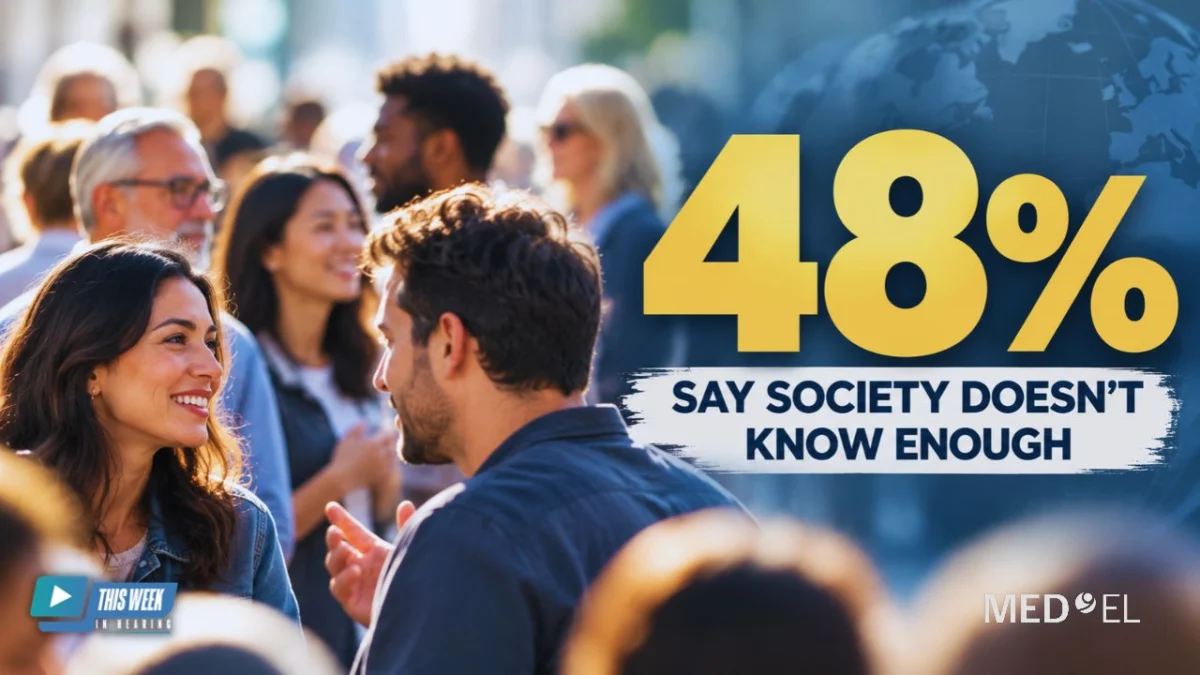
The most striking revelation from the survey, as highlighted by Dr. D’Haese, was the finding that 48% of U.S. adults believe society lacks sufficient knowledge about hearing loss, compared to only 29% who felt society was adequately informed. This is not a sentiment voiced by hearing health professionals or those directly affected, but by the general public, signaling a significant societal blind spot. The strength of this belief—nearly one in two Americans—underscores a profound challenge in public awareness.
This finding exists in stark contrast to another key result: people overwhelmingly recognize the importance of hearing. This disconnect is critical. It suggests that the issue is not a devaluation of hearing itself, but rather a fundamental misunderstanding of what hearing loss entails, its implications, and the available solutions. The public is aware of hearing’s value for human experience, yet struggles to grasp the complexities and realities of its impairment. This gap creates fertile ground for misconceptions, delays in diagnosis, and reluctance to embrace interventions.
Unpacking the Misconception: Impact, Invisibility, and Solutions
When respondents indicated that society doesn’t know enough, their concerns likely encompass several critical aspects:
-
Underestimated Impact: Many people tend to reduce hearing loss to a simple difficulty in perceiving sounds. However, as both Eberts and D’Haese emphasized, its effects are far more extensive. Unaddressed hearing loss can profoundly impact communication effectiveness, strain personal relationships, diminish self-confidence, reduce participation in educational and professional settings, limit social engagement, and significantly compromise emotional well-being and overall quality of life. Studies have linked untreated hearing loss to higher rates of depression, anxiety, and even cognitive decline. The subtle, gradual onset of hearing loss often means individuals and their families adapt over time, masking the true extent of its progression until the challenges become overwhelming.
-
The Invisible Effort: Perhaps one of the most overlooked aspects of hearing loss is the immense "listening effort" it demands. Unlike visible disabilities, hearing loss is largely invisible. Individuals with hearing impairment often expend extraordinary mental energy and concentration to follow conversations, especially in noisy environments. This constant cognitive load can lead to profound fatigue, stress, and even withdrawal from social situations. Others may misinterpret this effort as disengagement, distraction, or lack of interest, further isolating the individual. The survey implicitly highlights this unseen burden, suggesting that greater public understanding of this invisible effort could foster more empathy and support.
-
Awareness Gaps in Solutions: The survey also revealed significant gaps in knowledge regarding available hearing solutions, particularly advanced technologies like cochlear implants. Only one in four U.S. respondents reported knowing exactly how a cochlear implant works. This lack of familiarity is critical, as it means many individuals who could benefit from such devices may not even be aware of their existence or efficacy. Cochlear implants are sophisticated electronic devices that can provide a sense of sound to people with severe to profound hearing loss, fundamentally transforming their ability to communicate. The limited public awareness about these and other hearing technologies contributes directly to the delay in seeking help, as people may not realize the range of effective interventions available beyond traditional hearing aids.
Regional and Global Consistency: A Universal Challenge
A particularly insightful aspect of the survey was the remarkable consistency of the findings across different regions within the U.S. and globally. While minor regional variations were noted, the overarching themes remained constant. The central idea that hearing enables communication and connection, coupled with a general openness to hearing solutions, resonated across all 10 countries surveyed. Critically, the sentiment that society doesn’t know enough about hearing loss, and the limited awareness of cochlear implants, were consistent global trends.
This uniformity suggests that the awareness deficit surrounding hearing loss is not a localized or culturally specific issue, but rather a global public health challenge. This broad commonality presents both a challenge and an opportunity. It implies that solutions and awareness campaigns developed in one region might be adaptable and effective elsewhere, fostering a global collaborative approach to improving hearing health literacy. It moves the discussion from isolated national or regional issues to a unified global imperative.
Age and Stigma: Challenging Preconceptions
The survey yielded some surprising age-related findings, particularly concerning stigma. Counterintuitively, younger adults were more likely than their older counterparts to report that stigma around hearing devices remains strong. This challenges common assumptions that younger generations, often perceived as more open to diversity and accustomed to wearable technology, would be less concerned with social perceptions. Dr. D’Haese suggested that younger adults might simply be more sensitive to social judgment, perhaps influenced by peer dynamics or the curated self-image prevalent in the digital age.
Despite this difference in perceived stigma, there was considerable agreement across all age groups on the importance of hearing and the ongoing need for greater awareness. This finding is crucial because it disrupts the pervasive misconception that hearing loss is exclusively an issue affecting older adults. While prevalence increases with age, hearing loss can affect individuals of all ages, including children and young adults. Framing hearing health solely as an elderly concern overlooks a significant portion of the affected population and perpetuates delayed diagnosis and intervention. The data underscores the necessity of awareness and education campaigns that are relevant and accessible to diverse age demographics, emphasizing that hearing health is a lifelong concern.
The Human Element: Hearing for Connection
When asked why good hearing matters, approximately four in ten U.S. respondents identified communication and staying connected with others as the most important reasons. This response significantly outranked other factors like entertainment or safety. Dr. D’Haese noted the profound implication of this finding: people do not primarily think of hearing in medical, technological, or even purely health terms. Instead, they frame it in deeply human terms—as the fundamental enabler of interaction, shared experiences, relationship building, and a sense of belonging.
This insight offers a powerful directive for future advocacy. Rather than focusing solely on the mechanics of hearing or the technology of devices, public health messages should emphasize the core human need for connection that good hearing facilitates. This approach resonates with people’s intrinsic values and can make the importance of hearing health more relatable and compelling. The finding that communication ranked above entertainment, which might have been expected to be higher in a technology-driven world, reinforces that the emotional and social aspects of hearing are paramount to the general public.
Bridging the Gap: The Call for Routine Hearing Checks
Perhaps the most significant implication and call to action emerging from the survey is the urgent need to integrate hearing health into routine healthcare conversations. Dr. D’Haese passionately advocated for hearing checks to become as commonplace and routine as eye exams, blood pressure checks, cholesterol screenings, and annual dental visits. These preventive health measures are widely accepted as normal components of general health maintenance, yet adult hearing screening remains largely absent from established healthcare protocols in nearly every country globally.
Current statistics reveal a stark disparity: only about one in four people reported getting their hearing tested regularly, a figure dramatically lower than the compliance rates for other routine health screenings. This neglect is especially concerning given the profound and wide-ranging consequences of untreated hearing loss, which extend from social isolation and communication difficulties to increased risks of cognitive decline and falls.
The survey’s encouraging finding that people already understand the inherent value of hearing, particularly its role in communication, relationships, and quality of life, provides a strong foundation for future action. The challenge now lies in translating this latent appreciation into proactive engagement. This involves a multi-faceted approach:
- Promoting Regular Hearing Checks: Advocacy for policy changes to establish universal adult hearing screening programs.
- Encouraging Open Conversations: Fostering environments where discussing hearing difficulties is destigmatized and normalized.
- Educating on Solutions: Increasing public knowledge about the full spectrum of available hearing technologies and interventions.
Toward a Future of Integrated Hearing Health
The MED-EL survey provides invaluable data that can guide a global movement towards better hearing health. Its findings reinforce what many in the hearing health community have long understood: awareness is the first step toward action. By highlighting the societal deficit in understanding, the survey empowers healthcare providers, policymakers, and advocacy groups to craft more effective strategies.
The long-term vision is a society where hearing health is not an afterthought but an integral component of overall well-being. This requires sustained public health campaigns that leverage the human-centric value of hearing—its role in connection and communication—to motivate individuals to seek early intervention. It also necessitates a collaborative effort among governments, healthcare systems, and technology providers to ensure that hearing checks are accessible and that effective solutions are known and available to all who need them. Ultimately, by elevating hearing health to its rightful place alongside other vital health concerns, society can help ensure that every individual has the opportunity to stay connected with their loved ones and participate fully in the world around them.