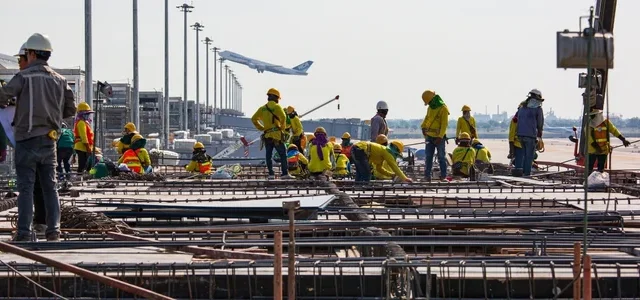

The survey, conducted by Censuswide between August 19 and August 25, 2026, highlights a systemic vulnerability in how knowledge is transferred from veteran tradespeople to the next generation. As the industry faces an aging workforce and the retirement of "baby boomer" specialists, the failure to formalize onboarding processes has transitioned from a localized frustration into a macro-economic challenge that affects project timelines and profit margins across the United States.
The Chronology of a Skills Crisis
The construction industry has historically relied on apprenticeship programs and informal, on-the-job training. However, the period between 2020 and 2026 saw a dramatic shift in both job site complexity and labor demographics. Following the global supply chain disruptions and the rapid acceleration of digital tools—such as Building Information Modeling (BIM), automated machinery, and AI-driven project management software—the gap between what a new recruit needs to know and what they are actually taught has widened.

During the third quarter of 2026, industry analysts began flagging an uptick in project delays and re-work costs. The STACK report serves as a formal quantification of these anecdotal reports. By surveying a cohort of workers in the early stages of their careers, the report isolates a specific point of failure: the transition from classroom or vocational training into the reality of high-pressure job sites. The absence of structured onboarding not only leaves these workers vulnerable to safety hazards but also creates a psychological disconnect, as young professionals enter the field expecting a digital-forward environment only to be met with analog processes and ad-hoc instruction.
Quantifying the Impact on Productivity
The repercussions of this training deficit are not merely theoretical; they are measurable in both time and capital. The survey indicates that 34% of respondents have experienced direct project delays as a result of missing expertise. Perhaps more concerning for project managers and stakeholders is that 26% of these workers identified these delays as the primary contributor to costly mistakes—errors that could have been avoided with proper, standardized guidance.

In an industry where margins are notoriously thin, a 26% error rate directly linked to knowledge transfer represents a significant financial liability. When expertise is siloed in the minds of a few senior foremen or project managers, and not captured in a retrievable, digital format, the entire enterprise becomes fragile. If a senior employee leaves the company, that knowledge often leaves with them, creating a "brain drain" that companies are currently ill-equipped to replace.
The Technology Divide and AI Integration
One of the most compelling insights from the report is the disconnect regarding artificial intelligence and modern technology. While there is a common perception that the construction industry is resistant to innovation, the survey paints a different picture of the younger workforce. A significant 82% of respondents stated they would be more likely to remain with an employer long-term if that company invested in technology for capturing and sharing knowledge. This sentiment is particularly strong among the youngest segment of the workforce, with 90% of those aged 18 to 25 favoring such investments.

However, a cultural friction persists. The survey found that 51% of entry-level workers believe their leadership views AI negatively or fails to prioritize its implementation. Furthermore, 25% reported that when they attempt to introduce or advocate for new, more efficient digital tools, they encounter resistance from more experienced decision-makers. This creates a dual-threat environment: the company loses out on potential efficiency gains from AI, and it simultaneously alienates the very talent pool it needs to retain in a competitive labor market.
Implications for Industry Leadership
The data suggests that the "Great Crew Change" is not just about replacing retiring bodies with younger ones; it is about bridging a cultural and technological chasm. For leadership, the findings indicate that retention strategies must pivot. Competitive wages are no longer sufficient to secure long-term loyalty; instead, workers are demanding a "technological roadmap" that includes formal training and the integration of modern tools.

Industry experts analyzing these results suggest that companies that fail to adopt centralized knowledge-sharing platforms—such as digital repositories for site logs, automated safety training modules, or AI-assisted technical documentation—will likely see higher turnover rates. When a worker feels that their professional development is stunted by the lack of formal systems, their commitment to the employer wanes. By formalizing training, companies can mitigate the risk of project delays and cultivate a workforce that is technically proficient and aligned with the company’s long-term digital strategy.
Addressing the Knowledge Gap: A Way Forward
The path forward, as indicated by the report, involves a shift toward institutionalizing knowledge. This includes moving away from informal mentorship as the sole source of education and toward a hybrid model. This model would blend traditional hands-on field experience with digital platforms that allow workers to access standard operating procedures (SOPs) and safety protocols on-demand via mobile devices or tablets.

Furthermore, the data suggests that experienced decision-makers must become more receptive to the input of their younger counterparts. By creating cross-generational committees or "reverse mentoring" programs, firms can leverage the digital literacy of their new hires to implement AI and project management software while ensuring the core principles of safety and structural integrity remain firmly in the hands of seasoned veterans.
Broader Socio-Economic Context
The construction sector is a pillar of the American economy, directly influencing housing costs, public infrastructure development, and industrial expansion. A 75% deficit in formal training for the entry-level workforce implies a systemic risk to the quality and speed of this vital sector. As the demand for sustainable building practices and smart cities grows, the need for a workforce that is not only skilled in traditional manual labor but also adept at managing high-tech machinery and integrated digital ecosystems becomes paramount.

If the industry continues to operate under the assumption that informal training is sufficient, it risks a decline in quality control and an escalation in project costs that could eventually be passed down to consumers and taxpayers. Conversely, by addressing the findings of the STACK report, construction firms have the opportunity to transform their onboarding processes into a competitive advantage. Companies that prioritize formal training and technology adoption will likely emerge as the preferred employers for the next generation, ultimately positioning themselves to outperform competitors in an increasingly complex and technical market.
In conclusion, the Construction Knowledge Gap Report serves as both a warning and a blueprint. The industry is currently operating with a significant deficit in human capital development, but the solution—a commitment to formal training and technological investment—is clear. For the 500 professionals surveyed, and for the thousands of others entering the field, the future of their careers and the health of the industry depend on whether leadership is willing to listen to the needs of the next generation of builders. The technology exists to capture and transfer expertise; the challenge now lies in the cultural and operational willingness to implement it.