

The Scientific Shift: From Symptom Management to Biological Understanding
The 2nd International Conference on Pharmacology and Gene Therapy for Tinnitus served as a critical platform for neuroscientists, pharmacologists, and clinicians to confront the inherent complexity of tinnitus. Historically, the medical model relegated tinnitus to a peripheral auditory issue—a localized dysfunction of the ear. However, contemporary research presented at the conference suggests that this perspective is incomplete.
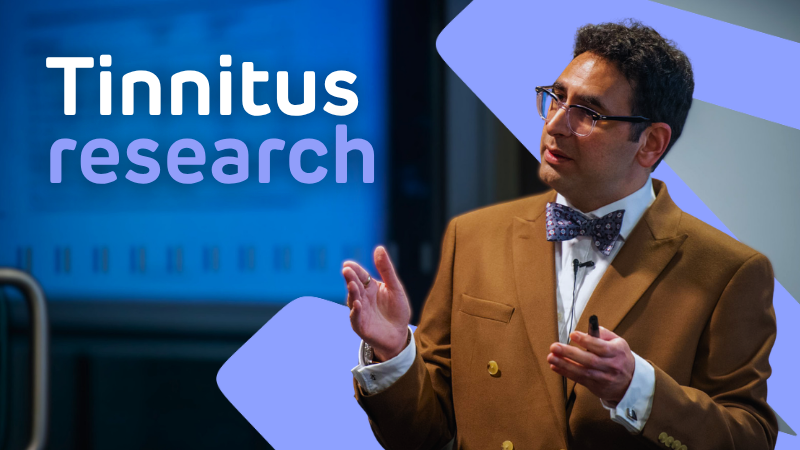
The emerging consensus among experts is that tinnitus represents a systemic neural phenomenon. It is now widely understood to involve a complex interplay between the auditory cortex and non-auditory brain networks, including those responsible for emotional regulation, cognitive attention, and memory. Dr. Hashir Aazh, the conference president and Director of the Hashir International Institute, framed this development as a move toward a more sophisticated understanding of human flourishing. By maintaining the Aristotelian distinction between addressing immediate suffering and seeking long-term physiological solutions, the medical community is acknowledging that while CBT and sound therapy are essential today, they do not resolve the underlying neural architecture of the condition.
The Mechanics of Phantom Perception: Why Tinnitus Persists
A central theme of the conference was the "gain-control" hypothesis. Researchers presented evidence suggesting that tinnitus is a manifestation of the brain’s compensatory response to sensory deprivation. When the auditory system experiences damage—whether through noise-induced trauma, age-related hearing loss, or chemical ototoxicity—the brain’s neural circuits attempt to "turn up the volume" to compensate for the lost input. This process, known as maladaptive plasticity, often leads to hyperactivity in the auditory pathways.
In a healthy system, the brain effectively filters out background noise and regulates the balance between excitatory and inhibitory signals. However, participants at the conference explored how this regulatory mechanism fails in tinnitus patients. The resulting imbalance leads to persistent internal neural activity that the brain interprets as sound. By identifying the specific neurotransmitters and signaling pathways responsible for this hyperexcitability, researchers are beginning to map the potential targets for future pharmaceutical intervention.
Decoding the Heterogeneity of Tinnitus
One of the most significant takeaways from the conference was the acknowledgment that tinnitus is not a monolithic condition. Clinical data presented during the sessions highlighted the extreme heterogeneity of patient profiles. Two individuals may present with identical complaints of persistent ringing, yet their underlying etiologies may be radically different. For some, the condition is primarily driven by peripheral hearing loss; for others, it is inextricably linked to autonomic stress responses, anxiety, or hyperacusis.
This realization has profound implications for clinical research. It explains why large-scale pharmaceutical trials have historically yielded mixed results. A drug that targets a specific potassium channel, for instance, may prove highly effective for a subset of patients with a specific genetic or environmental trigger, while failing to produce any effect in others. The shift toward "stratified medicine"—the categorization of patients into distinct biological subgroups—is now considered the most viable path toward developing effective, personalized treatments.
The Challenge of Objective Measurement
Despite significant advancements in mapping the neural correlates of tinnitus, the lack of an objective diagnostic tool remains the primary hurdle for drug development. Unlike hypertension, which can be measured with a sphygmomanometer, or hearing loss, which is quantified via audiometry, tinnitus remains a subjective experience.
Pharmacological research is currently hindered by the reliance on patient-reported outcome measures (PROMs). While these tools are essential for clinical management, they introduce a degree of variability that makes it difficult to standardize drug efficacy in a laboratory setting. During the conference, experts discussed the potential for future diagnostic breakthroughs, such as functional MRI (fMRI) signatures or electroencephalography (EEG) patterns that could serve as "biomarkers" for tinnitus. Establishing these objective metrics is seen as a mandatory prerequisite for regulatory approval of any new drug or gene therapy.
A Multimodal Future: Integrating Psychology and Pharmacology
The conference also sought to dismantle the perceived dichotomy between behavioral and pharmacological treatments. There is a growing consensus that these modalities are not mutually exclusive but rather complementary. Cognitive Behavioral Therapy (CBT) and associated counseling techniques are highly effective at modifying the patient’s cognitive and emotional reaction to the sound, which in turn can reduce the distress associated with the condition.
Simultaneously, pharmacological research aims to address the source of the neural signal itself. The integration of these two approaches—using pharmacology to quiet the neural hyperactivity while using behavioral therapy to manage the cognitive impact—is emerging as the gold standard for future clinical care models. This holistic approach ensures that patient quality of life is protected even as the search for a permanent "silencing" of the phantom sound continues.
Looking Toward 2027: The Global Collaborative Effort
The momentum generated by the 2nd International Conference on Pharmacology and Gene Therapy for Tinnitus is set to continue at the 4th World Tinnitus Congress and 15th International Tinnitus Seminar, scheduled to take place in London in 2027. This upcoming event represents a monumental collaborative effort between a wide array of global institutions, including the British Academy of Audiology, the American Auditory Society, and the International Society of Audiology, among many others.
This congress will serve as a global clearinghouse for the latest advancements in the field, drawing together a diverse coalition of ENT specialists, hearing scientists, patient advocates, and regulatory bodies. The participation of organizations such as the RNID and the Misophonia Research Fund highlights the importance of incorporating the patient perspective into the research pipeline, ensuring that scientific inquiry remains focused on the real-world needs of those living with the condition.
Analysis: The Path Forward
The path to a definitive cure for tinnitus is long and complex, but the recent conference signals a maturing of the field. By moving away from the search for a "magic bullet" and embracing the complexity of the brain’s auditory system, researchers are laying a more sustainable foundation for medical breakthroughs.
The implications for the next decade are clear:
- Personalization: Future treatments will likely require a screening process that identifies the specific biological drivers of an individual’s tinnitus before prescribing a targeted intervention.
- Technological Integration: Advances in AI and neuroimaging are expected to provide the objective biomarkers necessary to validate new pharmaceutical candidates.
- Collaboration: The international nature of the 2027 congress indicates that the scientific community recognizes the need for standardized global protocols to accelerate drug discovery.
As the scientific community continues to refine its understanding of the neurobiological underpinnings of tinnitus, the focus remains on the synthesis of patient care and cutting-edge science. While the "silencing" of tinnitus is the ultimate objective, the ongoing refinement of therapeutic models offers tangible hope for millions of people. The dedication shown by the international research coalition suggests that, while the challenge is immense, the collective commitment to solving the mystery of phantom sound is stronger than ever. The 2027 London seminar will undoubtedly be a defining moment in this ongoing scientific odyssey, bridging the gap between theoretical research and clinical reality.