The Evolution of Epson’s Robotics Strategy
Epson’s history in the robotics sector is rooted in the high-speed assembly and manufacturing of watch components, where precision and repeatability are paramount. Over the decades, the company established itself as a dominant force in SCARA (Selective Compliance Assembly Robot Arm) technology. However, the manufacturing sector has seen a rapid pivot toward “Industry 4.0” and “Industry 5.0,” the latter of which emphasizes the synergy between human intuition and machine endurance.
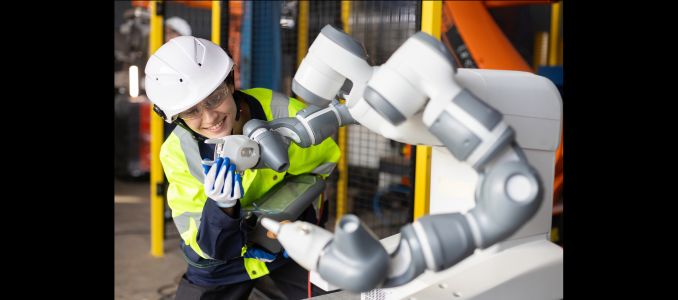
For years, Epson’s product portfolio was defined by robots that required physical safeguards—cages, light curtains, and pressure mats—to protect personnel from high-velocity movements. The AX6 marks a pivot point in this timeline. By incorporating sensitive force sensors and responsive control software, the AX6 is designed to detect physical contact and halt operations, effectively lowering the barrier to entry for facilities looking to integrate robotics without the footprint of traditional safety fencing.

Technical Specifications and Design Architecture
The AX6 is built upon a lightweight, carbon-fiber structure, a material choice that enhances its mobility and reduces the inertial forces involved during operation. This structural integrity is paired with an IP54 rating, ensuring the unit is resistant to dust and water splashes, a common requirement in diverse industrial settings.
Beyond its durability, the robot is certified for ISO Class 5 cleanroom environments. This is a critical feature for sectors such as semiconductor manufacturing, pharmaceutical packaging, and medical device assembly, where airborne particulate control is non-negotiable. The ability to deploy a collaborative robot in a cleanroom environment allows companies to automate repetitive, contamination-sensitive tasks that were previously restricted to manual labor due to the difficulty of integrating bulky robotic safety hardware into sterile zones.

In terms of power and connectivity, the AX6 provides versatile deployment options. It supports a wide range of input voltages, spanning from 100 to 240 volts AC, and is also compatible with 48 volts DC, allowing it to be integrated into mobile platforms or battery-operated transport systems. The unit also features an array of customizable control buttons and status indicators, facilitating seamless integration with existing end-of-arm tools, such as advanced vacuum grippers, force-torque sensors, and precision dispensers.
Programming and User Accessibility
A primary barrier to cobot adoption has historically been the high skill requirement for programming complex robotic paths. Epson has addressed this through a dual-layered software approach. For users with limited coding experience, the system offers a no-code interface, enabling operators to teach the robot positions manually by guiding the robotic arm through a series of waypoints. This “hand-guiding” functionality is a hallmark of collaborative robotics, allowing workers on the shop floor to quickly repurpose the robot for new tasks without needing to consult a specialized robotics engineer.

For more sophisticated applications, the system includes a robust Python development environment. This allows technical teams to script complex logic, integrate machine vision, and interface with factory-wide Industrial Internet of Things (IIoT) platforms. Furthermore, the inclusion of a three-dimensional simulation tool allows engineers to build digital twins of their work cells. By testing collision detection, cycle times, and reach envelopes in a virtual environment before deploying the physical asset, companies can significantly reduce downtime and mitigate the risk of human error.
The Critical Role of Risk Assessment
While the AX6 is designed for safety, the industry remains steadfast in its emphasis on risk assessment. The transition from industrial to collaborative robotics does not remove the employer’s obligation to maintain a safe working environment. Collaborative robots operate under the guidelines established by international standards such as ISO 10218-1/2 and ISO/TS 15066.

Industry experts emphasize that the “collaborative” label is not a blanket guarantee of safety. The safety profile of the AX6 depends entirely on the application: the robot’s end-effector, the materials it handles (e.g., sharp objects or hot materials), and the speed at which it operates. If an AX6 is tasked with handling a sharp blade, for instance, the robot’s force-limiting capability will not prevent an injury. Therefore, a formal risk assessment must account for the entire ecosystem of the work cell. Epson’s entry into this market brings with it a responsibility to educate clients on these safety protocols, ensuring that the technology is implemented to complement human labor rather than place it at risk.
Market Context and Industry Implications
The global collaborative robot market has experienced exponential growth, with market analysts projecting a compound annual growth rate (CAGR) exceeding 25% over the next five years. This growth is driven by labor shortages, the rising cost of human labor in manufacturing hubs, and the need for greater operational agility.

By launching the AX6, Epson is positioning itself to compete with established cobot incumbents like Universal Robots, FANUC, and ABB. Epson’s competitive advantage lies in its deep-seated expertise in high-precision assembly. While many cobots are optimized for palletizing or general machine tending, Epson’s heritage suggests that the AX6 may be particularly well-suited for fine-motor tasks, such as electronic component placement, miniature assembly, and high-precision inspection.
The implications for the labor market are multifaceted. On one hand, the adoption of collaborative robots allows manufacturers to move employees away from "dull, dirty, and dangerous" tasks toward more supervisory and creative roles. On the other, it necessitates an upskilling of the workforce. As manufacturing facilities shift toward human-robot interaction, the ability for floor workers to understand basic Python logic or interact with no-code interfaces will become a requisite skill set for the future industrial employee.

Looking Toward the Future
The introduction of the AX6 is likely the first step in a broader strategy for Epson. Industry observers anticipate that the company will continue to iterate on this collaborative platform, potentially introducing units with higher payloads or longer reaches. As machine learning and artificial intelligence continue to advance, the integration of these technologies into the AX6’s control architecture could lead to robots that are not only collaborative but also autonomous in their navigation and decision-making.
Furthermore, as Epson expands its portfolio of safety tools and support services, it is likely to form deeper partnerships with system integrators. The success of the AX6 will not be measured solely by the unit’s performance, but by how effectively it can be integrated into existing, complex production lines without disrupting established workflows.

Conclusion
Epson’s entry into the collaborative robot space is a significant validation of the "human-in-the-loop" manufacturing philosophy. By combining their traditional strengths in precision and cleanroom compatibility with the flexibility of collaborative safety features, Epson is offering a compelling solution to a manufacturing sector that is increasingly defined by the need for speed, precision, and worker safety.
While the AX6 provides the hardware necessary for this transition, the long-term success of this technology will rely on the commitment of industrial leaders to implement rigorous safety standards and invest in the necessary training for their workforce. As the AX6 begins to appear on factory floors, it will serve as a bellwether for how effectively high-precision industrial giants can adapt to the collaborative future, setting a new benchmark for safety, accessibility, and efficiency in the global manufacturing theater.