The Foundation of Core Vocabulary Instruction
The challenge for many practitioners, however, is the logistical burden of creating fresh, engaging, and age-appropriate materials on a monthly basis. The "Year of Core Vocabulary" project was launched to mitigate this fatigue by providing a structured, curated roadmap. By breaking down vocabulary acquisition into monthly thematic sets, the project enables educators to focus their modeling efforts, ensuring that students are exposed to the same words repeatedly across various settings and activities.

Chronology of the Initiative
The development of these resources has been an iterative process spanning over a decade, involving collaborative efforts from experts in the field.
- 2013-2015: The initial "Year of Core Vocabulary" series was established, focusing on foundational word sets that provided a baseline for early interventionists and preschool educators. These early sets introduced the concept of monthly focus words, accompanied by activity suggestions.
- 2016-2019: Recognizing the need for variety, the platform introduced a second set of core word resources. During this period, AAC specialist and co-founder of Talking AAC, Rachael Langley, contributed highly influential activity calendars that transformed abstract vocabulary lists into actionable daily plans.
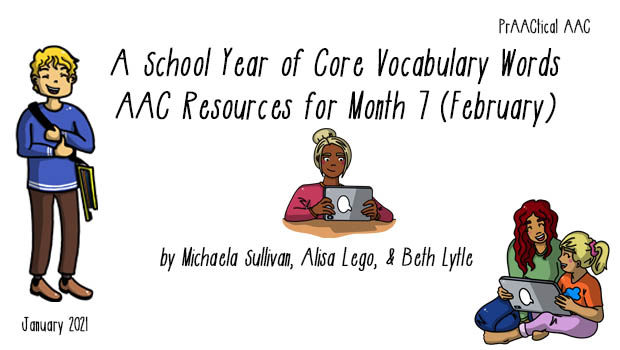
- 2020: The scope expanded significantly with the publication of "The School Year of Core Vocabulary Words," designed specifically for the K-12 environment. Authored by Michaela Sullivan, Alisa Lego, and Beth Lytle, this series aligned vocabulary instruction with classroom curriculum standards, ensuring that AAC users could participate more fully in academic settings.
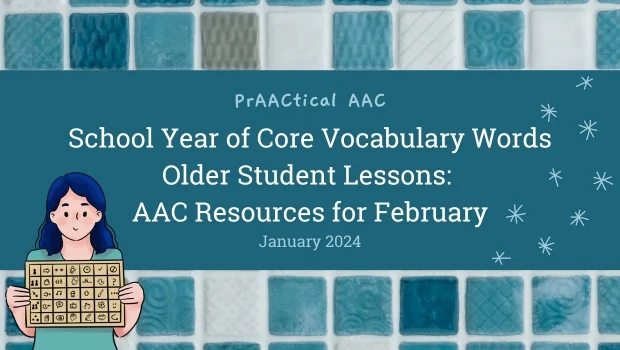
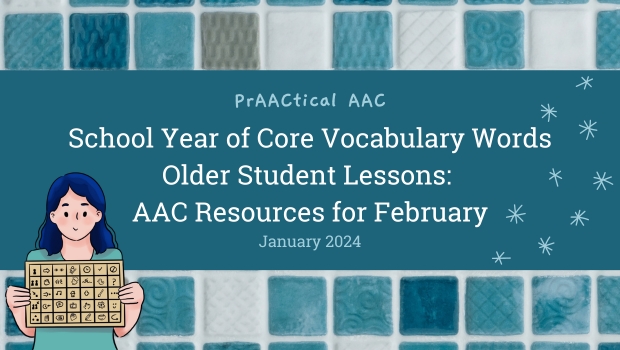
- 2023-2024: Addressing a long-standing gap in the field—the scarcity of age-appropriate materials for adolescents—the project introduced specialized lessons for older students. This curriculum, developed by Michaela Sullivan and Lindsay Dougherty, moved away from the simplified visual styles of early childhood materials, focusing instead on words and scenarios relevant to middle and high school students.
Supporting Data and Pedagogical Rationale
The efficacy of systematic core vocabulary instruction is supported by the principle of aided language stimulation (ALS), also known as modeling. In ALS, the communication partner models the use of AAC symbols while speaking. Research indicates that when communication partners consistently provide an "input" of symbols that matches the learner’s "output" needs, the learner’s linguistic competence increases significantly.
Data from longitudinal observations in classrooms utilizing the "Year of Core Vocabulary" framework suggests that students who are exposed to a consistent, monthly vocabulary focus demonstrate higher rates of spontaneous communication. By restricting the focus to a specific, manageable set of words each month, educators can effectively monitor progress and provide targeted feedback. Furthermore, the structured approach reduces the "cognitive load" on teachers and therapists, who often report that the primary barrier to effective AAC implementation is the lack of time to create high-quality, relevant materials.
Expert Perspectives on AAC Integration
The success of these initiatives relies heavily on the collaborative efforts of the contributing authors. Industry leaders emphasize that the value of these resources lies not just in the words themselves, but in the pedagogical strategies provided alongside them.
"The transition from early childhood vocabulary to complex, social, and academic vocabulary for older students is a critical juncture in a student’s communication development," noted experts in the field during the launch of the 2023 curriculum. By standardizing the resources available for February—a month often associated with themes of friendship and community—practitioners are encouraged to integrate core words into lessons that naturally involve social interaction, such as "give," "like," and "together." This alignment between natural social cues and structured language instruction is considered a "best practice" in contemporary speech-language pathology.
Broader Impact and Educational Implications
The February resource release serves as a microcosm of a larger shift in special education: the move toward evidence-based, inclusive language instruction. By providing resources that span from preschool through high school, the initiative acknowledges that the need for robust AAC supports does not terminate at a specific age or skill level.
The implications for classroom management are substantial. When an entire classroom or school district adopts a unified approach to core vocabulary, the student is no longer reliant on a single teacher’s knowledge. Instead, the student encounters the same symbols and language structures across the library, the cafeteria, the playground, and the classroom. This ubiquity is essential for generalization—the ability to use language skills in new environments and with new partners.
Moreover, the availability of these resources in digital formats allows for rapid dissemination, bridging the gap between urban centers with high access to specialized training and rural areas that may have limited support for AAC users. The printer-friendly nature of the provided modules ensures that they remain accessible even in schools with limited technological infrastructure.
Looking Toward Future Implementation
As the project continues into its current phase in 2026, the focus remains on refinement and accessibility. The materials for February 2026 are categorized into three distinct tiers:
- Foundational Sets: Tailored for younger students, these materials emphasize simple, high-frequency words paired with visual aids and play-based activities.
- School-Age Modules: These resources, led by the work of Sullivan, Lego, and Lytle, provide a bridge between play and academic participation, focusing on words that facilitate classroom engagement and peer-to-peer interaction.
- Secondary Student Lessons: The most recent addition to the repository, these lessons address the developmental needs of teenagers. By focusing on more abstract concepts and social vocabulary, these resources support the transition toward independence in high school settings.
The collective effort behind these resources highlights a critical component of the AAC community: the culture of sharing and continuous improvement. By making these materials publicly available, the authors have effectively created a repository that serves as a permanent reference point for anyone seeking to improve the communication outcomes of students with complex communication needs.
In conclusion, the February initiative represents more than just a monthly lesson plan; it is a manifestation of a professional consensus that consistency, planning, and high expectations are the cornerstones of successful AAC instruction. As the educational landscape continues to evolve, the ability to leverage these collaborative, time-tested resources will remain a vital tool for those dedicated to the empowerment of non-speaking individuals. Whether through the use of the activity calendars, the school-year modules, or the secondary-level lessons, the "Year of Core Vocabulary" remains a cornerstone of professional practice in the field of speech-language pathology.