Historical Context: From the 1880 Milan Conference to the Modern Era
The NAD’s current mandate is deeply rooted in the history of the 19th century. In 1880, the International Congress on the Education of the Deaf, held in Milan, Italy, signaled a dark period for Deaf individuals globally. The conference resulted in a series of resolutions that sought to ban the use of sign language in schools, advocating instead for an "oralist" approach that forced Deaf children to attempt speech and lip-reading, often at the expense of their cognitive development and mental well-being. This existential threat to Deaf identity served as the catalyst for the founding of the NAD.
By organizing at the national level, Deaf leaders successfully defended the right to use American Sign Language (ASL) and maintained a space for the community in public and educational life. Today, the NAD views the rapid advancement of gene therapy—specifically those technologies aimed at "correcting" hearing loss—as a contemporary echo of the 1880 movement. While the organization acknowledges the life-saving potential of gene therapy for addressing severe, life-threatening conditions, it draws a firm ethical boundary regarding interventions designed to eliminate Deafness as a form of human diversity.
The Scientific Landscape: Gene Therapy and Deafness
Recent breakthroughs in CRISPR-Cas9 and viral vector gene therapies have enabled researchers to target specific mutations responsible for hereditary hearing loss. According to the National Institutes of Health (NIH), approximately two to three out of every 1,000 children in the United States are born with a detectable level of hearing loss in one or both ears. With the advent of gene-editing technologies, clinical trials are increasingly focused on correcting genetic markers associated with deafness.
However, the NAD argues that the current medical model of hearing loss is fundamentally flawed. By framing Deafness exclusively as a pathology—a "defect" to be repaired—the scientific community risks devaluing the lived experiences of millions. The NAD posits that the Deaf community is not a collection of individuals in need of "fixing," but rather a vibrant linguistic and cultural minority. ASL serves as the cornerstone of this culture, providing a rich, visual-spatial language that has thrived despite centuries of marginalization.
Chronology of the Debate: Moving Toward Ethical Governance
The conversation surrounding genetic intervention is not new, but its urgency has escalated in the 2020s:
- 2015-2018: The emergence of CRISPR-Cas9 technology sparks global debate regarding germline editing and its potential to permanently alter the human genome.
- 2021-2023: Early-phase clinical trials for gene therapy targeting specific genetic forms of deafness (such as OTOF-related hearing loss) show promising results in restoring auditory function in pediatric subjects.
- 2024: Bioethicists and disability rights advocates begin to push for greater inclusion of the Deaf community in research design, noting that most studies currently operate without input from those directly affected by the proposed "cures."
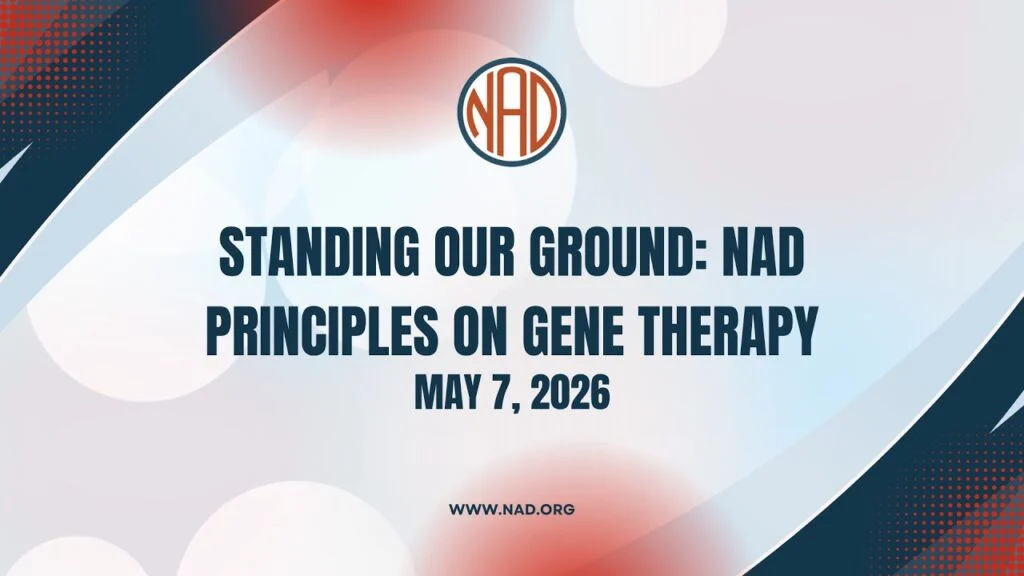
- May 2026: The NAD releases its comprehensive set of "Principles on Gene Therapy," formalizing its opposition to the use of genetic technologies for the purpose of eliminating Deaf identity.
Principles of Ethical Engagement
The NAD has outlined a clear framework for how the scientific community should engage with the Deaf community moving forward. The organization emphasizes that scientific inquiry must be governed by principles that respect bodily autonomy and cultural diversity. Key components of these principles include:
- Informed Consent and Community Agency: Research protocols must include the active participation of Deaf individuals and advocates. This ensures that the priorities of the research reflect the actual needs of the community rather than the biases of the medical establishment.
- Distinction Between Health and Identity: The NAD calls for a clear demarcation between treating debilitating health conditions and "fixing" a sensory difference that is, in itself, a valid human state.
- Prioritization of Quality of Life: The community argues that "success" in gene therapy should be measured by the overall quality of life and well-being of the individual, not merely by the metric of hearing sensitivity.
Reactions from the Scientific and Bioethical Community
The response from the scientific community has been varied. While some researchers maintain a strict focus on the biological imperative to "restore function," a growing segment of the bioethics community is beginning to align with the NAD’s perspective. Dr. Elena Rodriguez, a bioethicist specializing in neurodiversity, noted, "We have historically struggled to understand that sensory difference does not equal a lack of functionality. The NAD’s stance is a necessary intervention that challenges researchers to think beyond the pathology-based model of disability."
Conversely, some proponents of gene therapy argue that parents should have the autonomy to choose any available medical treatment for their children. The NAD counters this by pointing to the historical precedent of eugenics, arguing that societal pressure to conform to "typical" hearing standards can coerce parents into medical interventions they might otherwise forgo, particularly when those interventions are marketed as a universal good.
Implications for Future Research and Policy
The NAD’s call to action is directed at federal agencies, including the National Institutes of Health (NIH) and the Food and Drug Administration (FDA), as well as global scientific institutions. The organization demands that:
- Federal Funding Criteria: Research grants should prioritize projects that include community-based participatory research (CBPR) methods.
- Ethical Review Boards: Institutional Review Boards (IRBs) should include members of the Deaf community to assess the potential social and cultural impacts of proposed genetic studies.
- Accessibility in Clinical Trials: Any information regarding gene therapy trials must be provided in accessible formats, including fully fluent ASL, to ensure true informed consent.
The implication for the scientific community is profound. If researchers fail to adopt these standards, they risk alienating the very demographic they claim to assist. Furthermore, the NAD’s stance serves as a reminder that science does not exist in a vacuum; it is embedded in a social and political context where identity is as critical as biological function.
Looking Ahead: A Task Force for Sustained Advocacy
To ensure these principles are not merely a one-time statement, the NAD has announced the creation of a dedicated task force. This group will be responsible for sustained engagement with medical researchers, pharmaceutical companies, and policy makers. The task force aims to foster a collaborative environment where Deafness is recognized as a legitimate and valued part of human diversity.
As the scientific community continues to push the boundaries of what is possible, the NAD remains a stalwart defender of the community’s right to exist. In 1880, the leaders of the movement affirmed that their value was inherent in their language and culture. That declaration, now echoed in the age of gene editing, serves as a cornerstone for the future. The NAD maintains that the goal of scientific progress should be to create a world that is more inclusive and accessible, not a world that is less diverse.
By centering the voices of the Deaf community, the NAD is ensuring that the technological advancements of the 21st century respect the fundamental rights of all people to determine their own identity. As the organization stated in its closing remarks, "We do not exist to be fixed; we exist as a vital part of human diversity." This ethos will define the coming decades of advocacy as the NAD continues its mission to ensure that the Deaf community is fully included, fully accessible, and fully valued in every facet of global society. The path forward requires a shift from a culture of eradication to a culture of acceptance—a shift that the NAD is committed to leading.