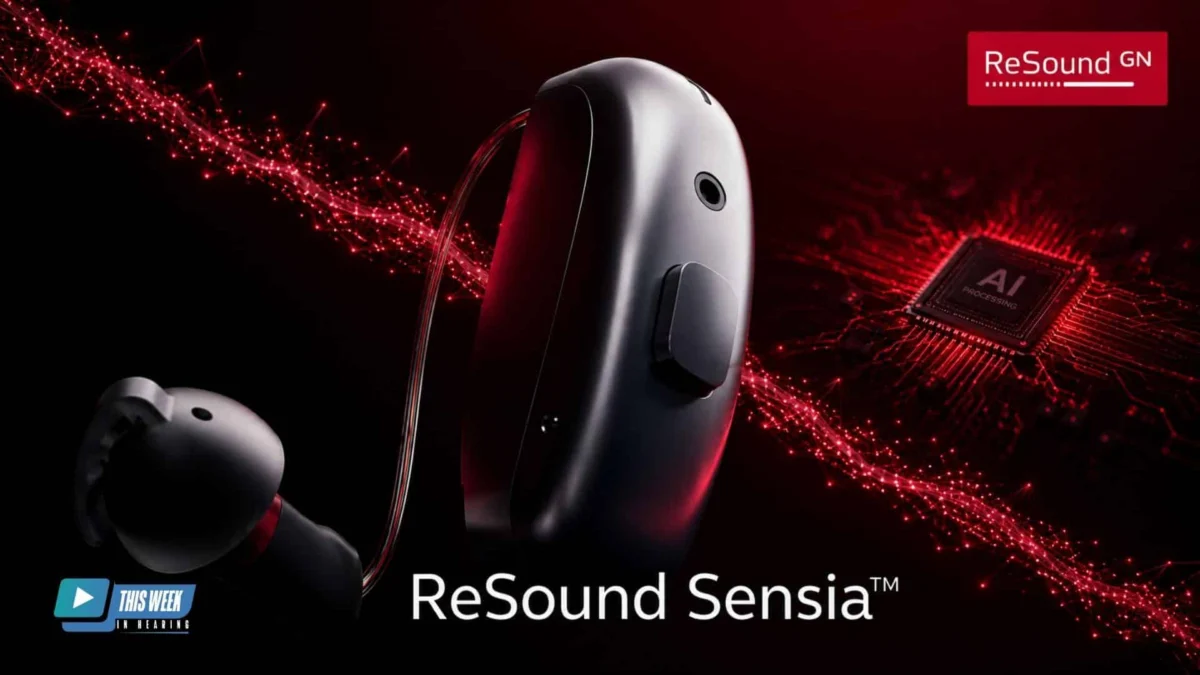
At the heart of the ReSound Sensia platform lies AcoustIQ™, an intelligent system designed to meticulously analyze the listening environment. AcoustIQ™ determines precisely when to activate various advanced features, including directional processing and DNN-based noise reduction, to enhance speech clarity without requiring any manual intervention from the wearer. This automatic engagement represents a pivotal shift from previous models like the ReSound Vivia, where DNN functionality often required users to select a dedicated "Hear in Noise" program. The automation is poised to deliver a more consistent and superior user experience, ensuring that the sophisticated technology is always working optimally, irrespective of the user’s technical proficiency or memory.
The Genesis of Innovation: Building on a Legacy of Advanced Acoustics
GN’s journey in integrating artificial intelligence into hearing aids is part of a broader industry trend towards more sophisticated, adaptive devices. The ReSound Vivia, introduced previously, set a high bar by incorporating DNN technology to address the perennial challenge of speech comprehension in noisy settings. However, the manual activation of the DNN feature, while powerful, presented a barrier for some users. Studies cited by GN indicate that only about 10% of hearing aid wearers consistently switch to a secondary program, such as a dedicated noise program, highlighting a significant gap between available technology and actual user engagement. This statistic underscored the imperative for GN to develop a system that could seamlessly integrate these advanced features into the automatic program.
The development of Sensia is a testament to GN’s continuous investment in research and development, blending traditional signal processing methods with cutting-edge AI approaches. The company recognized that while classical audiological signal processing techniques have seen significant advancements over the past two decades, yielding substantial improvements in speech-in-noise performance, the pace of these improvements has begun to plateau. The introduction of DNNs and machine learning, however, has opened a "new toolbox," as described by Brian Dam Pedersen, Chief Technology Officer of GN Group, promising another wave of rapid and transformative improvements in hearing aid capabilities. This dual approach—refining existing signal processing while embracing new AI paradigms—is central to Sensia’s design philosophy.
AcoustIQ™: The Intelligent Orchestrator of Sound
The most groundbreaking aspect of the ReSound Sensia is its AcoustIQ™ platform. This sophisticated system acts as an intelligent orchestrator, constantly monitoring and interpreting the acoustic landscape to dynamically adjust the hearing aids’ settings. According to Laurel Christensen, GN’s Chief Audiology Officer, AcoustIQ™ is "extremely accurate" in classifying environments, ensuring the device selects the most appropriate settings for optimal hearing.
One of AcoustIQ™’s distinct features is its deliberate decision not to classify music environments automatically. This strategic choice addresses a common challenge in hearing aid design: when music is present in a noisy environment (e.g., a restaurant), many classifiers mistakenly categorize it as a "music environment," leading the hearing aids to disable directional microphones and noise reduction, which are crucial for speech understanding. As Christensen explains, "Most people will tell you that’s a speech-in-noise environment. I went there to listen and talk to the people I came with." By not classifying music, AcoustIQ™ ensures that the hearing aids prioritize speech intelligibility in complex situations where background music might otherwise confuse the system, defaulting to optimal settings for conversation. GN’s internal data and a peer-reviewed Yellum study support this approach, indicating that classifiers that attempt to categorize music often misclassify noisy environments at least half the time, whereas AcoustIQ™ achieves 100% accuracy in simple speech and noise environments without music.
Beyond Basic Noise Reduction: A Multi-Stage Listening Experience
The Sensia’s ability to adapt its processing is executed through a sophisticated multi-stage approach, ensuring a natural and transparent listening experience across various soundscapes:
-
Spatial Perception Mode (Quiet Environments): In quiet settings, the Sensia operates in an omnidirectional mode in both ears. This emphasizes spatial hearing, allowing wearers to maintain full awareness of their surroundings, much like a person with normal hearing.
-
Better Ear Mode (Moderate Noise): As moderate noise levels are detected, the hearing aids swiftly transition into "Better Ear Mode." This involves activating a directional beamformer using all four microphones (two per ear) but focusing its output on the ear that offers the best signal-to-noise ratio. This asymmetric directionality dynamically shifts between ears, mimicking how normal-hearing individuals naturally orient themselves in noisy "cocktail party" scenarios, allowing the brain to leverage the clearest signal while still maintaining some spatial awareness from the other ear.
-
Binaural Beamformers + Deep Neural Network (Loud Noise, Frontal Speech): In extremely loud environments, particularly when speech originates from directly in front of the wearer, the Sensia engages both binaural beamformers and the powerful Deep Neural Network. This is the most aggressive noise reduction mode, designed to isolate and enhance speech coming from the front. GN’s design philosophy here is critical: the DNN is only activated when speech is primarily frontal, preventing it from indiscriminately amplifying the loudest speech from any direction, which could disconnect the user from their companions.
Brian Dam Pedersen elaborated on the nuanced operation of the beamformer in Sensia, which differs from its predecessor. Unlike a broadband beamformer, Sensia’s automatic program employs a multi-band approach: low frequencies remain omnidirectional (where beamforming offers minimal benefit due to large wavelengths), mid-frequencies utilize a very narrow beamformer for precise speech focus, and frequencies above 5,000 Hz feature a slightly broader beamformer to preserve essential spatial cues. This intelligent blending across frequency bands helps to "soften off the sound picture," preventing the jarring changes and "mono" listening experience often associated with full-band beamformers. Pedersen noted that preserving these spatial cues can lead to a benefit of around 3 dB in Speech Reception Threshold (SRT), preventing the loss of gains achieved through beamforming by providing the brain with a more natural signal to process.
Enhanced Connectivity and Accessibility: A Holistic Approach
Beyond its core AI capabilities, the ReSound Sensia offers a comprehensive suite of features designed for modern living and enhanced accessibility:
- Exceptional Battery Life: Despite integrating powerful DNN processing, the Sensia boasts an impressive 24-hour battery life, ensuring users can comfortably go through their entire day without needing a recharge. This extended usage is critical for user convenience and peace of mind.
- Robust Durability: With an IP68 rating, the Sensia is highly resistant to dust and water, making it suitable for active lifestyles and providing reassurance against accidental exposure to moisture.
- Modern and Traditional Connectivity: The hearing aids support the emerging Auracast™ broadcast audio standard, enabling direct audio streaming from public spaces to compatible devices. Additionally, telecoil connectivity options are available in certain models, catering to users who rely on hearing loops in public venues. For those opting for smaller form factors without a built-in telecoil, GN’s MultiMic accessory provides this functionality.
- Seamless Bimodal Integration: A significant announcement accompanying the Sensia launch is the introduction of new ReSound Sensia Bimodal and Enzo IA Bimodal models. These are specifically designed to work more seamlessly with Cochlear® Nucleus® sound processors, stemming from the ongoing Smart Hearing Alliance between GN and Cochlear. This collaboration addresses a long-standing need for bimodal users, allowing for a single remote control and unified streaming from accessories across both the hearing aid and cochlear implant, simplifying the user experience for individuals benefiting from both technologies. This integration is expected to be warmly welcomed by the bimodal community, offering unparalleled convenience and synchronized audio performance.
Executive Insights: Navigating the Future of Hearing Technology
Laurel Christensen and Brian Dam Pedersen provided invaluable insights into the philosophy and future trajectory of GN’s hearing aid development. Christensen emphasized the importance of accurate environmental classification and feature engagement, asserting that Sensia ensures users "get all the features you need in the environment you need them." She underlined that the primary reason people wear hearing aids is for better speech understanding, a goal that Sensia directly addresses through its automated, intelligent processing.
Pedersen reiterated that while classical signal processing is reaching its limits, AI and DNNs represent a "new toolbox" for significant advancements, particularly in speech-in-noise performance. He highlighted the careful tuning involved in integrating the DNN into Sensia’s automatic program, ensuring smooth transitions without "jarring movements" for the wearer. The focus on a "set-and-forget" experience is paramount, aiming to minimize the need for users to interact with their devices, allowing them to focus on their lives rather than their hearing aids. He also noted GN’s commitment to broadening the accessibility of DNN technology, with manual DNN mode now being introduced in lower price points (price point 7), making this advanced feature available to a wider segment of the market.
A Paradigm Shift in User Experience and Broader Implications
The ReSound Sensia represents more than just a technological upgrade; it signifies a paradigm shift in the user experience of hearing aids. By automating complex AI and DNN functions, GN has significantly reduced the cognitive load on users. This "set-and-forget" approach is crucial for increasing user satisfaction and adherence to hearing aid use. When users trust their devices to automatically adapt to their environment, they are more likely to wear them consistently and engage fully in social situations, leading to improved quality of life.
The implications extend beyond individual users. For hearing care professionals (HCPs), Sensia offers a powerful tool that delivers consistent performance without demanding extensive user training on program changes. This can streamline the fitting process and enhance client outcomes. The strategic decision to not classify music, backed by research, also provides a clearer, evidence-based approach to managing sound environments, empowering HCPs to explain the benefits of prioritizing speech clarity in complex settings.
Looking ahead, both executives hinted at the immense potential for future advancements driven by increasingly powerful DNNs. Pedersen envisions "significant improvements in speech-to-noise driven by DNNs in the coming years," a trend he anticipates will be industry-wide. This outlook underscores the ongoing commitment to tackling the most persistent challenges in audiology, particularly the "cocktail party problem" that has long plagued hearing aid users. The continuous evolution of edge AI models, capable of running complex DNNs on miniature, low-power devices, will unlock further enhancements in speech enhancement, noise reduction, and potentially new intelligent features that are yet to be imagined.
Ultimately, the ReSound Sensia’s emphasis on automated, intelligent processing aligns with a broader vision of improving overall health and wellness through better hearing. By enabling individuals to confidently participate in social interactions, reduce listening fatigue, and maintain cognitive engagement, these advanced hearing aids play a vital role in supporting mental well-being and preventing social isolation. The launch of Sensia is not merely about a new product; it is about reinforcing the promise of technology to deliver meaningful, life-enhancing benefits for millions worldwide.