
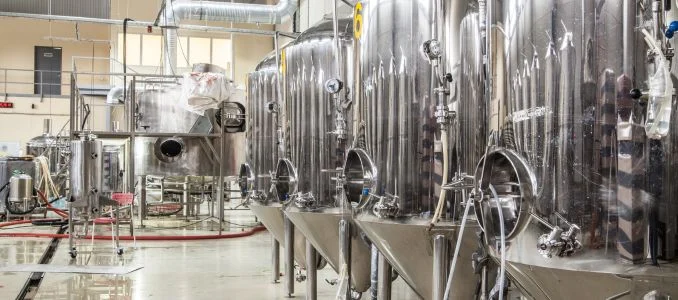
The enforcement action underscores ongoing concerns regarding process safety management within the food processing industry, where high-pressure equipment and thermal hazards present significant risks to personnel. The fines, divided into two distinct penalty packages, highlight systemic failures in equipment maintenance, emergency response protocols, and workplace safety training.
Chronology of the Incidents
The sequence of events began on February 12, when a mechanical failure occurred at the NaturPak facility. According to OSHA’s investigative report, the incident was triggered by a clogged vent line in an industrial kettle. The blockage caused an internal pressure buildup that overwhelmed the vessel’s safety mechanisms, leading the lid to eject with significant force. The resulting release of pressurized steam, scalding liquid, and food product engulfed two employees. One worker sustained critical injuries and was transported to a medical facility, where they eventually succumbed to their wounds. The second worker also required extensive hospitalization.
Despite the gravity of the February incident, the facility remained operational. On March 18, OSHA inspectors returned to the site after a second, eerily similar event occurred. Once again, a kettle lid opened unexpectedly under pressure, discharging hot materials into the workspace. This second failure was more lethal, resulting in the deaths of two employees and the hospitalization of a third. The rapid succession of these two incidents—occurring within roughly thirty-five days—prompted an aggressive review of the facility’s engineering controls and safety culture by federal inspectors.
OSHA Findings and Violations
The federal investigation revealed a pattern of negligence that extended beyond the immediate mechanical failures. OSHA cited the employer for "serious" violations, a designation reserved for hazards that could cause death or serious physical harm and which the employer knew, or should have known, existed.

The primary citations focused on fundamental failures in industrial safety engineering:
- Kettle Design and Maintenance: Inspectors found that the kettles were not properly maintained or configured to prevent pressure-related catastrophic failure. The existence of clogged vent lines suggests a lack of routine inspection and preventative maintenance protocols.
- Thermal Burn Hazards: The facility failed to protect employees from foreseeable thermal burn hazards. This included inadequate guarding around high-temperature equipment and a failure to provide immediate access to emergency deluge systems or water, which are critical for mitigating burn injuries in the first moments after an exposure.
- Lockout/Tagout (LOTO) Deficiencies: OSHA issued repeat citations for the company’s failure to implement, document, and train employees on LOTO procedures. These protocols are the gold standard for industrial safety, designed to ensure that machinery is completely de-energized and depressurized before workers perform maintenance or operation tasks. The lack of adherence to these procedures is a frequent precursor to industrial fatalities.
- Fall Hazards and PPE: The inspection also uncovered risks related to elevated work areas around the kettles, as well as a failure to conduct a formal Hazard Assessment to determine the specific Personal Protective Equipment (PPE) required for employees working in proximity to high-pressure vessels.
Financial and Regulatory Implications
The $364,100 in proposed penalties is structured to reflect the severity of the oversight. OSHA proposed $115,850 in penalties for the February incident and $248,250 for the March incident. Under federal regulations, these fines are not merely punitive; they serve as a mechanism to incentivize compliance in high-risk industries.
NaturPak now faces a 15-business-day window to respond to the citations. The company has several legal avenues: it may pay the penalties in full, request an informal conference with an OSHA area director to negotiate the terms of the settlement, or formally contest the findings and the proposed penalties before the Occupational Safety and Health Review Commission. Should they choose to contest, the matter would move into a quasi-judicial administrative process, potentially extending the timeline for resolution by months or even years.

The Broader Context of Food Industry Safety
The NaturPak tragedy serves as a stark reminder of the hidden dangers within food manufacturing plants. While public perception often focuses on food safety (pathogens and contamination), industrial safety—specifically related to large-scale cooking vessels—remains a critical, yet often under-discussed, priority.
Industry data from the Bureau of Labor Statistics (BLS) indicates that workers in the food manufacturing sector face higher rates of injury and illness compared to many other manufacturing sub-sectors. The nature of the work involves frequent exposure to high-temperature liquids, high-pressure steam, and complex machinery. When safety systems—such as pressure relief valves and vent lines—are neglected, the consequences are often immediate and lethal.
Safety experts note that "pressure-release" incidents, while less common than slips or mechanical entanglement injuries, are statistically more likely to result in fatalities. A primary challenge in food plants is the "corrosive" environment; steam and acidic or alkaline food products can degrade seals, valves, and metal components faster than in dry manufacturing environments. Consequently, the reliance on standard maintenance schedules may be insufficient, necessitating more frequent and rigorous inspections.

Corporate Responsibility and Training
The repeat nature of the citations suggests that the facility’s safety management system failed to learn from the February incident. A core requirement of OSHA compliance is the "continuous improvement" model—if an accident occurs, the employer is expected to perform a root-cause analysis and implement corrective actions to ensure that a recurrence is impossible.
The fact that a second, nearly identical accident occurred only weeks later raises significant questions regarding the oversight at the plant. In the wake of these events, labor advocates and safety professionals often emphasize that training must be more than a checkbox exercise. Employees must be empowered to shut down machinery they deem unsafe without fear of reprisal, and management must prioritize the integrity of safety-critical equipment over production quotas.
Future Outlook and Industry Impact
As the investigation concludes, the impact on the Janesville community and the broader food manufacturing sector will likely be significant. Local labor advocates are expected to scrutinize the facility’s ongoing operations, while the case will almost certainly be used by OSHA in future outreach and training seminars as a case study in the necessity of pressure vessel safety.

For NaturPak, the road ahead involves not only financial settlement and potential legal challenges but also a total overhaul of its safety culture. Rebuilding trust with the workforce and proving to federal regulators that the facility can operate without endangering human life will require substantial investment in new equipment, updated training programs, and perhaps a fundamental shift in leadership philosophy.
The tragedy highlights a recurring theme in industrial safety: the cost of compliance is often high, but the cost of non-compliance—measured in human lives and the destruction of a company’s reputation—is invariably higher. As the regulatory process moves forward, the industry will be watching to see how the company responds and whether this tragedy leads to more stringent oversight of pressure vessel operations in similar manufacturing plants across the United States.
The incident also serves as a sobering reminder for employees working in hazardous environments to remain vigilant and for companies to treat the maintenance of safety-critical equipment as the most essential component of their business model. As the investigations and legal proceedings continue, the focus remains on ensuring that such a sequence of failures is never repeated, honoring the memory of those who lost their lives in the service of their workplace duties.