The Evolution of Core Vocabulary Instruction
The initiative began with the development of the "Year of Core Vocabulary Words," a series designed to provide a predictable, manageable, and data-driven approach to teaching language. Recognizing that AAC users require immersion, repetition, and modeling, the project organizers—led by Dr. Carole Zangari and a team of dedicated specialists—sought to remove the burden of curriculum planning from individual teachers. By creating monthly thematic guides, the project provided a roadmap for consistent, systematic instruction.
Chronological Development of the AAC Resource Series
The project’s trajectory reflects a decade of growth and specialization within the AAC community. The following timeline outlines the key milestones in the development of these resources:

- 2013-2015: The initial "Year of Core Vocabulary Words" series was launched. It focused on establishing a foundational set of core words, providing introductory materials and basic activity calendars to help families and therapists get started.
- 2016-2019: Based on the success of the first series, a second iteration was released. This phase expanded the scope to include more complex linguistic structures and diverse communication goals, incorporating the activity calendars designed by AAC expert and Talking AAC co-founder, Rachael Langley.
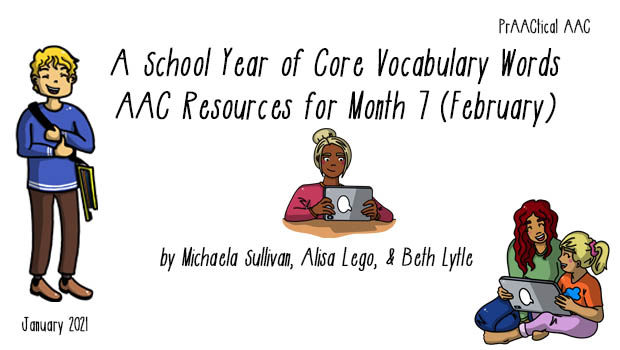
- 2020: The "School Year of Core Vocabulary Words" was published. Spearheaded by guest contributors Michaela Sullivan, Alisa Lego, and Beth Lytle, this series pivoted toward classroom integration, offering teachers concrete strategies for embedding core vocabulary into daily lesson plans.
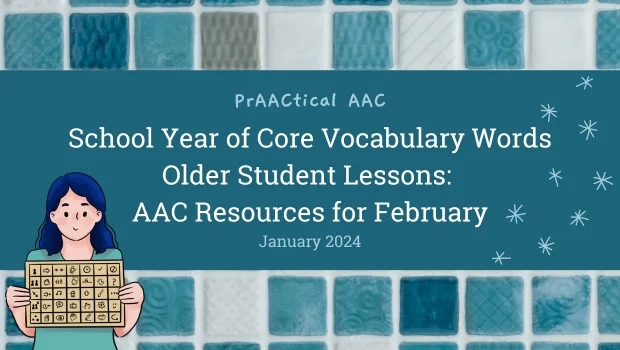
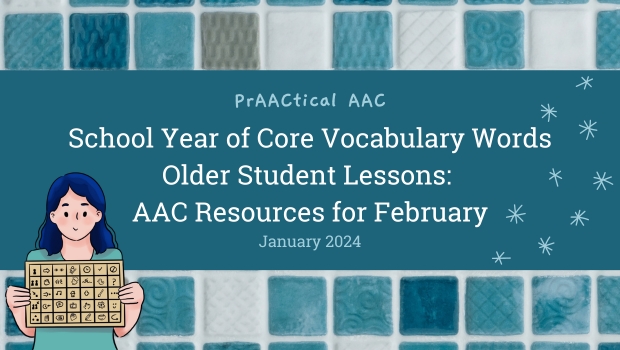
- 2023-2024: A new series specifically tailored for older students and adolescents was introduced by Michaela Sullivan and Lindsay Dougherty. This phase recognized the unique developmental and social needs of middle and high schoolers, ensuring that core vocabulary remained relevant for older AAC users.
- 2026: The current retrospective initiative highlights the ongoing relevance of these materials, re-promoting the February-specific resources as a benchmark for mid-year instructional pivots.
Data-Driven Approaches to Language Learning
The pedagogical model behind these resources is rooted in the "Aided Language Stimulation" (ALS) approach. Data indicates that when communication partners consistently model vocabulary on an AAC system while speaking, the AAC user’s ability to acquire and use those words increases significantly.
According to research in the field of speech-language pathology, core vocabulary instruction is most effective when it is embedded in high-interest, routine-based activities. The February resources, for instance, are designed to align with common school-year themes while maintaining a rigorous focus on word acquisition. By limiting the number of target words per month, educators can ensure that students achieve mastery through high-frequency exposure rather than attempting to teach a vast, disjointed vocabulary that leads to cognitive overload.
Perspectives on Collaborative Implementation
The success of the "Year of Core Vocabulary" series is widely attributed to its collaborative nature. By pulling in experts from various sectors—including clinical private practice, public school systems, and university research—the resources maintain both theoretical integrity and practical utility.
"The challenge for many educators is not the lack of desire to teach, but the lack of time to create materials that are both evidence-based and student-centered," notes a representative familiar with the project’s history. "By providing these pre-designed resources, we empower professionals to spend their energy on the human element of communication—the actual interaction—rather than the administrative burden of curriculum creation."
The inclusion of the "Older Student Lessons" was a critical response to feedback from the field. Educators had long reported a "resource gap" for teenage students, who often felt that materials designed for preschool or elementary settings were patronizing. The 2023-2024 series addressed this by focusing on social participation, vocational terminology, and age-appropriate peer interaction, demonstrating a shift toward dignity and maturity in AAC intervention.
Broader Implications for AAC Education
The ongoing availability of these materials highlights a critical shift in how the AAC community views long-term support. Rather than viewing AAC intervention as a series of isolated therapy sessions, these resources promote a systemic, school-wide, and home-based approach.
Implications for Educators
For teachers, these resources serve as a "plug-and-play" solution that allows for seamless integration into existing state curriculum standards. By aligning core vocabulary with literacy and social studies, educators can ensure that AAC users are not isolated from the general curriculum but are active participants in classroom discourse.
Implications for Clinicians
For speech-language pathologists, the structured nature of the series allows for more reliable progress tracking. By knowing exactly which words were targeted in a given month, therapists can coordinate their intervention goals with the classroom teacher, creating a "continuity of care" that is often lacking in traditional special education models.
Implications for Families
For parents and caregivers, the simplified, monthly calendar format lowers the barrier to entry. Many parents report that the "Year of Core Vocabulary" provides them with the vocabulary they need to model language at home, turning routine activities like eating, playing, or getting ready for school into meaningful opportunities for linguistic development.
Analysis of Current Trends
As of 2026, the focus in the AAC community is shifting toward digital accessibility and personalized learning. The materials provided in the February resource pack are inherently flexible; they can be utilized on low-tech paper communication boards, mid-tech switches, or high-tech speech-generating devices. This "device-agnostic" approach is vital in an era where technology changes rapidly, but the fundamental need for human connection and effective communication remains constant.
The continued promotion of these legacy resources suggests that while technology improves, the underlying linguistic principles of core vocabulary instruction remain stable. The "Year of Core Vocabulary" model demonstrates that even in a digital-first world, the most powerful tool in an AAC user’s arsenal is a consistent, highly frequent, and intentionally taught vocabulary base.
Moving Forward
The availability of the February resources serves as a call to action for the broader educational community. As the academic year reaches its midpoint, the materials provide an opportunity to refresh instructional goals and re-engage with core communication targets. By leveraging these existing frameworks, professionals can ensure that students are not merely observers of their own education, but active, vocal participants.
For those interested in exploring these materials, the resources remain archived and publicly accessible, categorized by student age and developmental stage. This archive stands as a testament to the power of open-source professional collaboration, proving that when experts share their insights and tools, the entire field of special education moves forward. As the project enters another year of dissemination, the focus remains clear: providing the tools necessary for every individual to express their thoughts, needs, and dreams, regardless of their physical or neurological starting point.