The Evolution of the NAD Leadership Search
The current search process was initiated to ensure that the next leader possesses both the professional acumen to handle the administrative burdens of a national non-profit and the grassroots credibility required to represent the interests of the American deaf community. The organization’s board of directors established a search committee tasked with vetting a wide pool of applicants. This process involved multiple stages of interviews, background screenings, and leadership assessments, culminating in the selection of Cline and Kiego as the two individuals deemed most qualified to lead the organization into its next chapter.
Profile of the Finalists
The two candidates selected for this final vetting phase represent a culmination of extensive deliberation by the search committee.
Michelle Cline enters the final stage with a background that suggests a deep familiarity with the structural and advocacy challenges facing the deaf community. Her leadership style, as projected through the preliminary search materials, highlights an emphasis on institutional stability and collaborative governance. In previous roles, she has demonstrated a capacity for navigating complex regulatory environments and managing the fiscal responsibilities inherent in non-profit management.
Nicholas Kiego offers a different, yet complementary, perspective. His professional trajectory has often focused on outreach, community development, and the expansion of organizational influence within broader social justice frameworks. By prioritizing innovative engagement strategies and policy reform, Kiego’s candidacy appeals to stakeholders looking for a dynamic shift in how the NAD interacts with both federal lawmakers and the diverse populations it serves.
The Virtual Town Hall: A Mechanism for Transparency
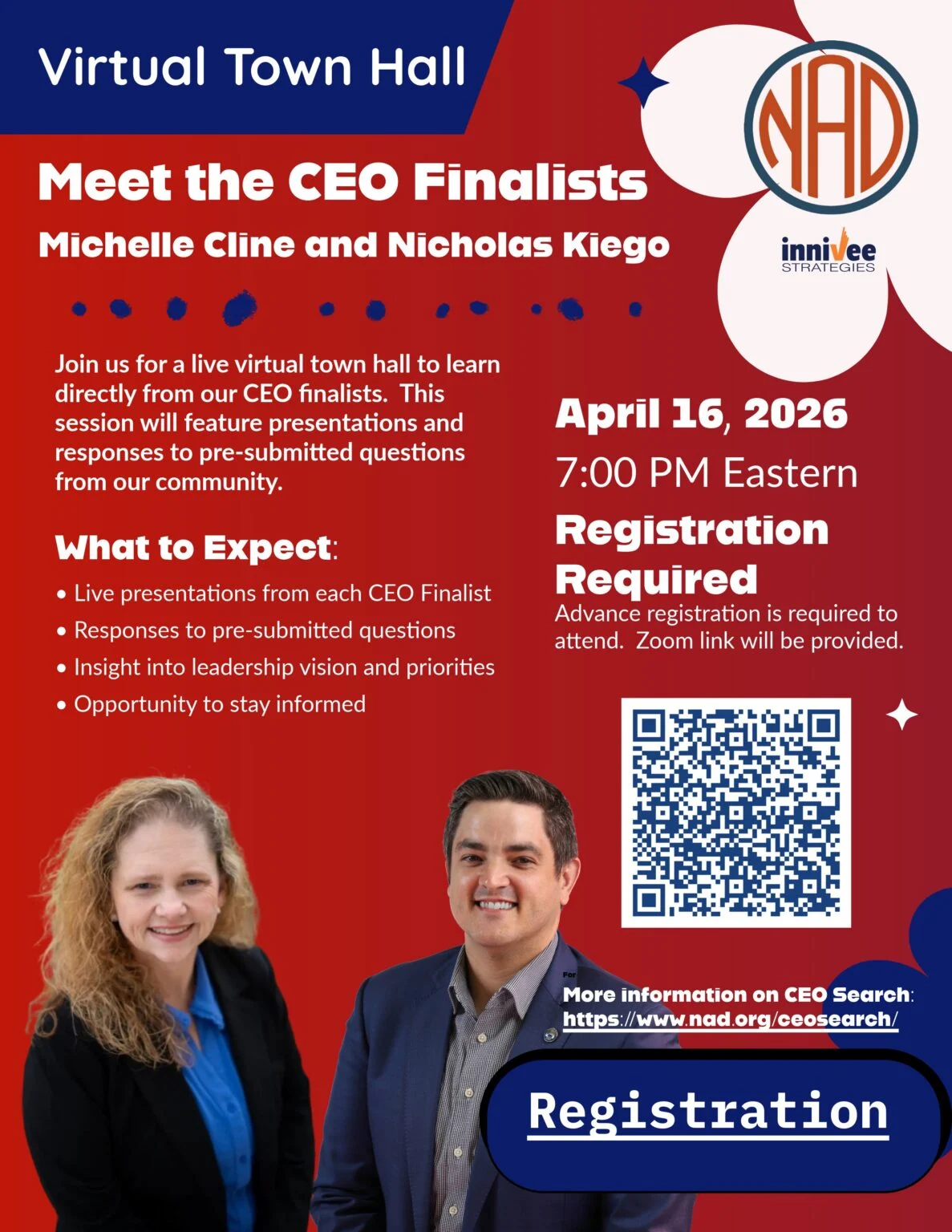
The decision to host a live virtual town hall on April 16, 2026, serves as a mechanism for institutional transparency. In an era where non-profit leadership is subject to intense public scrutiny, the NAD has opted to bypass a closed-door selection process in favor of a public forum. This approach allows the community to participate in the democratic functioning of the organization, ensuring that the final selection is not merely an executive decision but one that carries a degree of public consensus.
The forum is structured to address three core components of the finalists’ potential tenure:
- Strategic Vision: How the candidates plan to address the most pressing civil rights issues, including education equity, accessibility in the digital age, and employment discrimination.
- Operational Priorities: The candidates’ approaches to the internal management of the NAD, including staff retention, fiscal transparency, and long-term financial sustainability.
- Community Responsiveness: How the finalists plan to maintain the link between the organization’s headquarters in Silver Spring and the local chapters and members spread across the United States.
Chronology of the Selection Process
The road to the April 16 forum has been a measured, multi-month endeavor. The timeline for this leadership transition began in early 2026, following the conclusion of previous leadership tenures and the formal opening of the search.
- January 2026: The NAD Board of Directors formally authorized the formation of a CEO Search Committee. During this period, the organization outlined the key competencies required for the position, focusing on leadership, advocacy, and financial management.
- February 2026: A national recruitment campaign was launched, targeting professionals with experience in non-profit management, civil rights advocacy, and organizational development.
- March 2026: The Search Committee conducted initial interviews, whittling down a large field of candidates to a short list of semi-finalists. Extensive background checks and psychometric evaluations were performed during this phase.
- April 10, 2026: The NAD officially announced Michelle Cline and Nicholas Kiego as the two finalists, setting the stage for the public forum.
- April 16, 2026: The virtual town hall serves as the final opportunity for the broader community to influence the board’s decision-making process before a final vote.
Supporting Data and Organizational Context
The National Association of the Deaf operates within a complex ecosystem of federal funding, private donations, and high-profile legal advocacy. According to the most recent organizational reports, the NAD’s operational budget is heavily influenced by its ability to secure grants and sustain its donor base. Consequently, the new CEO must be an effective fundraiser and a savvy steward of resources.
Furthermore, data from recent years indicates that the deaf community is facing a critical junction in technological integration and digital accessibility. The next CEO will be expected to lobby for legislation that keeps pace with rapid advancements in AI, automated captioning, and remote communication tools. The finalists’ responses to these technological challenges during the town hall will likely be a primary factor in the board’s final determination.
Implications for Future Advocacy
The appointment of a new CEO carries significant weight for the broader disability rights movement. The NAD has historically acted as a lead plaintiff or amicus curiae in landmark cases involving the Americans with Disabilities Act (ADA). The chosen leader will oversee the legal department’s strategic focus, determining which cases are prioritized for litigation and where the organization spends its limited legal capital.
If the organization moves toward a more aggressive litigation-based strategy, the community may see an increase in class-action lawsuits against entities that fail to provide adequate accommodations. Conversely, a focus on diplomatic engagement and legislative lobbying might lead to more collaborative partnerships with government agencies and corporate entities. The choice between these two approaches—or a synthesis of both—is arguably the most critical implication of the current search.
Professional Perspectives on the Transition
Industry analysts and observers within the non-profit sector have noted that the NAD’s commitment to a transparent search process is a positive indicator of institutional health. By allowing for a Q&A session based on pre-submitted questions, the organization mitigates the risk of sudden, unexpected leadership shifts that can often destabilize non-profit operations.
Experts suggest that the success of the new CEO will ultimately be measured by their ability to maintain the NAD’s relevance among younger generations of deaf activists who may prioritize different issues—such as intersectionality and environmental justice—compared to the organization’s traditional base. The finalists’ ability to bridge this generational divide will be a key metric for the Board of Directors.
Conclusion and Next Steps
As the April 16th deadline approaches, the focus remains on the candidates’ ability to articulate a vision that resonates with the diverse requirements of the national deaf community. The virtual town hall is the final, essential step in the selection process, providing a platform for the finalists to demonstrate their readiness to lead.
Following the forum, the Board of Directors will review the feedback gathered from the community, alongside the results of their own internal evaluations. While the official appointment date has not been set, the momentum of the search suggests that the transition will be finalized in the coming months. For stakeholders and members of the deaf community, the upcoming town hall represents more than just a presentation; it is an invitation to witness the start of a new administrative era that will define the trajectory of deaf advocacy in the United States for years to come.
Further updates, including comprehensive documentation regarding the candidates’ platforms and additional information on the search process, remain available through the official NAD portal. As the organization prepares for this transition, the community remains in a position of vigilance, ensuring that the selected candidate remains accountable to the principles of equality, accessibility, and empowerment that have defined the NAD since its inception.