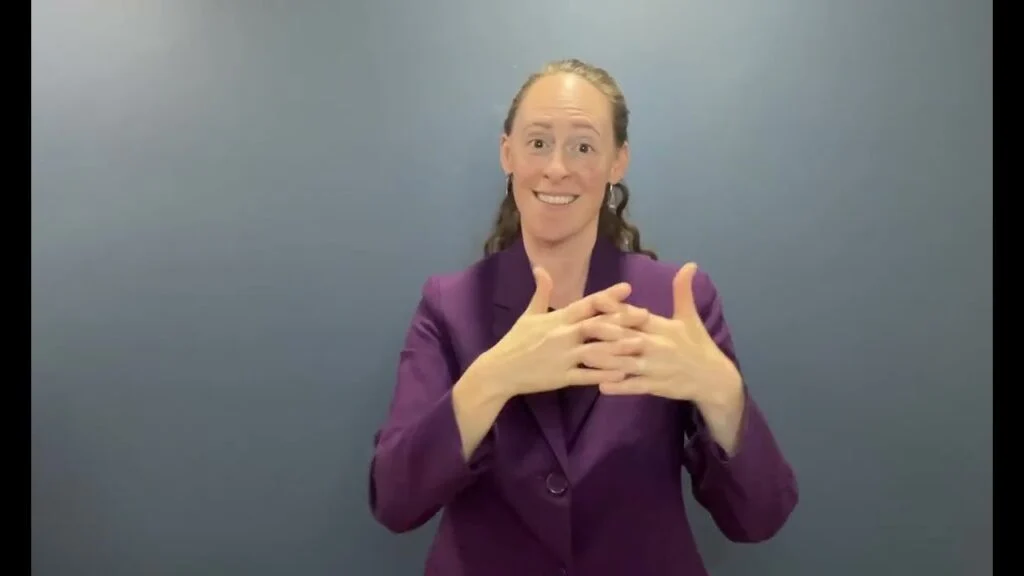
The Chronology of a Legal Struggle
The origins of this dispute trace back to the shifting policies of the executive branch regarding public transparency. For years, the provision of ASL interpreters at White House briefings was a subject of inconsistent practice. A critical turning point occurred during the COVID-19 pandemic, which underscored the necessity of real-time, accessible information during national emergencies.
In 2020, the NAD successfully litigated National Association of the Deaf v. Trump, a landmark case that established a judicial precedent requiring the White House to provide ASL interpretation during official briefings. This ruling was widely heralded as a victory for civil rights, ensuring that millions of Americans who rely on sign language as their primary mode of communication could stay informed alongside their hearing counterparts.
However, the current conflict began in January 2025, when the administration discontinued the use of ASL interpreters at official briefings. Following several months of advocacy and unmet requests for reinstatement, the NAD and Derrick Ford filed a lawsuit on May 28, 2025, alleging that the removal of interpreters constituted a violation of the rights of Deaf and hard of hearing citizens to access critical government information.
The litigation moved swiftly through the federal court system. In November 2025, Judge Amir Ali issued a definitive ruling, ordering the White House to immediately reinstate ASL interpreters for all press briefings conducted by the President or the White House Press Secretary. The administration subsequently appealed this decision, setting the stage for the upcoming hearing in the D.C. Circuit.
The Core of the Argument: Equal Access vs. Administrative Discretion
At the heart of the legal argument presented by the NAD is the concept of "functional equivalence." The association maintains that providing written transcripts or closed captioning—which are often subject to delays or inaccuracies—does not constitute equal access for those whose first or primary language is ASL.
"This case is about whether Deaf and hard of hearing Americans can receive information from the White House at the same time as everyone else," stated Nicholas Kiego, Chief Executive Officer of the NAD. The legal team representing the plaintiffs argues that the White House, as the primary source of national news and crisis communication, has a non-negotiable duty under Section 504 of the Rehabilitation Act of 1973 to ensure that its programs and activities are accessible to people with disabilities.
Conversely, the government’s appeal is expected to focus on the scope of judicial authority regarding executive communications. Historically, the executive branch has claimed broad discretion in how it manages press logistics. The government may argue that while accessibility is a goal, the specific format of that accessibility should remain within the purview of the administration’s operational decisions. Legal analysts observing the case note that the D.C. Circuit’s decision will hinge on whether the court views ASL interpretation as a fundamental civil right in this context or a flexible administrative service.
Demographic Data and the Necessity of ASL
The urgency of this case is supported by significant demographic data regarding the Deaf and hard of hearing population in the United States. According to the National Institute on Deafness and Other Communication Disorders (NIDCD), approximately 15 percent of American adults (37.5 million) report some trouble hearing. While the level of reliance on ASL varies within this group, the NAD emphasizes that for those who are culturally Deaf, ASL is not merely a tool for communication but a primary language.
Furthermore, studies on emergency communication have consistently shown that information provided in a person’s native language is processed more effectively and with less error. During periods of heightened national stress, such as health crises, economic downturns, or geopolitical instability, the ability to receive information instantaneously through ASL is critical for public safety and civic participation. By excluding interpreters, the administration risks creating a "tiered" citizenry where access to government information is contingent upon an individual’s ability to use spoken or written English.
Implications for Federal Civil Rights Litigation
The outcome of the October 6 hearing is poised to have ripple effects far beyond the White House briefing room. If the appellate court upholds Judge Ali’s ruling, it will set a binding precedent for federal agencies across the executive branch. This could force a reevaluation of accessibility standards for all government-produced media, including town halls, official announcements, and public hearings.
Legal experts suggest that this case is part of a broader trend of "impact litigation" by disability rights organizations. By targeting the highest office in the land, the NAD is setting a standard that trickle-down policies are expected to follow. If the government fails to comply with the mandate for ASL, it sends a message that accessibility is an optional service rather than a core component of democratic governance.
Public Interest and Courtroom Procedures
The NAD has signaled that the upcoming oral argument is a matter of public interest, inviting the community and its allies to observe the proceedings. The D.C. Circuit is a high-profile venue, and the presence of community members is intended to underscore the visibility of the Deaf community in the democratic process.
For those planning to attend, the court has emphasized that security protocols will be rigorous. Attendees are advised to arrive well in advance of the 2:00 P.M. start time to account for security screenings, which can be time-consuming in federal buildings. The visibility of the attendees is viewed by the NAD as a vital component of the case, reinforcing that this is not an abstract legal dispute but one that directly impacts the daily lives and civic engagement of millions.
Institutional Context: The Role of the NAD
The National Association of the Deaf, established in 1880, remains the oldest and most influential civil rights organization for Deaf and hard of hearing individuals in the United States. Its Law and Advocacy Center (LAC) has been instrumental in shaping the legal landscape for disability rights for over a century. Through impact litigation, the LAC seeks to challenge systemic discrimination rather than merely addressing individual grievances.
The center’s work is funded through a combination of memberships and private charitable contributions. The ongoing litigation against the White House represents a significant financial and organizational commitment. Supporters of the NAD argue that the organization’s role in this case is essential to maintaining the pressure necessary to force institutional change. As Brittany Shrader, Director of Legal Services at the NAD, has noted in previous statements, the persistence of these legal challenges is a direct response to the recurring failure of public institutions to prioritize accessibility.
Awaiting the D.C. Circuit’s Verdict
As the date approaches, the legal community and disability rights advocates remain in a state of cautious anticipation. The D.C. Circuit is known for its nuanced interpretations of administrative law, and its decision will be a landmark indicator of how the judicial system balances executive power with the civil rights of marginalized populations.
If the court rules in favor of the NAD, it will solidify the mandate for ASL interpreters in high-level government communications, creating a permanent expectation of accessibility. If the court sides with the government, it could lead to a protracted legal battle that may eventually reach the Supreme Court, potentially setting a precedent that could either strengthen or weaken the accessibility requirements of the Rehabilitation Act.
Regardless of the immediate verdict, the case has already achieved a significant objective: it has kept the issue of accessibility at the forefront of the national conversation. By insisting that Deaf and hard of hearing citizens deserve the same real-time information as their peers, the NAD and Derrick Ford have challenged the government to live up to its promises of equity and inclusion. The October 6, 2026, hearing will be more than just a procedural step; it will be a decisive moment in the ongoing evolution of American civil rights.