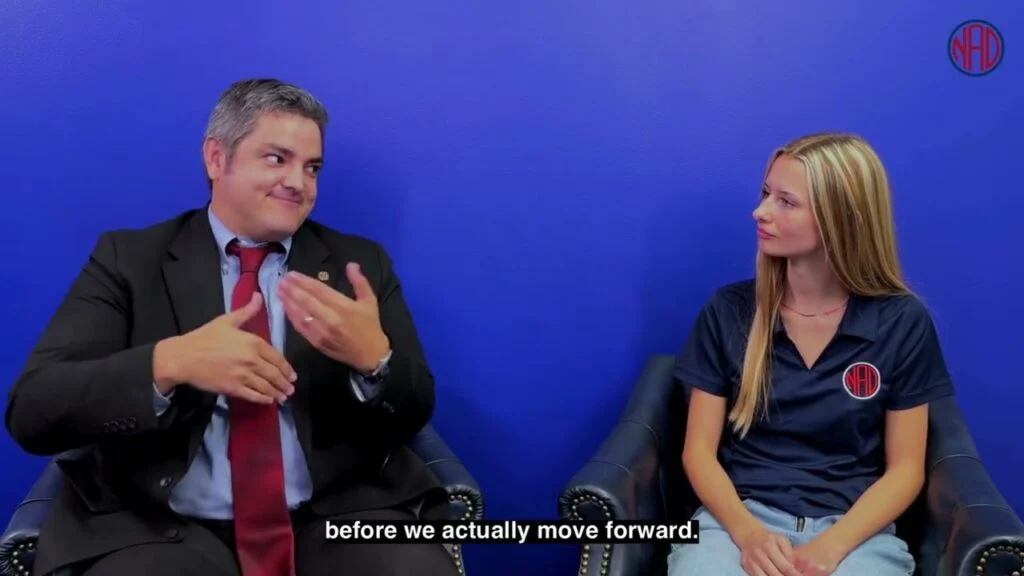
The Current State of NAD Operations
Kiego’s initial assessment of the NAD reveals a lean, resource-constrained organization that has maintained its national advocacy mandate through the dedication of a remarkably small staff. During the interview, Kiego confirmed that the organization currently operates with a core team of only six employees. This revelation has sparked discussion regarding the scaling of non-profit advocacy in an era of increasing digital demand and complex legislative challenges.
The physical reality of the NAD headquarters serves as a microcosm for the organization’s broader operational challenges. Kiego and Goff discussed the discrepancy between public perception—which often imagines a sprawling, high-budget corporate entity—and the reality of a modest office space that represents the organization’s current financial parameters. By addressing this "gap in perception" early in his tenure, Kiego is setting a precedent for a management style rooted in the acknowledgment of limited resources as a prerequisite for meaningful growth.
A Chronology of the First Thirty Days
The first month of Kiego’s leadership was characterized by a systematic approach to institutional stability. The transition period followed a specific, prioritized timeline:
- Days 1–3: Fiscal Immersion. Kiego’s immediate priority was the financial health of the organization. He engaged in intensive consultations with the Chief Financial Officer (CFO) and external accountants to review budget monitoring, investment portfolios, and operational expenses.
- Days 4–14: Internal Audits. Kiego conducted extensive one-on-one sessions with department heads, specifically the directors of the Youth Program and Legal Advocacy. These meetings were designed to catalog the history of ongoing legal challenges, identify systemic bottlenecks, and assess the workload of the existing staff.
- Days 15–30: External Stakeholder Engagement. Following the internal assessment, Kiego expanded his reach to key partners, including the Deaf and Hard of Hearing Consumer Advocacy Network (DHHCAN) and Telecommunications for the Deaf and Hard of Hearing (TDI), to synchronize policy goals and establish collaborative frameworks.
Strategic Wins and Immediate Objectives
Despite the challenges inherent in a lean operational structure, Kiego reported three "fast wins" that have already begun to stabilize the organization. First, the recruitment of an IT systems administrator is expected to address long-standing technical issues with the NAD website, which serves as a primary hub for member resources. Second, the acquisition of a volunteer grant writer specifically for the Youth Program provides a sustainable pathway for securing specialized funding. Third, Kiego noted that his deep-dive into the organization’s financial books has resulted in a high degree of confidence regarding the current fiscal baseline, allowing for more precise strategic planning moving forward.
Moving into the next quarter, Kiego has identified three pillars of focus: fiscal stabilization, personnel support, and program enrichment. Recognizing that the organization is currently unable to expand its paid payroll, Kiego intends to launch an open call for professional volunteers. The recruitment strategy specifically targets retired legal professionals to assist with intake and client support, as well as policy experts to bolster the NAD’s advocacy in telecommunications and educational reform.
Empowering the Next Generation: The Youth Perspective
A significant portion of the discourse between Kiego and Jr. NAD Ambassador Marisa Goff centered on the future of the organization: the recruitment and retention of Deaf youth. Goff, representing the 2025–2027 Jr. NAD cohort, articulated a common sentiment among younger constituents: a feeling of disconnection from the parent organization’s events and strategic decisions.
Goff advocated for a more collaborative approach, suggesting that the NAD integrate youth representatives into the planning of national events rather than treating them as passive beneficiaries. Kiego acknowledged this as a critical failure in the current pipeline. He emphasized that the most loyal and passionate advocates in the NAD’s history typically trace their involvement back to youth engagement. The proposed solution involves a hybrid approach to community building: leveraging social media as a "digital window" to provide a preview of NAD activities, while maintaining the primacy of in-person gatherings to foster deeper cultural and organizational investment.
Broader Implications and Institutional Grace
The candid nature of the conversation between the new CEO and the youth representative suggests a deliberate pivot toward a culture of transparency. Kiego’s insistence on "showing the reality of the situation" rather than projecting a curated, "diamond-like" image is a calculated strategic move. By setting expectations early, the leadership hopes to build a foundation of "grace and patience" within the community, which will be necessary as the organization undergoes what Kiego describes as the "necessary steps backward" required to facilitate future growth.
Industry analysts observe that this approach is common among non-profit leaders taking over organizations that have survived challenging, resource-starved years. The implication is that the NAD is moving away from a top-down, opaque management structure toward a community-integrated model. The sustainability of this model, however, rests on the ability of the NAD to successfully convert community goodwill into tangible human capital—specifically, the influx of skilled volunteers needed to bridge the gap between current capacity and the organization’s ambitious advocacy mandate.
Conclusion: A Call to Action
The path forward for the National Association of the Deaf involves a delicate balancing act: maintaining core legal and policy advocacy while simultaneously restructuring the organization’s financial and operational bones. Kiego’s focus on the Legal Advocacy Center, the Youth Program, and Policy work underscores his commitment to the organization’s foundational missions.
As the NAD looks toward the remainder of 2026, the success of these initiatives will depend on the community’s response to the call for specialized volunteerism. By fostering a direct line of communication between the CEO and the Jr. NAD, the organization is signaling that the era of isolation—both between the organization and its members, and between the organization and its youth—is coming to an end. The coming months will be a critical test of whether this new, transparent, and collaborative framework can effectively scale the NAD’s impact to meet the evolving needs of the Deaf community in a complex digital age.