The Clinical Catalyst: Challenging Traditional Paradigms
The impetus for VOZ SOS CAAPAZ stems from a critical internal evaluation of standard speech therapy practices. For decades, the therapeutic approach to communication disorders has been heavily rooted in a medical model, which often prioritizes oral speech as the primary—and sometimes only—successful outcome.
Ordóñez, an experienced specialist in the field, identified several shortcomings in this conventional framework. Central to her critique is the question of whether traditional therapy is inherently respectful of individuals who do not utilize speech as their primary modality. Her inquiry highlights a growing consensus among communication experts: that limited, once-a-week clinical sessions often fail to provide the necessary exposure to multimodal communication. Furthermore, these sessions are frequently facilitated by speaking partners who are not themselves users of AAC, creating an inherent imbalance in the learning dynamic. By shifting the focus toward peer-to-peer interaction, VOZ SOS CAAPAZ aims to replace isolated clinical training with meaningful, context-driven social engagement.
Chronology of Development: From Concept to Community
The development of this project followed a deliberate, evidence-based trajectory over the course of 18 months, marked by three pivotal milestones that transformed theory into operational reality.
In 2024, Ordóñez joined "CAAmigos Angelman," a virtual, neuroaffirmative program led by Claudia Marimón. This collaboration exposed her to a broader Latin American network of AAC users and families, providing a testing ground for naturalistic, comprehensive literacy models. This experience allowed her to move beyond the constraints of ableist therapeutic frameworks that historically prioritized verbal speech.
In 2025, the intellectual foundation of the project was further bolstered by an article in the ISAAC AAC Journal, titled "Nothing About AAC Users Without AAC Users." This piece, authored by non-speaking advocate Gran Blasko, served as a call to action for the meaningful inclusion of AAC users in the design and implementation of communication technologies. This article became the philosophical cornerstone for VOZ SOS CAAPAZ, emphasizing that the voices of the users must dictate the direction of their own therapeutic and social environments.
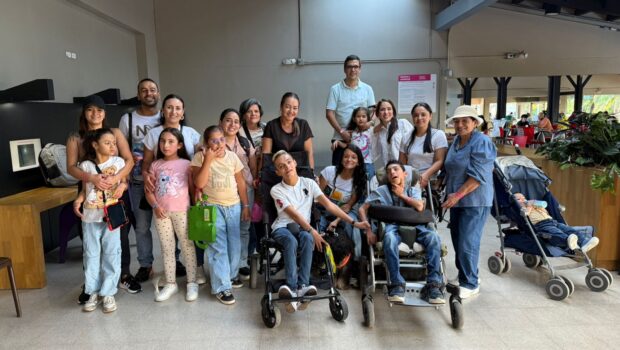
By October 2025, these influences culminated in the launch of the project’s first in-person gathering at Parque Comfama in Rionegro. This event coincided with AAC Awareness Month, marking the first time the group successfully facilitated a large-scale, public interaction for users of various systems, including Td Snap, Communicator 5, Proloquo2go, and Grid 3.
Data and Demographics: A Snapshot of Participation
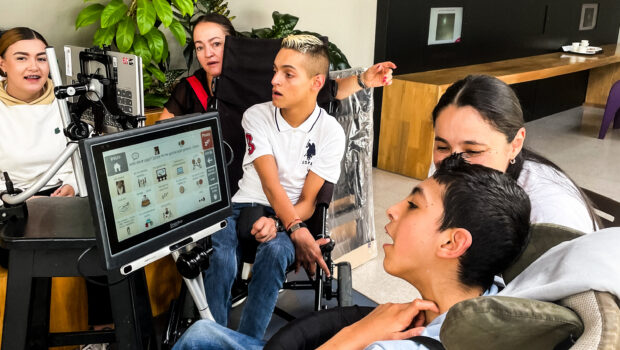
The gatherings have served as a demographic microcosm of the diverse needs within the AAC community. During the inaugural event in October 2025, participants included six primary AAC users, ten family members, and a specialized Speech-Language Pathologist. The technology represented was varied, including eye-tracking interfaces for those with complex motor support needs.
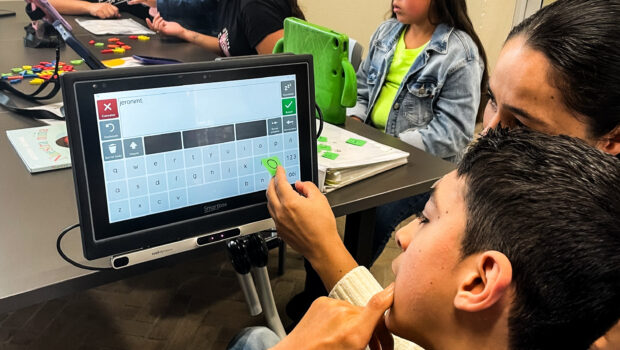
In February 2026, the project expanded its scope by hosting a shared reading session at a public library in Rionegro. This session focused on "Comprehensive Literacy," a pedagogical approach defined by Erin Sheldon as a collection of experiences that build print knowledge through interactions with literate individuals. This event hosted three AAC users, all categorized at an "emergent" level of literacy development, alongside their families and the project facilitator. The shift from an amusement park setting to a library signifies a deliberate effort to integrate AAC users into traditional academic and public spaces, fostering the belief that literacy is a fundamental right for all.
The Philosophy of "Presuming Competence"
At the heart of VOZ SOS CAAPAZ is the neuroaffirmative principle of "presuming competence." This concept asserts that every individual possesses the capacity to communicate, regardless of the tools they use or their current level of demonstrated literacy.
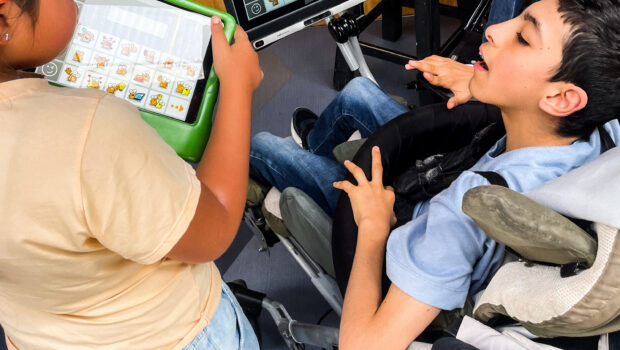
Ordóñez emphasizes that her role as a therapist is not to be the "voice" of the user, but rather to ensure they have the tools to project their own. This involves a fundamental restructuring of the relationship between the professional and the user. The project operates on the premise that the communication partner must also be an active learner, constantly updating their knowledge of the specific system—whether it be a low-tech board or a high-tech eye-tracking device—used by the individual.
Broader Implications and Future Outlook
The implications of the VOZ SOS CAAPAZ project are significant for both the Colombian healthcare system and the global AAC community. By successfully moving therapy out of the clinic and into the public sphere, the project challenges the societal stigma often associated with non-speaking individuals.
For families, the initiative provides a blueprint for bypassing the "ceilings" of traditional therapy, which often limit access to advanced communication tools or literacy-based learning. The model encourages families to seek out or create environments where their loved ones can engage with peers who share similar communication modalities.
The feedback from participants suggests a high demand for such services. Pablo Andrés Calderón Gómez, a participant and user of Tobii eye-tracking technology, noted after the inaugural meeting, "I met other friends. We need more people with this right to communication." This testimonial reflects the isolation that many AAC users experience in environments where they are the only ones utilizing assistive technology.
As the project moves into its second year, the goals remain clear:
- Expansion of Access: Increasing the frequency of meetings as more families and community members join.
- Systemic Integration: Working with public institutions, such as libraries and parks, to create permanent, accessible communication environments.
- Professional Advocacy: Promoting a shift in speech-language pathology training that prioritizes AAC proficiency and neuroaffirmative practices.
VOZ SOS CAAPAZ serves as a compelling case study on how localized, community-driven efforts can effectively bridge the gap between clinical theory and real-world communication. By centering the experiences of AAC users and their families, the initiative is not only providing a social outlet but is actively dismantling the barriers that prevent non-speaking individuals from exercising their fundamental right to express, learn, and connect. The project demonstrates that when communication is treated as a shared, human-centered endeavor rather than a medical deficit to be "corrected," the potential for meaningful interaction is boundless.