The Silent Epidemic: Undiagnosed Hearing Loss in Children
Globally, the challenge of undiagnosed hearing loss among children and adolescents remains a pressing public health concern. Estimates indicate that approximately 90 million individuals aged 5 to 19 years live with some form of hearing loss, a staggering number many of whom remain unaware of their condition. The ramifications of this silent epidemic are particularly acute in low- and middle-income settings, where limited access to specialized audiological services means that teachers often serve as the first line of observation for potential signs of hearing difficulty. Without early identification and intervention, the adverse effects of untreated hearing loss cascade far beyond the confines of the classroom, profoundly impacting speech and language development, impeding literacy acquisition, hindering social participation, contributing to mental health challenges, and ultimately curtailing long-term educational and life opportunities. The WHO emphasizes that over 60% of childhood hearing loss is preventable through cost-effective public health measures, highlighting early identification as the indispensable first step. In this context, teachers, with their unique daily interactions with children, are uniquely positioned to recognize these early indicators, making their training a critical component of any effective intervention strategy.
Pioneering a Solution: The EARS Programme’s Evolution
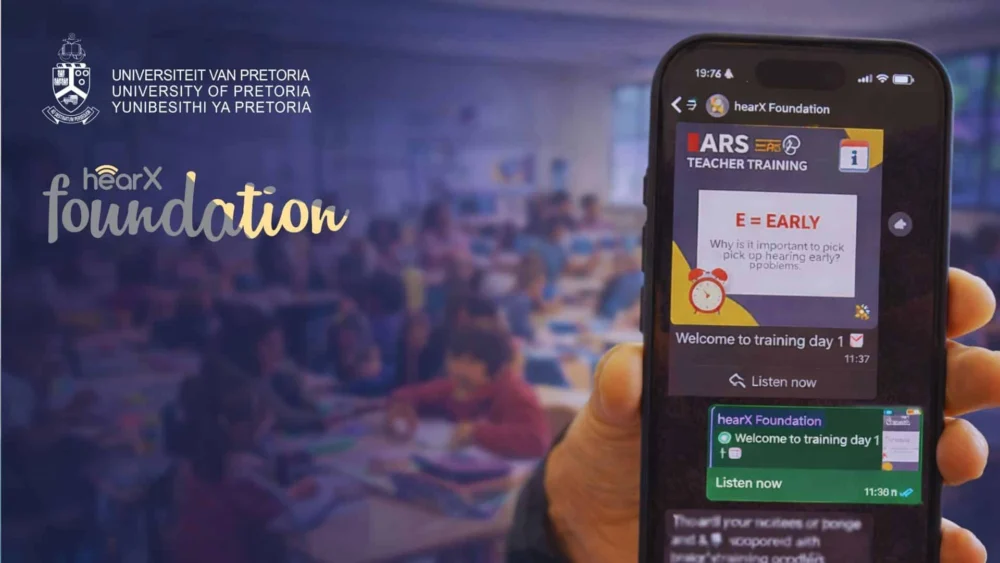
The EARS programme represents a robust, evidence-based intervention rooted in rigorous scientific research. Its genesis lies in a published study that meticulously demonstrated the efficacy of the original mHealth-supported WhatsApp training module. This initial phase successfully improved hearing health knowledge among more than 1,000 early childhood development practitioners, with knowledge gains demonstrably sustained for a period of six months post-training. This foundational research not only validated the program’s pedagogical approach but also established a highly scalable and accessible model for delivering evidence-based hearing health education, particularly in under-resourced settings where traditional in-person training might be impractical or cost-prohibitive.
Building upon this solid scientific bedrock, the 2026 iteration of EARS introduces a significant technological leap: a fully automated upgrade incorporating an advanced AI agent. This artificial intelligence component has been meticulously trained on a comprehensive repository of evidence-based materials, including the latest WHO guidelines on hearing health. The AI-enabled system boasts the capacity to answer participant questions in real-time, provide personalized guidance tailored to individual learning needs, and offer continuous support throughout and beyond the training modules. All these functionalities are seamlessly integrated within the universally familiar and accessible WhatsApp environment, removing barriers to entry and maximizing user engagement. This evolution from a human-facilitated mHealth model to an AI-driven automated system marks a strategic shift towards greater scalability, consistency, and immediate responsiveness, addressing the challenges of human resource limitations and ensuring uninterrupted support for educators.
A Strategic Partnership for Broader Impact
The collaboration between the University of Pretoria and the hearX Foundation is a testament to the power of synergistic partnerships in addressing complex global health challenges. The University of Pretoria’s WHO Collaborating Centre for the Prevention of Deafness and Hearing Loss, a unique institution in Africa, plays a crucial role in this alliance. Established to foster research, provide training, and develop policies in hearing health, the Centre serves as a regional hub for expertise and innovation. Its designation by the WHO underscores its commitment to translating cutting-edge research into practical, impactful solutions that benefit communities.
The hearX Foundation, renowned for its expertise in developing innovative digital health solutions for hearing care, brings invaluable technological and implementation capabilities to the partnership. Their mission aligns perfectly with UP’s vision, focusing on leveraging technology to make hearing care more accessible and affordable, especially in underserved populations. The joint launch of the enhanced EARS programme is a direct manifestation of their shared commitment to the WHO’s 2026 World Hearing Day theme, "From Communities to Classrooms: Hearing Care for All Children." This theme is a call to action, emphasizing the critical role of early detection and intervention within educational settings to safeguard children’s hearing and, by extension, their overall development and future prospects. The partnership strategically leverages the strengths of both organizations: UP’s academic rigor, research leadership, and WHO affiliation, combined with hearX Foundation’s technological prowess and experience in deploying scalable digital health interventions.

Technology as an Enabler: WhatsApp and AI Integration
The choice of WhatsApp as the delivery platform is a deliberate and strategic one, recognizing its pervasive reach and ease of use, particularly in low- and middle-income countries where smartphone penetration often outstrips traditional internet access. The program’s design ensures that no app download is required, no special equipment is needed, and no prior technical knowledge is assumed, democratizing access to this vital training. WhatsApp’s ubiquity means that educators can engage with the EARS programme using a tool they already use daily for communication, significantly lowering the barrier to entry and increasing the likelihood of participation and completion.
The integrated AI agent represents the cutting edge of this initiative. Trained extensively on authoritative WHO resources and the most current evidence in hearing health, this AI is designed to provide immediate, context-aware support. Unlike static training materials, the AI agent can dynamically respond to participant questions, clarify concepts, and offer personalized guidance, effectively mimicking the role of a human instructor but with limitless scalability and 24/7 availability. This real-time interaction fosters a more engaging and effective learning experience, ensuring that educators receive accurate, evidence-aligned support both during and after the formal training modules. The program is specifically engineered to function as an ongoing resource, a continuous wellspring of information and support, rather than a singular, time-bound intervention. This continuous learning model is crucial for reinforcing knowledge and adapting to new challenges in the classroom.
The technical backbone enabling this seamless WhatsApp delivery is provided by Turn.io, a conversational artificial intelligence platform built upon the WhatsApp Business API. Turn.io specializes in enabling organizations to deploy scalable, reliable, and intelligent chat-based services. Its robust infrastructure allows the EARS programme to scale efficiently, not only across South Africa but also to a broader international audience, ensuring that the critical training can reach millions of educators who need it most. This technological partnership ensures the stability, security, and expansive reach required for a program of this magnitude and importance.
Curriculum and Accessibility: What EARS Offers Educators
The EARS programme’s curriculum is meticulously designed to equip teachers with practical, actionable knowledge and skills for identifying and addressing hearing difficulties in children. Delivered entirely via WhatsApp, the programme guides educators through a series of practical modules that cover a comprehensive range of topics essential for early detection and intervention. While the specific module titles were not detailed in the original brief, it can be inferred that they would include:
- Understanding Childhood Hearing Loss: Basics of how hearing works, different types of hearing loss, and common causes.
- Recognizing the Signs: Detailed instruction on observable behavioral and academic indicators of hearing difficulty in various age groups (preschool, primary, secondary). This would include subtle cues often missed by untrained eyes.
- Initial Screening and Referral Pathways: Guidance on simple, non-invasive methods teachers can use to informally assess hearing, and clear protocols for referring children suspected of hearing loss to appropriate health services.
- Communication Strategies for Children with Hearing Loss: Practical tips for effective classroom communication, including seating arrangements, visual aids, speaking clearly, and reducing background noise.
- Supporting Social and Emotional Well-being: Advice on fostering an inclusive classroom environment and addressing the psychological and social impacts of hearing loss.
- Parental Engagement and Advocacy: Strategies for communicating concerns to parents and guardians, and empowering them to seek professional help and advocate for their child’s needs.
- Preventive Measures and Hearing Health Promotion: Information on how to protect children’s hearing, including awareness of noise-induced hearing loss and ear hygiene.
The program’s design prioritizes accessibility, requiring no app downloads, special equipment, or prior technical knowledge. This low-barrier approach ensures that educators, regardless of their technological proficiency or access to advanced devices, can easily participate. The self-paced nature of the WhatsApp modules allows teachers to complete the training at their convenience, fitting it into their demanding schedules without disrupting classroom activities.
Expert Perspectives on a Critical Intervention
Professor De Wet Swanepoel, a leading figure from UP’s WHO Collaborating Centre for the Prevention of Deafness and Hearing Loss, eloquently summarized the core philosophy driving this initiative: "Healthy hearing is the gateway to healthy learning." He further emphasized the university’s profound responsibility as Africa’s only such WHO Collaborating Centre to translate groundbreaking research into tangible, real-world impact. "This partnership with the hearX Foundation does exactly that. By placing an evidence-based, AI-supported training tool in the hands of every teacher, we are taking the science out of the laboratory and into the classroom, where it truly matters." His statement underscores the practical application of academic excellence and the ethical imperative to leverage scientific discovery for societal betterment.
A representative from the hearX Foundation, while not quoted directly in the original article, would likely echo Professor Swanepoel’s sentiments, emphasizing the transformative power of technology in democratizing access to health education. "Our mission at hearX Foundation has always been to innovate solutions that bridge the gap in hearing healthcare. The EARS programme, with its AI-powered WhatsApp delivery, represents a paradigm shift in how we can empower frontline educators. It’s about equipping them with the tools to change lives, one child at a time, ensuring that geographic or economic barriers no longer dictate access to vital health knowledge."

Similarly, a spokesperson for Turn.io might highlight the platform’s role in enabling such impactful initiatives. "We are incredibly proud that our conversational AI platform supports the EARS programme. It exemplifies how technology, specifically the WhatsApp Business API, can be harnessed to deliver critical health education at an unprecedented scale. By facilitating real-time, personalized interaction, we are helping to ensure that millions of educators can access life-changing training, fostering a healthier future for children across the globe."
Broader Implications for Public Health and Education
The launch of the AI-powered EARS programme carries profound implications for both public health and education sectors globally. Firstly, it promises a significant improvement in early detection rates of childhood hearing loss, particularly in communities that have historically lacked access to specialized audiological services. By empowering teachers to identify signs of hearing difficulty early, the programme can drastically reduce the average age of diagnosis, enabling timely intervention that can mitigate long-term developmental and educational setbacks.
Secondly, the scalability and cost-effectiveness of a WhatsApp-based, AI-powered solution are revolutionary. Traditional training methods often face logistical hurdles, high costs, and limited reach. The EARS programme bypasses these challenges, offering a low-cost, high-impact model that can be deployed to millions of educators without the need for extensive infrastructure or continuous human trainers. This model presents a blueprint for disseminating other critical health education modules, such as vision screening, nutrition, or mental health awareness, especially in resource-constrained environments.
Furthermore, the integration of AI ensures consistency and quality of information, as the agent is trained on verified, evidence-based guidelines. This reduces variability in training outcomes and provides a reliable, constantly available resource for ongoing support. For the educational system, a healthier student body means improved learning outcomes, reduced dropout rates, and a more inclusive classroom environment where every child has the opportunity to thrive. The program also fosters a greater sense of awareness and responsibility among educators regarding their students’ overall well-being, moving beyond purely academic concerns.
Ultimately, the EARS programme is not just about detecting hearing loss; it’s about fostering an ecosystem of early care that respects every child’s right to communicate, learn, and participate fully in society. It exemplifies how strategic partnerships, cutting-edge technology, and a commitment to evidence-based practice can converge to create truly transformative solutions that bridge health equity gaps and empower communities from the ground up.
How to Participate
The training is entirely free of charge and readily available to all teachers working with preschool and school-aged children. Participating in this transformative programme is straightforward. Educators interested in enhancing their ability to detect early signs of hearing loss can begin their training by simply sending the word "EARS" via WhatsApp to +27 87 813 4013. Alternatively, they can initiate the conversation directly by visiting the link: https://wa.me/27878134013. This accessible entry point ensures that any educator with a smartphone and WhatsApp access can immediately embark on this crucial learning journey, contributing to a brighter, more inclusive future for millions of children.