The Paradigm Shift in Auditory Processing
For decades, the prevailing model of auditory perception suggested that sound waves are converted into electrical impulses by the ear, which are then transmitted to the primary auditory cortex for registration. While this model accounts for the initial reception of sound, it fails to capture the holistic and transformative impact that continuous auditory streams have on the brain’s global architecture. The research led by Dr. Mattia Rosso and Associate Professor Leonardo Bonetti demonstrates that the brain is far more proactive than previously understood.
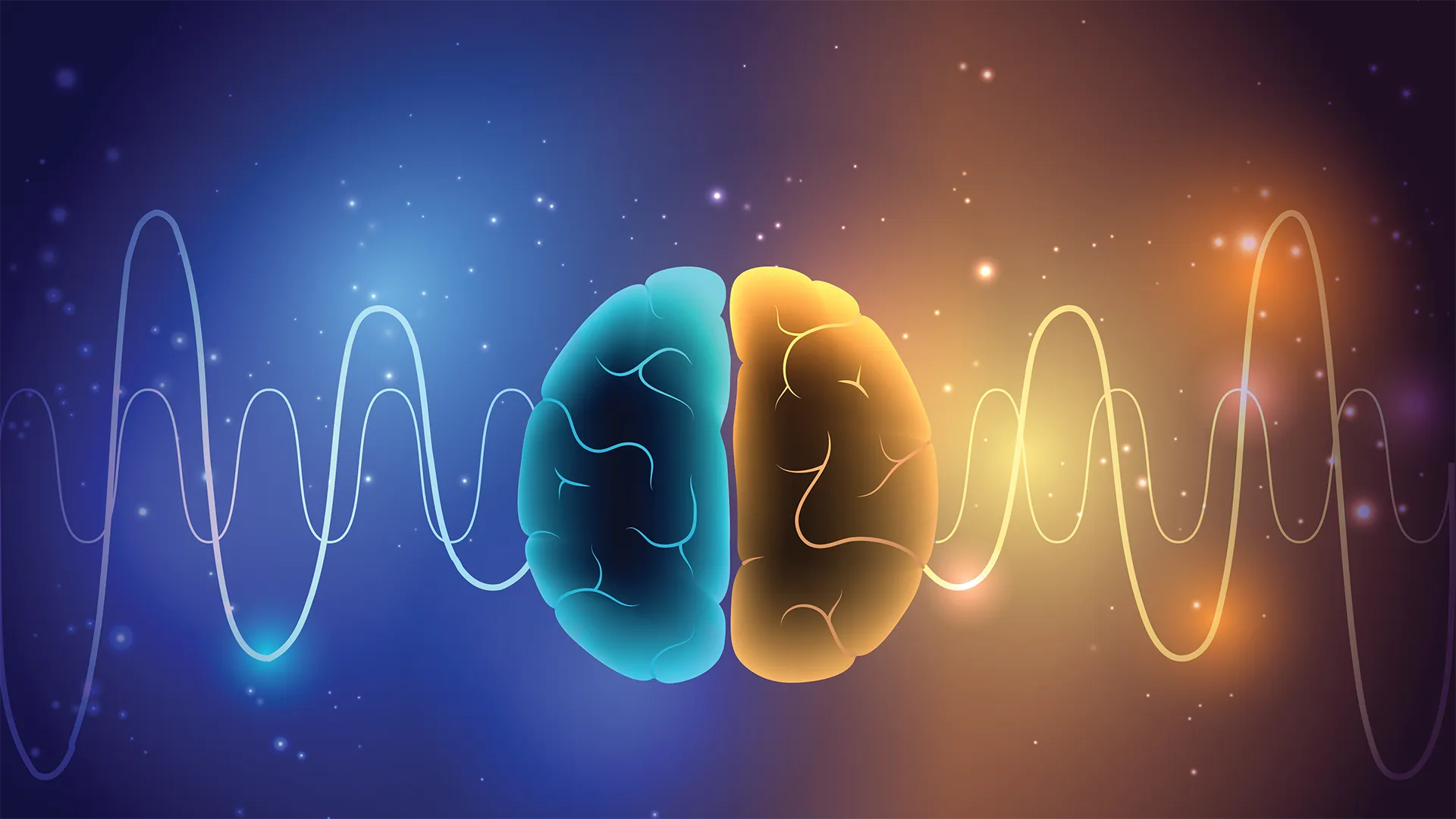
When a person listens to a continuous stream of sounds, such as a rhythmic beat or a melodic sequence, the brain’s internal networks do not remain static. Instead, they reconfigure their connectivity patterns to align with the frequency and structure of the external stimuli. This process, known as dynamic reconfiguration, suggests that the brain essentially "retunes" itself to its surroundings, creating a synchronized state between internal neural oscillations and external environmental rhythms.
Introducing FREQ-NESS: A New Frontier in Neuroimaging
The cornerstone of this research is the development of FREQ-NESS, a novel computational method designed to solve one of the most persistent problems in neuroscience: the "mixing" of signals. Traditional neuroimaging tools, such as Magnetoencephalography (MEG) or Electroencephalography (EEG), capture a wealth of data regarding brain activity, but these signals often overlap, making it difficult to determine which specific network is responsible for which function.
FREQ-NESS utilizes advanced source separation algorithms to disentangle these overlapping networks based on their dominant frequencies. By identifying a network through its unique "spectral signature," researchers can then trace how that specific network propagates across the spatial landscape of the brain. This allows for a dual-axis understanding of neural activity—mapping both when a frequency occurs and where it travels.
"We’re used to thinking of brainwaves like fixed stations—alpha, beta, gamma—and of brain anatomy as a set of distinct regions," Dr. Rosso explained. "But what we see with FREQ-NESS is much richer. It is long known that brain activity is organized through activity in different frequencies, tuned both internally and to the environment. Starting from this fundamental principle, we’ve designed a method that finds how each frequency is expressed across the brain."
The Chronology of Neural Mapping and the Evolution of the Study
The development of the FREQ-NESS method follows a decade of rapid advancement in signal processing and computational neuroscience. In the early 2010s, researchers focused heavily on "Functional Connectivity," which looked at how different brain regions communicated. However, these studies often relied on Functional Magnetic Resonance Imaging (fMRI), which, while spatially precise, lacks the temporal resolution to capture the millisecond-by-millisecond changes involved in music and rhythm perception.
Recognizing this gap, the team at Aarhus University began working on a way to combine the high temporal resolution of electrophysiological data with a more sophisticated spatial mapping technique. Over a multi-year period, the researchers refined the FREQ-NESS algorithm, testing it against various datasets to ensure its reliability. The study published in Advanced Science is the culmination of this effort, providing the first comprehensive evidence that the brain’s large-scale networks are frequency-dependent and highly plastic in the short term.
Technical Breakdown: How the Brain Orchestrates Sound
The research highlights that the brain operates through a series of "oscillatory hierarchies." When a rhythmic tone is introduced, the primary auditory cortex registers the frequency, but almost immediately, secondary networks—including those involved in motor control, memory, and executive function—begin to oscillate in harmony with the sound.
Using FREQ-NESS, the researchers were able to visualize this "orchestration." For instance, a 10Hz (Alpha) rhythm might originate in the visual or parietal regions but, upon the introduction of a steady auditory beat, the network responsible for that frequency may shift its spatial orientation to incorporate the temporal processing centers of the brain. This suggests that the brain’s "hardware" is essentially being rewritten by the "software" of the incoming auditory data.
This high level of spectral and spatial precision allows for the mapping of the whole brain’s internal organization without the need for predefined "regions of interest." Unlike older methods that required scientists to tell the computer where to look, FREQ-NESS is data-driven, allowing the neural patterns to reveal themselves organically.
Implications for Clinical Diagnostics and Neurotechnology
The ability to map the brain’s dynamic reorganization in real-time has profound implications for several fields, most notably clinical diagnostics. Many neurological and psychiatric conditions, such as schizophrenia, Alzheimer’s disease, and autism spectrum disorder, are characterized by "dysconnectivity"—a failure of brain networks to communicate effectively.
By using FREQ-NESS, clinicians may eventually be able to identify "biomarkers" of these diseases by observing how a patient’s brain fails to reorganize in response to standard rhythmic stimuli. If a healthy brain reorganizes its networks in a specific, predictable pattern when hearing a tone, and a patient’s brain does not, this could provide an early and highly accurate diagnostic tool.
Furthermore, the research has significant applications for the development of Brain-Computer Interfaces (BCIs). Current BCI technology often struggles with the "noise" of overlapping brain signals. FREQ-NESS provides a cleaner, frequency-resolved map of neural activity, which could allow for more precise control of prosthetic limbs or communication devices for individuals with paralysis.
Music Cognition and the Mystery of Consciousness
Beyond the clinical and technical benefits, the study offers deep insights into the nature of human consciousness and music cognition. Professor Leonardo Bonetti, a neuroscientist at both Aarhus University and the University of Oxford’s Centre for Eudaimonia and Human Flourishing, emphasizes that this research touches upon the very core of how we interact with the world.
"The brain doesn’t just react: it reconfigures. And now we can see it," says Bonetti. "This could change how we study brain responses to music and beyond, including consciousness, mind-wandering, and broader interactions with the external world."
Music is a unique stimulus because it is inherently structured around time and rhythm. The fact that the brain reorganizes itself to mirror these structures explains why music has such a powerful effect on human emotion and memory. It suggests that when we listen to music, our brain is not just "listening"—it is physically and functionally aligning itself with the art form. This alignment may be a key component of "flow states" or deep states of concentration and meditation.
Future Research: Individualized Brain Mapping
The success of the FREQ-NESS study has sparked an international research program supported by a global network of neuroscientists. One of the most promising avenues for future study is the potential for individualized brain mapping. Because FREQ-NESS has shown high reliability across different experimental conditions and datasets, it may be possible to create "neural fingerprints" for individuals.
Every person’s brain may reorganize itself in a slightly different way. Understanding these individual differences could lead to personalized medicine in the realm of neurology, where treatments for depression or anxiety are tailored to the specific way an individual’s brain networks respond to external stimuli.
The research team is currently expanding their scope to investigate how the brain reconfigures during "altered states of consciousness," such as during sleep, under anesthesia, or during pharmacological interventions. If the brain’s ability to reorganize is a hallmark of healthy consciousness, then tracking the breakdown of this reorganization could provide the first objective measurement of the "level" of consciousness in non-responsive patients.
Conclusion: A New Map for the Mind
The study from Aarhus University and the University of Oxford marks a turning point in the field of neuroscience. By moving away from a static view of the brain and embracing the dynamic, frequency-driven nature of neural activity, researchers have opened a new door to understanding the human mind.
The FREQ-NESS method provides the scientific community with a powerful new lens through which to view the brain’s internal workings. As this technology is refined and applied to broader contexts, it promises to revolutionize our understanding of everything from the basic perception of a single beep to the complex, transcendent experience of a symphony. The brain, it seems, is an instrument that is constantly being tuned by the world around it—and for the first time, we can see the music it creates within itself.