The program, led by a team of UCT occupational medicine registrars and specialist consultants, provided a comprehensive introduction to the fundamental principles that govern modern workplace environments. By exposing students to the complexities of risk management and labor rights, the university aims to foster a generation of workers who are not only aware of their environment but empowered to advocate for their own well-being.
Theoretical Foundations of Occupational Safety
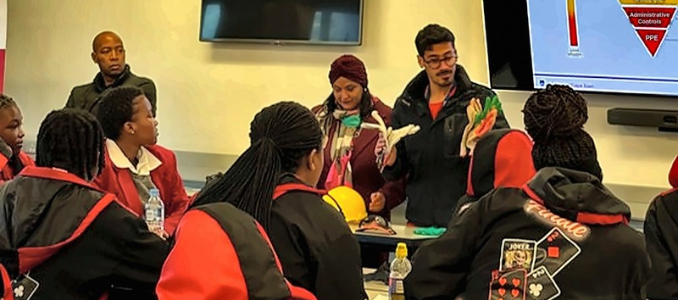
The curriculum for the day was structured to move from abstract concepts to practical application. Initially, students were introduced to the bedrock of occupational health. This included a detailed breakdown of risk assessment and the hierarchy of controls—a systematic approach to eliminating or minimizing hazards in the workplace.
The session emphasized the distinction between hazard and risk, a critical nuance for any future professional. Students learned that a hazard is any source of potential damage, harm, or adverse health effects on something or someone, whereas risk is the chance—high or low—that a person will be harmed if exposed to a hazard. By identifying these variables, the students gained insight into how professional safety protocols are developed.
Furthermore, the session covered the concept of "decent work," a term popularized by the International Labour Organization (ILO), which encapsulates the aspirations of people in their working lives. The curriculum highlighted that safety is not merely a technical requirement but a fundamental human right. Students were educated on the duties of employers to provide safe working conditions and the corresponding duties of employees to comply with safety protocols, thereby reinforcing the concept of a shared responsibility in workplace health.

The Interactive Team Challenge: A Practical Application
Moving beyond theoretical instruction, the organizers facilitated a dynamic team challenge designed to mirror real-world industrial scenarios. The sixty-five students were divided into groups, with each cohort assigned a specific industry—such as construction, healthcare, manufacturing, or agriculture.
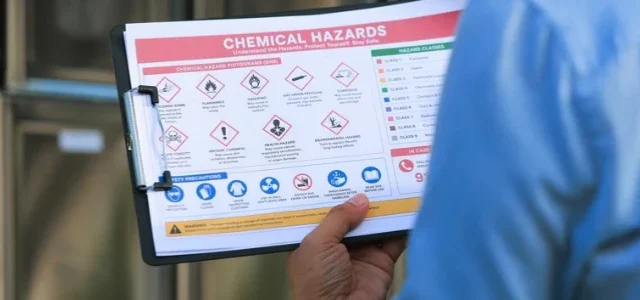
In these groups, the students were tasked with a multi-step audit of their assigned sectors. First, they conducted a brainstorming session to list common job roles within that industry. Next, they performed a "hazard hunt," identifying potential physical, chemical, biological, or ergonomic dangers associated with those roles. For instance, a group assigned to the construction sector might identify falling objects, noise pollution, and heavy machinery as primary hazards.
Once the hazards were identified, the students were required to predict potential injuries or long-term occupational diseases—such as silicosis in mining or repetitive strain injuries in assembly lines. Finally, each group had to devise practical, evidence-based mitigation strategies. This phase required students to think critically about engineering controls, administrative changes, and the use of Personal Protective Equipment (PPE). The process culminated in group presentations, where students articulated their findings and defended their safety strategies, effectively simulating the professional reporting process found in corporate health and safety meetings.

Expert Mentorship and the Role of the UCT Faculty
The success of the session relied heavily on the active involvement of the UCT medical faculty. Dr. Luqmaan Mohamed, Dr. Kagiso Peter, and consultant Dr. Yumna Williams-Mohamed provided the necessary clinical expertise to ground the students’ theoretical learning.
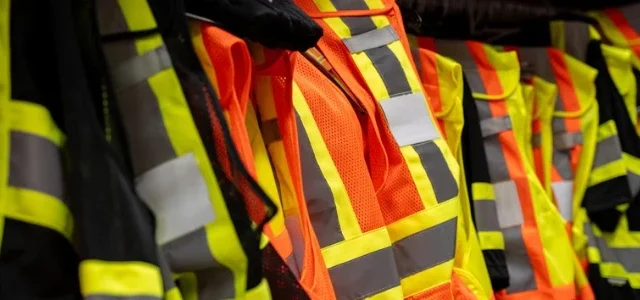
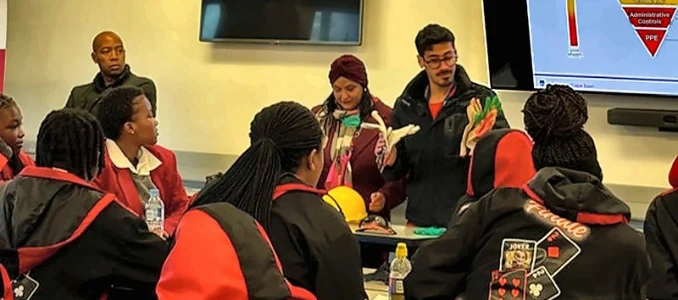
The inclusion of these experts served a dual purpose: it ensured that the information provided was accurate and aligned with current medical standards, and it provided students with direct access to professionals in the field. The experts demonstrated the correct use of various types of PPE, ranging from respiratory protection to high-visibility gear, allowing students to physically engage with the equipment.
By acting as mentors, the UCT team helped demystify the medical profession and highlighted the importance of occupational medicine as a career path. This interaction is particularly valuable in the South African context, where the burden of occupational disease remains a significant public health challenge.

Data and Context: The Need for Early Education
The necessity of such an initiative is supported by current labor market and health data. According to the International Labour Organization, approximately 2.3 million people die annually from work-related accidents or diseases globally. In South Africa, the mining, agricultural, and manufacturing sectors continue to face high rates of occupational injury.
Introducing these concepts to Grade 12 students—who are often months away from entering the workforce—serves as a primary prevention strategy. By creating a culture of safety awareness early, the UCT initiative seeks to reduce the incidence of workplace injuries. Educational research indicates that when safety training is integrated into the pre-employment phase, individuals are significantly more likely to utilize protective equipment and adhere to safety standards once they are formally employed.
Furthermore, the "Science is Fun" program addresses the socioeconomic disparity in information access. Students in underserved communities like Imizamo Yethu are often at a higher risk of entering high-hazard, low-regulation environments. Providing them with the knowledge of their rights—such as the right to refuse unsafe work—is an essential tool for social and economic empowerment.

Implications for Future Workforce Development
The long-term implications of the UCT outreach program extend beyond simple injury prevention. By fostering an analytical mindset, the program encourages students to look critically at their future workplaces. This shift in perspective—from passive employee to active participant in safety culture—can have profound effects on the national labor landscape.
If such programs were scaled, they could lead to a measurable improvement in workplace safety standards. An informed workforce is more likely to demand accountability from employers, which in turn incentivizes companies to invest in safer technologies and comprehensive training programs.
Moreover, the initiative highlights the university’s role as a social actor. By moving outside the traditional academic environment and engaging directly with secondary schools, UCT is fulfilling a critical mandate of community service. This collaborative model between academia and public education is increasingly viewed as a best practice for addressing complex social issues such as workplace safety and health inequity.

Looking Ahead: Sustainability and Expansion
The UCT team has noted that the "Qhaphela!" initiative is intended to be more than a one-off event. By establishing a framework for occupational health literacy, the university hopes to inspire similar programs across other South African universities. The positive reception from the students at Silikamwa High School suggests a strong appetite for practical, career-oriented education.
As the program moves forward, there is potential for digital integration, perhaps through the use of virtual reality simulations of hazardous environments or mobile applications that track workplace safety statistics. Such advancements would further solidify the importance of the work UCT is doing.
In conclusion, the visit to Silikamwa High School stands as a testament to the power of targeted, expert-led outreach. By equipping young adults with the tools to identify hazards, understand their rights, and implement safety solutions, the University of Cape Town is helping to build a safer, more resilient workforce. The lessons imparted during this session—that health and safety are integral to the dignity of work—will likely remain with these students long after they graduate and enter the professional sphere, ultimately contributing to a culture of safety that could save countless lives in the years to come.