
The Foundation of Digital Inclusion: Semantic HTML and the Accessibility Tree
This structural clarity is essential because of how browsers process code. When a browser renders a page, it creates a Document Object Model (DOM) and, simultaneously, an Accessibility Tree. The Accessibility Tree is a subset of the DOM that contains only the information relevant to assistive technology, such as screen readers (e.g., JAWS, NVDA, or VoiceOver). If a developer uses a <div> to create a button, the Accessibility Tree sees a generic container with no inherent action. Conversely, using the semantic <button> tag automatically informs the screen reader that the element is interactive and can be "pressed."
James Gordon, Senior Frontend Developer at the Department for Work and Pensions, highlights a common pitfall in modern development: the "faux-link." He notes that developers often use images or generic text with JavaScript click events to mimic links. While these may look functional to sighted users, they are invisible or confusing to screen readers unless substantial manual work—such as adding ARIA (Accessible Rich Internet Applications) roles and alt-text—is performed. Gordon argues that the current state of web development is often a "hangover" of trying to patch gaps in HTML with JavaScript, often at the expense of the underlying meaning.
A Chronology of Web Standards and UK Mandates
The emphasis on accessible code is not merely a matter of best practice but a legal requirement in the United Kingdom. The timeline of these requirements provides context for the current focus within government departments:
- 1999: The Web Accessibility Initiative (WAI) releases WCAG 1.0, the first international standard.
- 2008: WCAG 2.0 is published, introducing the four principles of accessibility: Perceivable, Operable, Understandable, and Robust (POUR).
- 2018: The UK introduces the Public Sector Bodies (Websites and Mobile Applications) (No. 2) Accessibility Regulations. This mandated that all public sector websites must meet WCAG 2.1 AA standards.
- 2023: WCAG 2.2 is officially released, adding new criteria regarding focus appearance, target size, and redundant entry.
- 2024-2025: Government departments transition toward "Accessibility by Default," moving beyond simple compliance toward proactive user-centered design.
Michael Cheung, Senior Front-end Developer at NHS England, emphasizes that using semantic HTML provides "accessibility for free." By adhering to the specifications laid out by the World Wide Web Consortium (W3C), developers ensure that their code is "Robust"—the fourth POUR principle—meaning it will remain compatible with future assistive technologies and browser updates.
Supporting Data: The High Cost of Inaccessibility
The drive toward semantic HTML is supported by alarming data regarding the current state of the web. According to the "WebAIM Million" report—an annual accessibility evaluation of the top one million home pages—95.9% of home pages had detected WCAG 2 failures in 2024. The most common errors included low-contrast text (81%), missing image alt-text (54.5%), and empty links (44.6%).
In the UK, the "Click-Away Pound" survey has consistently shown that 71% of disabled web users will leave a website that they find difficult to use. This represents a significant loss of engagement and potential economic impact, estimated at billions of pounds annually across the UK private sector. Within the public sector, the stakes are even higher, as inaccessible services can prevent citizens from accessing essential benefits, healthcare information, or housing support.
The "Shift-Left" Methodology: Accessibility from the Start
A recurring theme among the developers interviewed is the "Shift-Left" approach—the practice of integrating accessibility testing and consideration into the earliest stages of the development lifecycle. This contradicts the traditional "audit-and-fix" model, where accessibility is checked only after a website is built.
Dilwoar Hussain advocates for working with designers and content writers during the prototyping phase to flag potential issues. This includes ensuring color contrast meets the 4.5:1 ratio required for standard text and verifying that headings follow a logical hierarchy (<h1> followed by <h2>, and so on).

Holly Blues, a Front-end Developer at DWP Digital, notes that accessibility is a collective responsibility. At DWP, the process involves everyone from Product Owners to Quality Assurance (QA) testers. By utilizing established frameworks like the GOV.UK Design System, developers can start with components that have already undergone rigorous accessibility testing. This reduces the reliance on external plugins or automated tools, which, while helpful, often fail to catch more than 30% to 40% of accessibility barriers.
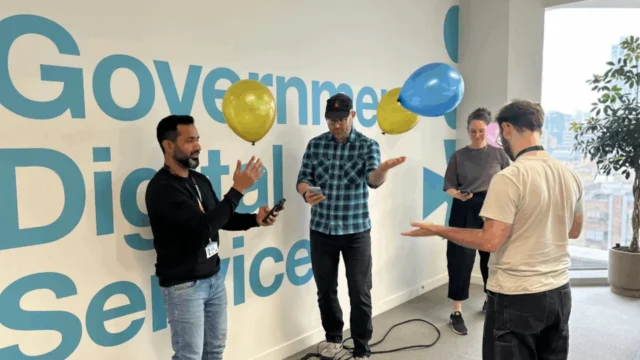
David Biddle of the Government Digital Service suggests that developers should manually test their code using only a keyboard and a browser’s built-in developer tools. This "zero-tool" approach forces developers to experience the site as a keyboard-only user would, highlighting issues with focus indicators and tab order that automated scanners often miss.
Navigating Complexity: Dynamic Content and ARIA
As websites move away from static documents toward complex applications, the challenge for frontend developers increases. Dynamic content—elements that change without a page reload, such as modals, carousels, and live search results—requires advanced techniques to remain accessible.
Dilwoar Hussain explains the importance of Progressive Enhancement. For a collapsible accordion, the core content should be available even if JavaScript fails to load. When JavaScript is active, the developer must manage the "state" of the element. Using the aria-expanded attribute, a developer can signal to a screen reader whether a section is open or closed. Without this, a screen reader user might click a button and have no indication that new text has appeared elsewhere on the screen.
The use of the <dialog> element is another modern advancement highlighted by David Biddle. Historically, creating an accessible modal (a popup that "traps" the user’s focus until closed) required complex JavaScript to prevent users from accidentally tabbing into the background content. The native HTML5 <dialog> element handles much of this "focus trapping" automatically, reducing the margin for error.
Official Responses and Strategic Implications
The collaboration between these departments signals a unified front in the UK government’s digital strategy. By sharing resources, such as the NHS Design System and the DWP’s internal patterns, the public sector is creating a standardized language for accessibility.
Industry analysts suggest that this government-led transparency has a "halo effect" on the private sector. As GDS publishes its findings and code snippets, private companies often adopt these patterns to ensure their own compliance with the Equality Act 2010. The emphasis on "clean HTML" also has secondary benefits, including improved Search Engine Optimization (SEO) and faster page load speeds, as semantic code is generally more lightweight than JavaScript-heavy alternatives.
Broader Impact and Future Outlook
The "Unlocking Accessibility" series underscores a fundamental shift in how digital infrastructure is perceived. It is no longer enough for a website to be functional; it must be equitable. The insights provided by Hussain, Gordon, Cheung, Blues, and Biddle suggest that the future of frontend development is not in more complex frameworks, but in a return to the robust, meaningful use of the web’s core languages.
As the UK government continues to iterate on its services, the focus is likely to expand toward cognitive accessibility—ensuring that services are easy to understand for users with neurodivergent conditions. However, as these developers have demonstrated, the foundation for all future innovations remains the same: well-structured, semantic HTML that speaks clearly to both humans and machines.
The ongoing dialogue within the "Unlocking Accessibility" series serves as a call to action for developers globally. By prioritizing accessibility at the code level, the digital community can move closer to a web that truly serves everyone, regardless of how they navigate the digital world. The commitment of these public sector developers ensures that the UK remains at the forefront of this essential movement.