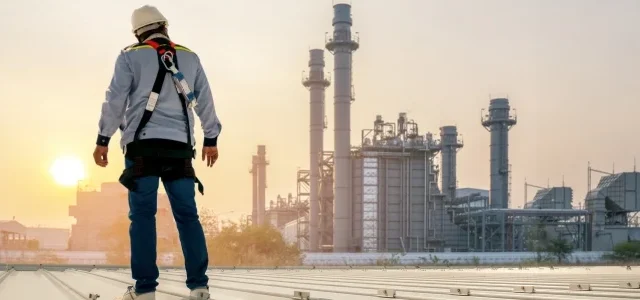

The challenge facing modern management is not necessarily the volume of capital deployed toward risk mitigation, but the precision with which that capital is applied. When a company faces a dense landscape of hazards—ranging from aging heavy machinery to evolving chemical exposure risks—the competition for funding can lead to a fragmented approach. Without a rigorous, data-driven framework, organizations frequently fall into the trap of financing low-impact improvements while leaving high-consequence systemic risks unaddressed.

The Evolution of Safety Economics
Historically, safety budgets were reactive, triggered primarily by post-incident insurance claims or citations from regulatory bodies like the Occupational Safety and Health Administration (OSHA). The modern shift toward "Safety II" and proactive risk management represents a fundamental departure from this model. By viewing safety as a proactive investment rather than a reactive cost, firms are finding that they can prevent losses that significantly exceed the initial capital outlay.
According to data from the National Safety Council (NSC), the total cost of work-related injuries in the United States alone reached an estimated $171 billion in 2023. This figure encompasses wage and productivity losses, medical expenses, and administrative costs. When these numbers are adjusted for the broader economic impact—including recruitment, training, and the reputational damage associated with workplace fatalities—the return on investment (ROI) for preventative safety measures becomes statistically undeniable.
Strategic Prioritization: The Hierarchy of Controls
The foundational principle for any effective safety budget is the Hierarchy of Controls, a framework that dictates the most effective ways to mitigate risk. Organizations that maximize their budget impact typically prioritize spending in the following order: elimination, substitution, engineering controls, administrative controls, and finally, personal protective equipment (PPE).

- Elimination and Substitution: While these often carry higher upfront costs, they provide the most permanent risk reduction. Investing in automated lifting systems to remove the need for manual handling, for instance, eliminates the risk of musculoskeletal injuries entirely, whereas training programs (an administrative control) only mitigate the risk.
- Engineering Controls: These are essential for isolating workers from hazards. In sectors such as manufacturing and construction, retrofitting machines with modern guarding systems or installing physical barriers for electrical work represents a high-value allocation of funds because these controls do not rely on constant human behavior to be effective.
- Administrative Controls and PPE: These are often the cheapest options, yet they are the least effective over the long term. A company that relies solely on issuing earplugs instead of investing in noise-dampening machinery is likely to incur higher long-term costs in medical monitoring and potential workers’ compensation claims.
Data-Driven Budgeting: A Chronology of Risk Assessment
To move away from intuition-based spending, organizations are increasingly adopting a "risk-cycle" approach to their fiscal planning. This process typically occurs in four distinct phases throughout the fiscal year:
Phase 1: The Audit Cycle (Q1-Q2): This period is dedicated to gathering granular data. This includes reviewing the past three years of OSHA 300 logs, analyzing near-miss reports, and conducting "skip-level" interviews where frontline workers provide candid feedback on equipment performance. During this phase, safety teams must correlate incident reports with equipment maintenance cycles to identify patterns of failure.
Phase 2: Gap Analysis (Q2): Once the data is consolidated, the organization must map its current safety posture against industry benchmarks. If a company’s incident rate for "struck-by" injuries is 15% higher than the industry average, the budget for 2026 must be weighted toward vehicle movement protocols, telematics for heavy equipment, and site-wide traffic management.

Phase 3: The Investment Pitch (Q3): This is the critical juncture where safety professionals must speak the language of finance. Rather than presenting a "wish list" of equipment, safety leaders present a "risk reduction projection." For example, if a conveyor belt system causes 40% of the site’s ergonomic injuries, the proposal for a modular replacement should include the projected savings in physical therapy costs and lost-time wages.
Phase 4: Implementation and Verification (Q4): Once funds are allocated, the final step is ensuring the control’s effectiveness. If a new safety system is installed, the budget should account for post-implementation auditing to verify that the equipment is actually reducing incident rates.
Beyond the Price Tag: The Total Cost of Ownership (TCO)
A pervasive error in safety budgeting is the focus on the initial purchase price. Procurement departments often prioritize the lowest-bidder strategy, but this frequently leads to "hidden costs" that undermine safety objectives. When evaluating new safety equipment, organizations should perform a TCO analysis that includes:

- Maintenance and Lifecycle Costs: A piece of high-quality, durable equipment may cost 20% more initially but require 50% less maintenance over a five-year period.
- Training and Compatibility: A low-cost tool that requires extensive, specialized training may actually be more expensive than a user-friendly, more expensive alternative that requires minimal onboarding.
- Reliability and Downtime: Equipment that breaks down frequently increases the risk of "workarounds"—the dangerous shortcuts employees take to meet production quotas when tools fail.
The Regulatory and Operational Landscape
The implications of failing to prioritize safety budgets go beyond immediate fiscal losses. Recent shifts in legal precedents have seen an increase in "willful violation" penalties for companies that fail to address known hazards despite possessing the means to fix them. As OSHA continues to modernize its enforcement strategies, including the use of targeted inspections based on data-sharing between government agencies, the cost of non-compliance is rising.
Industry analysts suggest that the most resilient organizations are those that integrate safety professionals directly into the strategic planning sessions of the C-suite. When the Chief Financial Officer (CFO) and the Safety Director are aligned, the safety budget is no longer viewed as a target for austerity measures during lean times. Instead, it is treated as a strategic reserve that protects the company’s most valuable asset: its human capital.
Addressing the Human Element: Worker Feedback
Perhaps the most underutilized data point in safety budgeting is the qualitative input from those on the shop floor. When employees are involved in the selection process for PPE or the design of a new safety protocol, the adoption rate of that safety measure increases significantly.

An internal study conducted by a leading global logistics firm found that when frontline workers were given a voice in the procurement process for high-visibility gear and ergonomic hand tools, reported "near misses" dropped by 22% within the first six months. This suggests that the budget is not just about the equipment itself, but about creating a culture where safety is a collaborative, transparent process.
Strategic Implications for the Future
As industries move toward increased automation and the integration of artificial intelligence in the workplace, the nature of hazards is changing. The safety budgets of 2026 and beyond must account for new risks, such as human-robot interaction, cybersecurity as a safety issue, and the mental health impacts of remote or high-pressure environments.
Investing in these areas requires a departure from traditional capital allocation. Organizations must be prepared to invest in "soft" safety infrastructure—such as predictive data analytics and mental health support programs—alongside "hard" infrastructure like protective guards and ventilation systems.

Ultimately, the most effective safety budgets are those that remain agile. By treating safety as a dynamic investment rather than a static cost, organizations can build a framework that not only survives the inevitable fluctuations of the market but ensures that every worker returns home in the same condition in which they arrived. The data confirms the premise: the cost of prevention remains significantly lower than the price of a tragedy, making the strategic allocation of safety funds the single most important fiscal decision an executive can make.