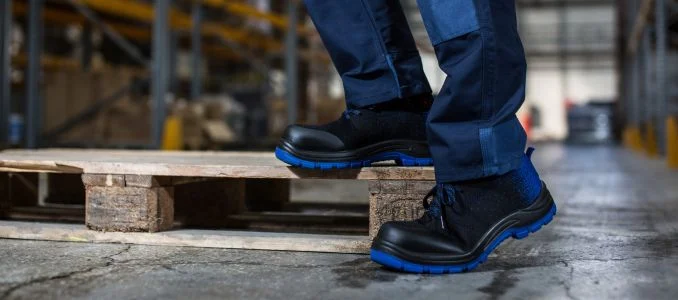
This often-overlooked issue is driving a silent crisis in workforce retention. Chronic conditions like plantar fasciitis—the inflammation of the thick band of tissue that runs across the bottom of the foot—develop incrementally. Because the onset is gradual, neither the individual worker nor the corporate safety program often draws the necessary connection to the mandatory footwear policy. Workers suffer in silence until the pain becomes debilitating, often resulting in requests for light duty, extended medical leave, or in many cases, a premature exit from the trades.
The Illusion of Compliance: ASTM F2413 and the Scope of Protection
The core of the issue lies in a fundamental misunderstanding of what industry standards actually guarantee. In the United States, OSHA’s 29 CFR 1910.136 regulation mandates that employers ensure workers wear protective footwear when exposed to hazards such as falling or rolling objects, puncture risks, or electrical dangers. To meet this mandate, safety managers almost universally rely on ASTM F2413, the consensus standard for performance requirements for protective footwear.
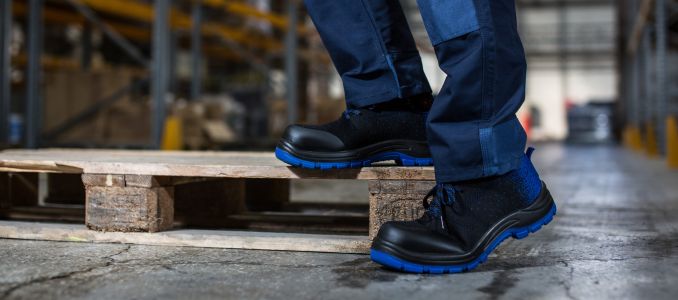
ASTM F2413 is a rigorous, highly specific document. It provides a definitive framework for impact and compression protection at the toe, as well as optional designations for metatarsal guard protection, conductive properties, and puncture resistance. When a boot is labeled “ASTM F2413 compliant,” it means the footwear has been subjected to laboratory-grade stress tests—such as drop tests with heavy weights and compression tests using hydraulic presses—and has passed those benchmarks.
However, the standard is essentially binary: it measures whether a boot can survive a catastrophic impact or a specific hazard. It does not contain a single requirement for longitudinal arch support, midfoot stability, heel geometry, or the long-term cushioning integrity of the midsole. A boot can be perfectly compliant with ASTM F2413 while providing the ergonomic equivalent of standing on a flat, unyielding sheet of steel for 40 hours a week. The standard was written to govern acute, traumatic injury; it was never intended to address the progressive, chronic degradation of the human foot under the rigors of industrial work.
The Evolution of Occupational Footwear Standards
To understand why this gap exists, one must look at the history of industrial safety. The evolution of foot protection has been largely reactionary, driven by high-profile accident reports and a focus on preventing immediate, visible injuries—crushed toes, severed digits, and electric shocks.
In the mid-20th century, the focus was entirely on shielding the foot from the environment. The American National Standards Institute (ANSI) established the Z41 standard in 1967, which served as the primary benchmark for decades. In 2005, the ASTM International F2413 standard replaced the aging ANSI Z41, updating testing protocols for modern materials like composite toes and advanced polymers. Throughout these transitions, the focus remained fixed on the "protecting the foot from the outside in" model.

It was not until the late 2010s that ergonomics began to enter the conversation. Data from the Bureau of Labor Statistics (BLS) indicates that while traumatic foot injuries have trended downward due to better PPE compliance, the incidence rate of musculoskeletal disorders (MSDs) involving the lower extremities has seen a relative plateau. Industry experts suggest that while we have successfully prevented the "crush" injury, we have inadvertently allowed a "fatigue" injury to thrive in its place.
Data-Driven Reality: The Cost of Chronic Pain
The clinical implications of improper footwear are well-documented by orthopedic specialists. Plantar fasciitis, often exacerbated by the lack of arch support in standard-issue safety boots, is a leading cause of missed workdays. According to the American Academy of Orthopaedic Surgeons, nearly 2 million patients are treated for plantar fasciitis annually in the U.S. In an industrial context, the "hard surface" factor—typically concrete or steel decking—compounds this issue significantly.
When a worker’s arch collapses due to inadequate support, the mechanical chain reaction extends up the kinetic chain. The foot rolls inward (pronation), which internally rotates the knee, increases stress on the hip joint, and inevitably leads to lower back strain. This creates a hidden productivity tax. A fatigued worker is objectively less attentive. As a worker adjusts their posture to alleviate foot pain, they lose focus on the primary task at hand, increasing the probability of secondary accidents.
Studies in industrial ergonomics have shown that when workers are provided with footwear that includes orthotic-grade support—specifically regarding arch height and heel cup depth—self-reported pain levels decrease by as much as 40% after three months. Furthermore, companies that invest in ergonomic footwear report higher employee morale and lower turnover rates among veteran staff, who are the most susceptible to long-term wear and tear.

The "Worn-in-Practice" Gap
Safety professionals are already familiar with this discrepancy in other areas of PPE. A hearing protector might be laboratory-rated for a high Noise Reduction Rating (NRR), but if the seal is uncomfortable and the worker removes it for even ten minutes a day, the effective protection drops to near zero. Similarly, a respirator might pass a fit test but fail in the field because it is too heavy or inhibits communication, leading to non-compliance.
The industry has largely accepted that "rated performance" and "real-world performance" are distinct metrics. Yet, when it comes to footwear, the disconnect is treated differently. Because the boot remains on the foot throughout the shift, it is perceived as "compliant," even if it is actively contributing to the physical deterioration of the worker.
The industry is beginning to see a shift in perspective. Forward-thinking safety managers are now moving beyond the "ASTM compliance" checkbox. They are beginning to include ergonomic criteria in their procurement policies. These criteria include:
- Arch Geometry: Requirements for contoured midsoles that mimic the natural shape of the foot.
- Material Compression Testing: Benchmarks for how much cushioning is lost after 500,000 steps (or equivalent wear).
- Torsional Stability: Ensuring the boot resists excessive twisting while allowing the natural flex of the forefoot.
- Heel-to-Toe Drop: Specifications that favor a natural, neutral alignment to reduce strain on the Achilles tendon.
Implications for the Future of Industrial Safety
The implications for the construction and manufacturing industries are clear: current procurement models are insufficient. Relying exclusively on the ASTM F2413 seal of approval is a necessary foundation, but it is not a complete strategy.

Professional bodies, including the American Society of Safety Professionals (ASSP), have begun to emphasize the role of "Total Worker Health." This approach recognizes that the workplace environment must support the physical longevity of the worker, not just their immediate survival. For footwear, this means treating the boot as a piece of medical equipment rather than a disposable commodity.
As the labor market continues to tighten, the retention of skilled tradespeople has become a strategic priority for firms. Protecting a worker’s feet is no longer just a regulatory obligation; it is a human capital management strategy. Employers who ignore the ergonomic needs of their workforce will inevitably face the costs of increased absenteeism, rising workers’ compensation claims related to chronic joint issues, and the loss of institutional knowledge as experienced workers retire early due to physical exhaustion.
The path forward requires a new standard of dialogue between safety officers, procurement departments, and footwear manufacturers. Safety managers must challenge the status quo by conducting in-field assessments of boot performance, collecting qualitative data on worker fatigue, and demanding that manufacturers provide more than just the minimum protective rating.
Ultimately, the goal is to bridge the gap between the protective standards of the past and the physiological needs of the modern workforce. A safety boot should do more than survive a falling object; it should support the worker who stands on it for 2,000 hours a year. Until the definition of "safety" is expanded to include the long-term health of the worker’s musculoskeletal system, the industry will continue to struggle with a problem that is, quite literally, standing right in front of them.