The Limitation of Mechanical Readiness
The primary objective of the ANSI/ISEA Z358.1-2014 standard is to ensure the mechanical readiness of emergency equipment. The requirement for weekly activation serves as a functional proof-of-concept; it confirms that valves are not seized, that water pressure is sufficient, and that the plumbing lines are not obstructed by large-scale debris. This process is effectively a stress test for hardware.
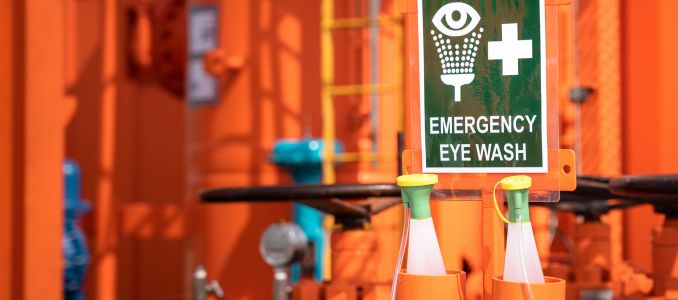
However, the distinction between mechanical readiness and microbiological safety is critical. Microbiologists and environmental health experts point out that the typical industrial eyewash station is a "dead leg" in a larger facility’s plumbing architecture. These fixtures are rarely used, often sitting dormant for months at a time. This lack of consistent flow allows water to stagnate, creating an ideal environment for the formation of biofilms—complex communities of bacteria, fungi, and protozoa that adhere to the internal surfaces of pipes, hoses, and nozzles. When a safety manager triggers the weekly flush, they may be clearing the immediate volume of water, but they are often not achieving the flow velocity or duration necessary to scour the internal pipe walls of these persistent biological colonies.
The Anatomy of Hidden Contamination
To understand the risk, one must look at the internal environment of the eyewash station. Unlike potable water systems that benefit from constant turnover, eyewash stations are characterized by low-flow or no-flow conditions. According to recent industrial hygiene assessments, the internal surfaces of these units frequently become repositories for contaminants that are not visible to the naked eye.
The internal plumbing, particularly in older facilities, often contains scale and corrosion products that provide a structural matrix for biofilm growth. Within this matrix, opportunistic pathogens—including Pseudomonas aeruginosa and Acanthamoeba—can thrive. These microbes are not merely nuisances; they are significant threats when introduced into an eye that has already been compromised by chemical exposure. If a worker sustains a chemical splash and flushes their eyes with contaminated water, they risk introducing pathogens directly into damaged ocular tissue, potentially leading to severe secondary infections, keratitis, or, in extreme cases, vision loss.

The contamination is rarely limited to the supply pipe. Data suggests that spray heads and strainers are particularly high-risk zones. These components often feature intricate designs that create turbulence and "shadow" areas where water flow is minimal, allowing microbes to accumulate. When the station is activated, the pressure change can dislodge clumps of this biofilm, effectively delivering a concentrated dose of microorganisms directly into the user’s eyes.
A Chronology of Evolving Safety Standards
The development of emergency safety standards has been a reactive process, driven by advancements in medical understanding and industrial technology. In the early 20th century, the focus was entirely on the physical presence of water. It was not until the mid-1970s that the American National Standards Institute (ANSI) formalized the Z358.1 standard, creating a uniform expectation for how long an eye must be flushed and the temperature at which that water must be delivered.
By the 1990s and early 2000s, the focus shifted toward "tepid water" requirements, acknowledging that cold water could cause a victim to stop flushing before the recommended 15-minute duration. However, it was not until the 2014 update that the industry began to more critically evaluate the quality of the water itself. While the 2014 standard emphasizes functionality, the subsequent decade has seen an increasing push by health and safety organizations to integrate water quality management into the broader definition of "emergency readiness."

Data and Risk Assessment
Recent longitudinal studies in industrial water quality reveal that in facilities where weekly flushing is the only maintenance protocol, bacterial counts often exceed the limits typically accepted for potable water by several orders of magnitude within just 48 hours of stagnant conditions.
In a study of 50 manufacturing facilities, researchers found that 62% of eyewash stations sampled contained significant levels of biofilm-associated bacteria. Notably, these stations had all passed their weekly mechanical inspections within the previous seven days. The data suggests that while the mechanical test confirms the equipment is "on," it provides no guarantee of what is being delivered to the user. This discrepancy highlights a major gap in modern safety protocols: the assumption that a functioning valve equates to a safe water source.
Broader Implications for Facility Management
The implication for safety managers and facility operators is a need to move beyond simple mechanical checklists. A comprehensive water quality management program must be integrated into the existing maintenance cycle. This includes several strategic shifts:

- Plumbing System Design: Reducing the length of pipe dead legs during facility construction or renovation can minimize the volume of stagnant water in the system.
- Advanced Filtration and Treatment: Implementing point-of-use filtration systems can help remove particulates and pathogens at the delivery point.
- Regular Water Quality Audits: Incorporating microbiological testing—beyond just mechanical activation—can help identify if a specific station has become a reservoir for contamination.
- Enhanced Flushing Protocols: Moving from a simple "functional check" to a more rigorous, time-dependent flushing protocol can help ensure that a higher volume of water is replaced, potentially disrupting biofilm formation.
Furthermore, industry associations are increasingly advocating for the use of anti-microbial components in the construction of new eyewash stations, such as copper alloys or specialized antimicrobial coatings, which have shown efficacy in reducing the attachment of biofilm-forming bacteria.
Official Responses and Future Directions
Industry regulators have noted that while the ANSI standards provide the baseline, they are not intended to be the ceiling for safety. "The standard is a minimum requirement, not a comprehensive health protocol," stated a representative from a leading occupational health consulting firm. "Employers are responsible for the entire safety environment, which includes the biological integrity of the water being used in an emergency."
As the industrial sector moves toward 2030, there is a clear trend toward "smart" safety equipment. New technologies include automated, programmable flushing systems that can be set to perform frequent, high-volume flushes without the need for manual intervention. These systems not only ensure the plumbing is clear but also provide digital logs of the flushing activity, which can be invaluable for compliance reporting and risk mitigation.

Conclusion: A New Standard of Vigilance
The transition from viewing eyewash stations as static hardware to viewing them as dynamic water-delivery systems is essential for modern workplace safety. The weekly activation check remains a vital component of the maintenance cycle, but it is no longer the sole solution to the hidden risks posed by stagnant water.
For safety officers, the challenge is to reconcile the mandate for mechanical reliability with the necessity of biological cleanliness. By integrating water quality management into their routine safety audits, facilities can ensure that when an emergency occurs, the solution does not become part of the problem. A robust, proactive approach that accounts for the hidden environment within the pipes is the next logical step in the evolution of occupational health, ensuring that safety equipment is not only ready to perform but also safe to use. As facility managers review their current protocols, the focus must shift from merely checking a box on a weekly clipboard to verifying the quality of the resource itself. Only through this holistic lens can employers truly fulfill their duty of care to their employees, providing an emergency response that is as safe as it is functional.