The Catalyst for Change: Questioning Traditional Paradigms
For decades, speech-language pathology has often been dominated by an ableist framework that prioritizes vocal speech as the gold standard for communication. This focus frequently leaves those who utilize AAC devices—ranging from text-to-speech software to eye-tracking technology—marginalized within their own therapeutic journeys. Ordóñez began to question the efficacy of individual, weekly sessions conducted by speaking therapists who were not themselves AAC users.
The core of her inquiry focused on several key pedagogical and ethical dilemmas: Is traditional, speech-focused therapy inherently respectful of those who utilize non-vocal modalities? Is the limited exposure provided in clinical settings sufficient to bridge the gap between technical competency and social participation? Furthermore, are AAC users being provided with adequate opportunities to interact with peers who share their communication modality, rather than being treated solely as patients in a hierarchy of speaking vs. non-speaking?
These questions necessitated a pivot toward a more holistic approach, leading to the formation of the VOZ SOS CAAPAZ collective in late 2025.
Chronology of the VOZ SOS CAAPAZ Initiative
The project’s development followed a deliberate, research-informed trajectory.
- October 2024: Ordóñez became a key team member of the "CAAmigos Angelman" program, an international virtual initiative focused on neuroaffirmative, evidence-based AAC practices. This collaboration provided the foundational experience necessary to transition from theory to community action.
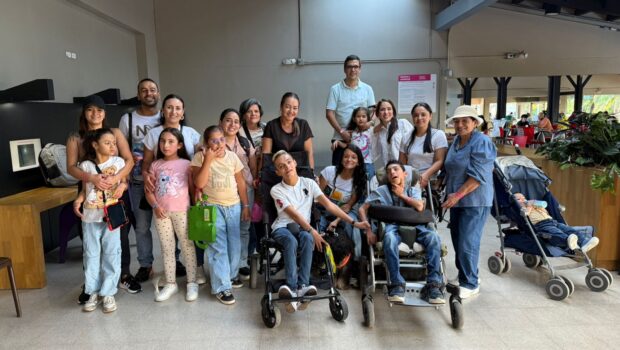
- October 2025: The inaugural VOZ SOS CAAPAZ gathering was held at Parque Comfama in Rionegro, coinciding with AAC Awareness Month. This event marked the first time multiple AAC users in the region convened in an informal, public setting.
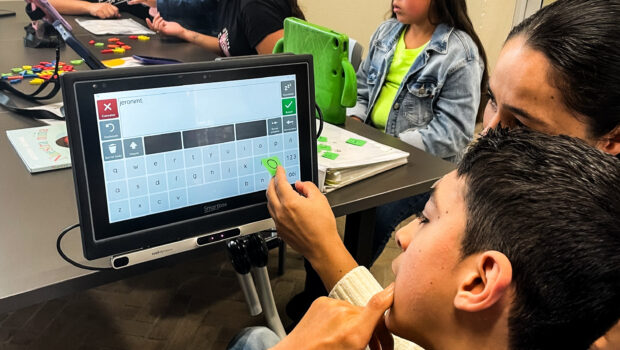
- February 2026: The initiative expanded into the realm of structured education with a shared reading session at a public library in Rionegro, applying the principles of Comprehensive Literacy—a model championed by experts like Erin Sheldon to ensure that non-speaking individuals receive consistent, meaningful access to print.
The Role of Comprehensive Literacy and Peer Interaction
One of the most significant aspects of the VOZ SOS CAAPAZ project is its commitment to "Comprehensive Literacy." Research indicates that individuals with complex communication needs are often denied access to literacy instruction under the false assumption that they lack the "prerequisite" skills for reading and writing.
By facilitating shared reading sessions in public spaces, Ordóñez is dismantling these barriers. These sessions are designed to provide "print knowledge" through interactions that are socially significant and contextually rich. The initiative moves beyond the therapy room and into the library, asserting that literacy is a fundamental right, not an achievement to be earned through clinical success.
Data from the February 2026 session confirms the diversity of needs addressed by this model. Participants included individuals utilizing a range of technology: Proloquo2go, Grid for iPad, and Grid 3 with eye-tracking access. By bringing these users together, the project provides a rare opportunity for peer-to-peer modeling, where the "communication partner" is no longer just the therapist, but a community of peers who understand the unique challenges and possibilities of AAC.
Expert Perspectives and Institutional Context
The initiative is informed by broader international discourse, most notably the 2025 article "Nothing About AAC Users Without AAC Users," published in the journal AAC by the International Society for Augmentative and Alternative Communication (ISAAC). Authored by non-speaking user Gran Blasko, the piece serves as a manifesto for the movement, demanding that those who rely on AAC be included in the design, research, and implementation of the systems that define their quality of life.
Ordóñez has integrated this philosophy into the core of VOZ SOS CAAPAZ. By prioritizing the voices of the users—such as Pablo Andrés Calderón Gómez, who expressed a desire for more frequent opportunities for social connection—the project validates the lived experience of the AAC community. Feedback from participants suggests that the impact of these gatherings extends far beyond communication goals; it fosters a sense of belonging that is often absent in strictly medicalized settings.
Broader Implications for Speech-Language Pathology
The implications of the VOZ SOS CAAPAZ project extend far beyond Rionegro. As the field of speech-language pathology continues to grapple with the shift toward neurodiversity-affirming care, initiatives like this serve as a roadmap for practitioners worldwide.
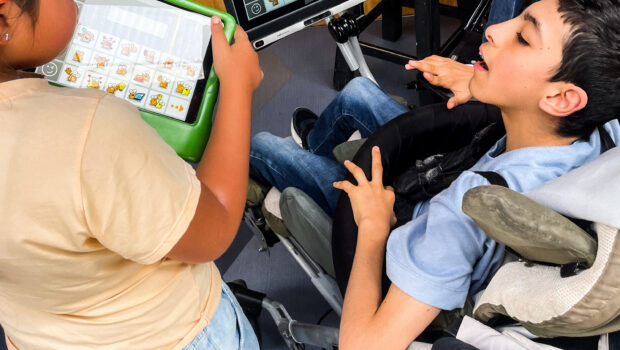
- Challenging the "Clinical Ceiling": The project encourages families to reject therapeutic approaches that impose arbitrary limits on their loved ones’ potential, particularly in the realm of literacy and autonomous expression.
- Presuming Competence: Central to the project is the principle of "presuming competence." By assuming that every individual has the capacity to learn and communicate, the program removes the barriers often created by low expectations.
- Horizontal Relationships: The shift from a clinical "therapist-patient" dynamic to a "facilitator-learner" dynamic is crucial. It recognizes that the therapist is also an apprentice in the individual’s unique communication system.
- Public Advocacy: By operating in public parks and libraries, the initiative serves a secondary purpose of public education. It forces the community to engage with the reality that there are many ways to be heard, fostering a more inclusive society for those who communicate through technology.
Looking Toward the Future
As VOZ SOS CAAPAZ prepares for its future monthly gatherings, the focus remains on scalability and sustainability. The logistical challenges of coordinating across diverse communication technologies and individual sensory needs are significant, but the results—measured in social participation, increased literacy exposure, and the joy of connection—are tangible.
For speech-language pathologists, the success of this project serves as a call to action. It suggests that while high-tech tools are essential, they are only as effective as the environment in which they are used. By creating spaces that prioritize horizontal, relationship-based learning, professionals can move closer to the goal of true communication equity.
Ultimately, the VOZ SOS CAAPAZ initiative highlights a simple, yet profound truth: that every person possesses a voice, and the role of the advocate is not to speak for them, but to provide the tools and environments necessary for that voice to be heard. As the project continues to grow in Colombia, it offers a replicable model for other regions, emphasizing that when we build community around shared humanity rather than clinical diagnosis, we create the conditions for genuine empowerment.