The Structural Foundation of Digital Inclusivity
Ontology focuses on the meaning and relationship of information. For users with cognitive disabilities or those with limited domain knowledge, a clear and consistent ontology reduces the mental effort required to understand a service. Taxonomy involves the organization and classification of that information. An inclusive taxonomy utilizes logical, predictable structures that benefit users of screen readers and those with mobility impairments who rely on efficient navigation. Finally, choreography dictates how a user interacts with these structures across different channels and over time. When choreography is designed with accessibility in mind, it ensures a logical tabbing order for keyboard users and provides clear, consistent calls to action.
Strategic Advice for Organizations
For organizations beginning to prioritize accessibility, Becky Ashley, Lead Information Architect at GDS, emphasizes the necessity of embedding these principles at every level of the workforce. The GDS approach suggests that accessibility should not be siloed into a single department but integrated into the standard workflows of developers, content designers, and project managers alike. This cultural shift requires a collective mindset where intuitive design is synonymous with inclusive design.
Sally Creasey, Senior Information Architect, notes that advocacy is a primary hurdle. She suggests that practitioners must involve stakeholders early in the IA process, sharing sitemaps and ontologies to build confidence and understanding. Without this collaborative approach, organizations risk creating systems that meet technical specifications but fail to meet the actual mental models of the end-users. The consensus among GDS leads is that the most successful digital architectures are those that take colleagues and users on a journey of co-creation.
Background Context: The Legal and Social Mandate
The emphasis on accessibility within the UK government is driven by both legal requirements and social necessity. The Public Sector Bodies (Websites and Mobile Applications) (No. 2) Accessibility Regulations 2018 mandate that all public sector digital platforms meet the Web Content Accessibility Guidelines (WCAG) 2.1 (and increasingly 2.2) to the AA standard. Failure to comply can result in investigations by the Equality and Human Rights Commission (EHRC).
Beyond legal compliance, the social context is significant. According to data from the Department for Work and Pensions, there are approximately 16 million people in the UK living with a disability, representing roughly 24% of the population. This demographic, often referred to in economic terms as the "Purple Pound," has a combined spending power estimated at £274 billion per year. For government services, the stakes are even higher; digital exclusion can prevent citizens from accessing essential healthcare, taxation, and social security benefits.
Educating Teams through Shared Frameworks and Empathy
One of the greatest challenges identified by the GDS architects is bridging the gap between technical design and the lived experience of users. To combat this, Becky Ashley advocates for the use of the POUR principles—Perceivable, Operable, Understandable, and Robust. These four pillars, derived from WCAG, provide a shared language that allows designers and developers to evaluate their work through a unified lens.
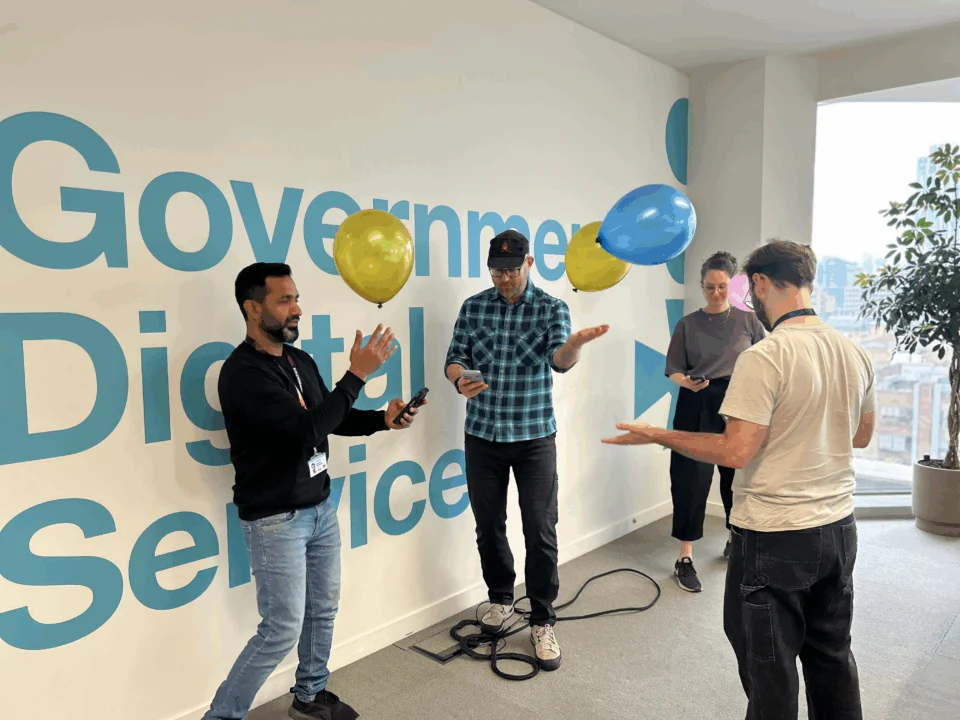
In addition to theoretical frameworks, GDS utilizes simulation-based training to foster empathy. This includes "empathy balloons," a game designed to simulate the frustrations of users with cognitive or dexterity issues, as well as the use of motor-control limiting gloves and vision-impairing glasses. However, Rik Williams cautions that while simulations are valuable for building initial awareness, they are not a substitute for direct testing with people who have actual disabilities. Simulations can provide a glimpse into barriers, but they cannot fully replicate the sophisticated workarounds and lived realities of disabled users.
Identifying and Avoiding Common IA Pitfalls
The GDS report identifies several recurring "pitfalls" that can compromise the accessibility of a digital service. One of the most frequent errors is "organizational-centric design," where the information structure reflects the internal hierarchy of the government department rather than the needs of the citizen. This often leads to the use of internal jargon and bureaucratic labeling that confuses the average user.
Sally Creasey points out the "paradox of choice" as another significant barrier. When users are presented with too many options or sections with overlapping purposes, the cognitive load increases. For individuals with neurodivergent conditions or those under high stress, this can lead to "decision paralysis." To avoid this, IAs use controlled vocabularies to ensure language consistency across all touchpoints, ensuring that the same service is never referred to by two different names.
Furthermore, Becky Ashley highlights the danger of viewing an information system as a "finished" product. The GDS philosophy maintains that information flows must be iterated constantly based on emerging user needs. A "fixed" architecture is an inaccessible architecture; systems must be flexible enough to adapt to changing data and user feedback loops.
Methodology and Tools for Inclusive Architecture
To ensure that structures are truly accessible, GDS employs several rigorous research and design methodologies:
- Noun and Verb Foraging: Analyzing the language users naturally employ when describing a task to ensure labels match their mental models.
- Card Sorting and Tree Testing: Validating whether users can find information within a proposed structure without being influenced by visual design elements.
- Progressive Disclosure: A technique where information is revealed only as needed, preventing users from becoming overwhelmed by data at the start of a process.
- Object-Oriented Design (OOD): Rik Williams notes that OOD helps create consistent environments built around tangible "objects" (e.g., a "Passport" or an "Application"). By standardizing the attributes of these objects, IAs can ensure that text structures and interactions remain predictable across various technologies.
Broader Impact and the Future of Digital Governance
The insights shared by the GDS information architects have implications far beyond the public sector. As digital transformation continues to accelerate globally, the "accessibility-first" approach to IA is becoming a benchmark for the private sector. The integration of Artificial Intelligence (AI) and advanced metadata is the next frontier. Sally Creasey suggests that with increased investment in metadata, organizations will eventually be able to serve highly personalized, relevant content to users based on their specific access needs and preferred channels.
The GDS "Unlocking Accessibility" series serves as a blueprint for how large-scale organizations can move beyond "checklist accessibility." By focusing on the structural logic of information, the government aims to create a digital landscape where the "universality of the web"—a concept championed by web founder Sir Tim Berners-Lee—is a reality for every citizen, regardless of their physical or cognitive ability.
As the UK government continues to refine these processes, the focus remains on the principle that "the deeply usable is fundamentally accessible." By removing the friction caused by poor organization and confusing labels, information architects are not just building websites; they are ensuring equitable access to the digital state. The GDS encourages further collaboration across the civil service and the wider tech industry to continue evolving these standards, inviting practitioners to share their own findings on the UK Government Digital Slack and other professional forums.