
The collaboration follows the record-breaking success of Tinnitus Week 2026, a national awareness campaign that reached an estimated 40 million people. The campaign succeeded in fostering a dialogue that bridged the gap between clinical health professionals and the music industry, proving that audiences are increasingly receptive to information regarding noise-induced hearing loss and the proactive steps required to mitigate these risks.
A Chronology of Engagement: From Advocacy to Action
The journey toward this partnership began years prior, as Tinnitus UK recognized that the long-term sustainability of the live music sector depends on the auditory health of its consumers. For decades, the association between high-volume environments and permanent hearing damage—including tinnitus, hyperacusis, and sensorineural hearing loss—has been well-documented in clinical literature, yet public health initiatives have struggled to gain traction within the festival circuit.
In early 2025, Tinnitus UK began a series of stakeholder consultations with industry leaders to assess how to best integrate hearing health messaging without disrupting the immersive nature of live performance. By early 2026, the success of the annual Tinnitus Week campaign provided the necessary momentum to formalize a relationship with Live Nation. The announcement of the partnership in June 2026 serves as the culmination of these efforts, positioning Download Festival as a pilot site for what may eventually become a standardized approach to health and safety across major UK festivals.
The Scale of the Challenge: Supporting Data and Industry Context
The necessity for this initiative is underscored by sobering statistics regarding hearing health. According to the World Health Organization (WHO), over 1.1 billion young people worldwide are at risk of hearing loss due to exposure to loud music in recreational settings. In the United Kingdom, tinnitus affects approximately 1 in 7 adults, with a notable subset of these cases directly attributable to prolonged exposure to high-decibel acoustic environments.
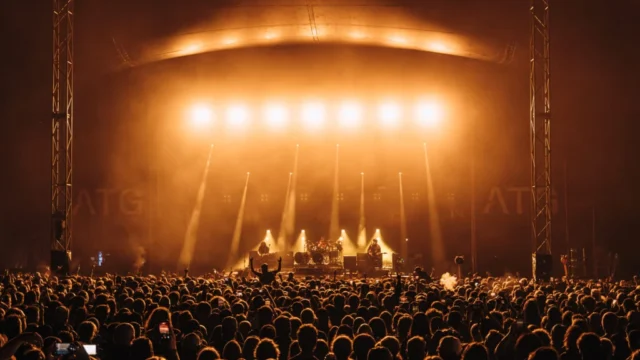
At a festival like Download, where sound pressure levels (SPL) frequently exceed 100 decibels for extended periods, the risk of temporary threshold shift—the precursor to permanent damage—is significant. The human ear is biologically capable of recovering from short-term exposure, but the cumulative impact of attending multiple festivals annually can lead to irreversible damage. By introducing awareness programs, Tinnitus UK is not attempting to curb the intensity of the performances, but rather to provide festival-goers with the tools—such as high-fidelity earplugs, noise-level awareness, and designated "quiet zones"—to enjoy the music safely.
Integrating Advocacy into the Festival Experience
The strategy for the 2026 festival involves a multi-pronged approach designed to reach fans where they are most engaged. Central to this is the development of artist-led content. By leveraging the influence of performers who have navigated their own hearing health journeys, Tinnitus UK hopes to de-stigmatize the use of protective equipment. The perception that wearing earplugs diminishes the quality of the live music experience is a significant barrier to entry, and by having respected artists champion high-fidelity solutions, the charity aims to shift the narrative from "protection" to "preservation of the experience."
Furthermore, the partnership will utilize the festival’s existing digital infrastructure and on-site signage to provide real-time information on decibel levels and the importance of "ear breaks." This educational component is intended to empower attendees, giving them the agency to manage their own exposure levels throughout the multi-day event.

Official Perspectives on the Collaboration
The partnership has garnered positive feedback from both the charity sector and industry professionals. Lewis Budden, Marketing Manager at Tinnitus UK, emphasizes that the initiative is built on a shared foundation of mutual respect for the art form.
"Tinnitus Week 2026 demonstrated a palpable appetite for honest, transparent conversations regarding hearing health within the music community," Budden stated during the announcement. "The engagement we witnessed from musicians and fans alike was not just a passing interest; it was a demand for more information. Partnering with Download Festival allows us to move beyond theory and into the heart of the environment where these issues are most relevant. Our goal is to ensure that future generations of music fans can continue to experience the visceral power of live music without sacrificing their long-term auditory wellbeing."
From the perspective of Live Nation, the collaboration serves to bolster the existing accessibility measures at Download. The festival has long prioritized physical accessibility, and this move into sensory health reflects a broader evolution in event management that views the total health of the attendee as a prerequisite for a successful event.
Broader Implications for the Live Music Industry
The implications of this collaboration extend well beyond the gates of Donington Park. Should the partnership prove effective in increasing the uptake of hearing protection and improving awareness, it is highly likely that other major festival organizers will adopt similar models. This could lead to a systemic change in how the UK live music industry approaches health and safety.
Fact-based analysis suggests that the long-term sustainability of the festival economy relies on the longevity of its audience. If a significant percentage of the core demographic experiences hearing loss, the demand for live music could potentially plateau. By proactively addressing these risks, festivals are not only acting in the interest of public health but are also protecting the future of their own business model.
Moreover, the normalization of ear protection could drive innovation in the audio-tech sector. As the demand for high-fidelity earplugs rises, manufacturers will likely invest in improved technologies that offer better sound clarity at lower volumes, further reducing the barriers for fans who are currently hesitant to protect their hearing.
Future Outlook and Strategic Goals
Looking ahead, Tinnitus UK and its partners are focused on quantifiable outcomes. The 2026 festival will serve as a baseline study to measure fan engagement, the efficacy of the awareness messaging, and the overall adoption of preventative measures. The charity intends to publish findings from this collaboration to help other event organizers understand the most effective ways to communicate health-related information to large, diverse crowds.
The initiative represents a pivotal moment in the history of UK music. It signals the end of an era where hearing damage was considered an inevitable "price of admission" for fans of heavy music. Instead, it ushers in a new standard—one where the intensity of the music is matched by a commitment to the health of those who make the industry possible. By placing hearing health on the national stage, Tinnitus UK and Download Festival are setting a precedent that will likely influence the global music community for years to come, ensuring that the legacy of live music is one that fans can hear, clearly and safely, for a lifetime.