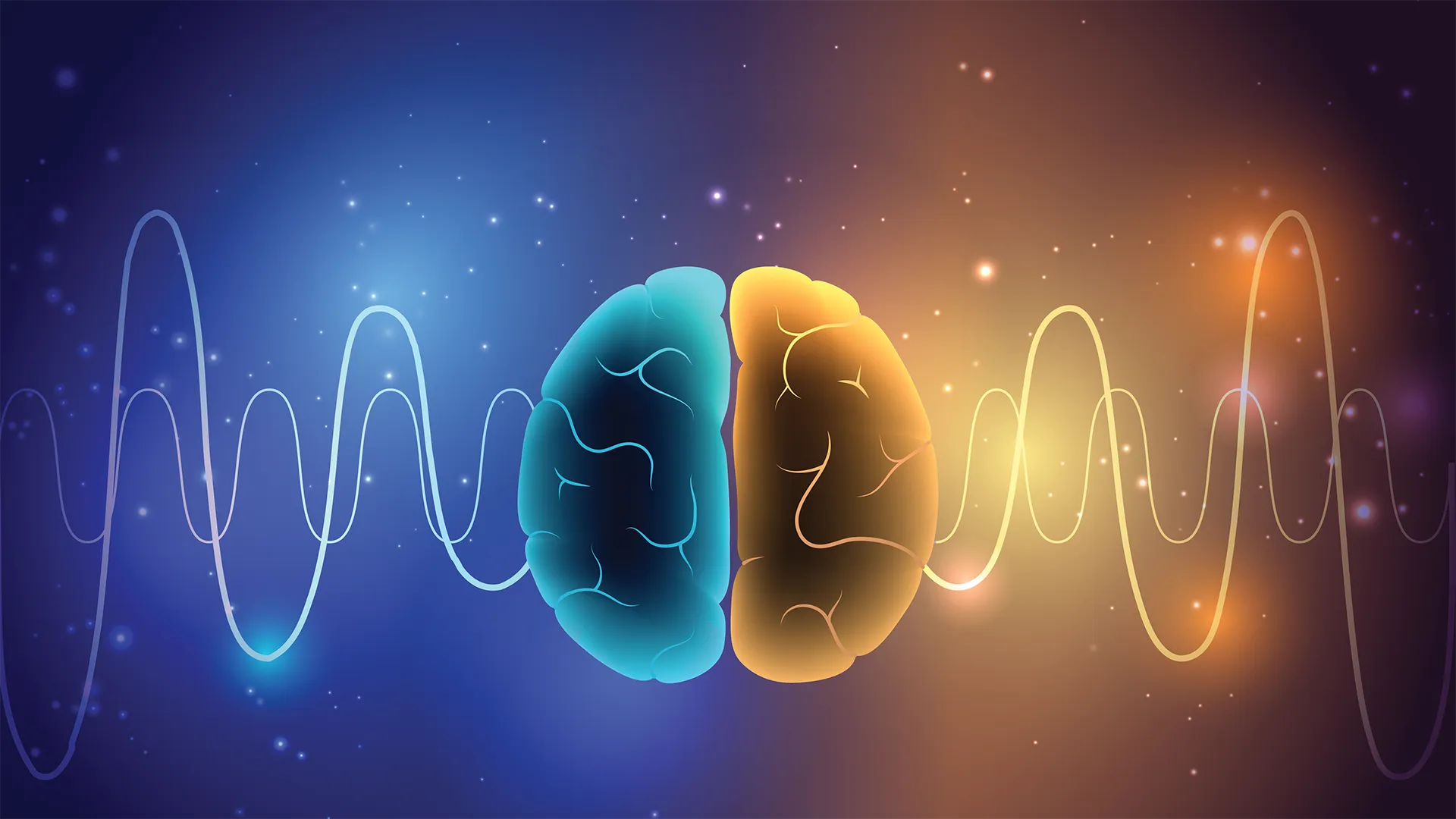
The research, spearheaded by Dr. Mattia Rosso and Associate Professor Leonardo Bonetti from the Center for Music in the Brain at Aarhus University, represents a significant departure from traditional models of auditory perception. Historically, the scientific consensus suggested that sound traveled from the ear to the auditory cortex, where it was registered as a discrete event. However, the new data indicates that the brain’s response is far more holistic and transformative. When exposed to a continuous stream of sound, the brain’s internal networks do not remain static; they propagate and adapt, creating a dynamic map of activity that fluctuates in tandem with the frequency of the stimulus.
Decoding the Dynamic Brain: The FREQ-NESS Methodology
At the heart of this discovery is the FREQ-NESS method, an analytical tool that leverages advanced algorithms to disentangle overlapping brain networks based on their dominant frequencies. In traditional neuroimaging, researchers often struggle with "source separation"—the ability to distinguish which parts of the brain are communicating when multiple signals occur simultaneously. FREQ-NESS solves this by identifying unique frequency signatures and tracing how these signals move across the brain’s physical space.
"We’re used to thinking of brainwaves like fixed stations—alpha, beta, gamma—and of brain anatomy as a set of distinct regions," explained Dr. Rosso in a statement regarding the study’s release. "But what we see with FREQ-NESS is much richer. It is long known that brain activity is organized through activity in different frequencies, tuned both internally and to the environment. Starting from this fundamental principle, we’ve designed a method that finds how each frequency is expressed across the brain."
This data-driven approach allows for high spectral and spatial precision, mapping the whole brain’s internal organization without the need for predefined regions of interest. By removing the bias of where researchers expect to see activity, the FREQ-NESS method provides a more objective view of the brain’s large-scale dynamics.
A Chronology of Research and Development
The journey toward the publication of this study involved years of interdisciplinary collaboration between the Danish and British institutions. The project began with the goal of understanding why rhythmic structures—such as those found in music—have such a profound impact on human cognition and behavior.
The timeline of the research followed a rigorous path:
- Conceptualization (2020-2021): The team at Aarhus University identified a gap in existing neuroimaging tools. While Magnetoencephalography (MEG) and Electroencephalography (EEG) provided excellent temporal resolution, the ability to isolate specific frequency-based networks in space remained a challenge.
- Algorithm Development: Dr. Rosso and Professor Bonetti worked on the mathematical framework for FREQ-NESS, focusing on source separation techniques that could handle the high-dimensional data produced by brain scans.
- Experimental Phase: Participants were exposed to various auditory stimuli, ranging from simple steady beeps to complex musical sequences, while their brain activity was recorded using high-density MEG.
- Data Analysis: The researchers applied the FREQ-NESS method to the raw data, revealing for the first time how different frequency bands (such as the 10Hz alpha rhythm or 20Hz beta rhythm) were not just localized "humming" but were actually part of a shifting network that reorganized itself as the sounds continued.
- Validation and Peer Review: The findings were validated across different datasets to ensure the reliability of the method, eventually leading to its publication in Advanced Science in late 2024.
Supporting Data and Technical Significance
The study’s findings are supported by a robust dataset that highlights the brain’s "spectral fingerprints." One of the most significant data points revealed by the FREQ-NESS analysis is the high degree of reliability across experimental conditions. Whether a subject was listening to a simple metronome or a more melodic tone, the method consistently identified how specific networks were recruited.
In traditional neuroscience, researchers often categorize brain activity into bands:
- Delta (0.5–4 Hz): Deep sleep and basic processing.
- Theta (4–8 Hz): Memory and emotional regulation.
- Alpha (8–12 Hz): Relaxed alertness and sensory gating.
- Beta (12–30 Hz): Active thinking and motor control.
- Gamma (30–100 Hz): High-level information processing.
The Aarhus-Oxford study demonstrates that these bands are not "fixed stations" but are fluid. For instance, when a 10Hz rhythm is introduced, the brain doesn’t just activate an "alpha region." Instead, the FREQ-NESS data shows a reorganization of the entire network architecture to accommodate that 10Hz signal, spreading from the auditory cortex to the frontal and parietal lobes. This suggests that the brain’s "operating system" updates its connectivity based on the frequency of the input it receives.
Expert Reactions and Official Commentary
The neuroscientific community has reacted with optimism toward the implications of the FREQ-NESS method. Professor Leonardo Bonetti, a co-author of the study who holds positions at both Aarhus and Oxford, emphasized the transformative potential of seeing the brain as a reconfigurable system.
"The brain doesn’t just react: it reconfigures. And now we can see it," Professor Bonetti stated. "This could change how we study brain responses to music and beyond, including consciousness, mind-wandering, and broader interactions with the external world."
Other experts in the field of auditory neuroscience have noted that this research fills a critical void in understanding "neural entrainment"—the process by which brainwaves synchronize with external stimuli. By providing a tool that maps this entrainment with such high spatial precision, the researchers have moved the field from observing that the brain synchronizes to understanding how the entire brain architecture changes during that synchronization.
Broader Impact: Clinical and Technological Implications
The development of FREQ-NESS is expected to have far-reaching consequences beyond the study of music and rhythm. The precision of this method opens new doors in several key areas:
1. Clinical Diagnostics
Because FREQ-NESS can map individualized brain organization with high reliability, it may become a vital tool in diagnosing neurological disorders. Conditions such as Alzheimer’s disease, schizophrenia, and epilepsy are often characterized by disruptions in the brain’s rhythmic networks. By establishing a "baseline" of how a healthy brain reorganizes in response to sound, clinicians could potentially use FREQ-NESS to identify early-stage deviations in these network dynamics, leading to earlier and more accurate diagnoses.
2. Brain-Computer Interfaces (BCI)
The field of BCIs relies on the ability to translate brain signals into commands for external devices. The high spectral and spatial precision of FREQ-NESS could allow for more sophisticated interfaces that respond to the brain’s dynamic network shifts rather than just localized spikes in activity. This could lead to more intuitive prosthetic limbs or communication devices for individuals with locked-in syndrome.
3. Understanding Consciousness and Mind-Wandering
The study also touches upon the mystery of consciousness. By observing how the brain reconfigures itself when interacting with the environment versus when it is "mind-wandering," researchers can begin to map the neural correlates of different states of awareness. This has implications for anesthesia research and the study of patients in vegetative or minimally conscious states.
4. Music Therapy and Education
On a more fundamental level, understanding how rhythm reorganizes the brain provides a scientific basis for the efficacy of music therapy. If specific rhythms can be shown to "reset" or "strengthen" certain neural networks, therapeutic interventions can be tailored to target specific brain regions or frequencies, improving outcomes for patients with stroke or Parkinson’s disease.
The Future of the Research Program
Following the success of the initial study, a large-scale international research program is currently underway. Supported by a global network of neuroscientists, the team aims to build on the FREQ-NESS methodology to create a comprehensive atlas of frequency-based brain networks.
The next phase of the research will focus on individualized brain mapping. Since every human brain is unique, the researchers believe that FREQ-NESS can be used to create personalized "neural maps" that show how an individual’s brain specifically responds to different stimuli. This could pave the way for personalized medicine in the realm of neurology and psychiatry.
The study from Aarhus University and the University of Oxford marks a paradigm shift in neuroscience. By moving away from a static view of the brain and embracing the complexity of its real-time reorganization, researchers are finally beginning to understand the true "symphony" of human cognition. As Dr. Rosso and Professor Bonetti have demonstrated, we are not just listeners in a world of sound; our brains are active participants, constantly reshaping themselves to stay in tune with the world around us.