
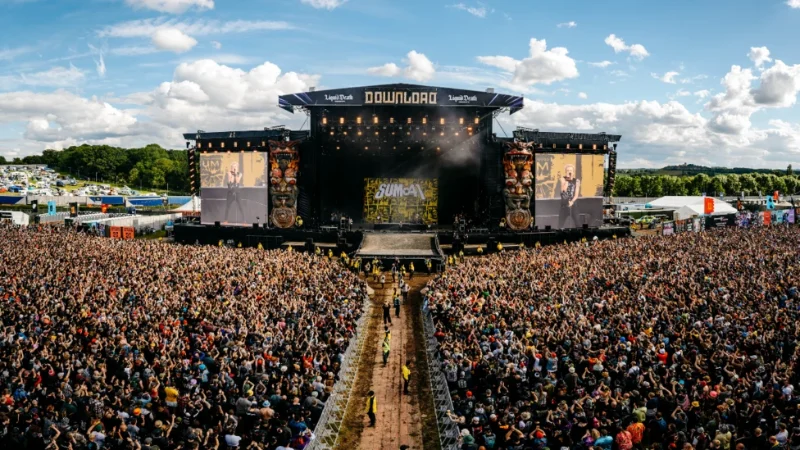
Central to this initiative is a strategic partnership with Download Festival 2026. By embedding education directly into the environment where high-decibel exposure is most prevalent, Tinnitus UK aims to transform the cultural perception of hearing protection from a niche concern to an essential component of the concert-going experience.
The Physiology of Sound and the Risk of Damage
To understand the necessity of this initiative, one must consider the mechanics of sound exposure. Live music environments frequently reach sound pressure levels (SPL) exceeding 100 decibels (dB). According to the World Health Organization (WHO), exposure to 100 dB for even 15 minutes can lead to irreversible hearing damage. When fans remain in these environments for several hours, the risk of temporary threshold shifts—the sensation of muffled hearing or ringing after a show—increases significantly.
Tinnitus, characterized by the perception of sound such as ringing, buzzing, or hissing in the absence of an external source, is a common symptom of noise-induced hearing damage. While often temporary, repeated or prolonged exposure to loud noise can cause permanent damage to the hair cells in the inner ear, which do not regenerate in humans. Data from recent auditory health studies suggests that approximately 1 in 8 people in the UK live with persistent tinnitus, highlighting a growing public health concern that coincides with the increasing prevalence of high-volume event production.
Chronology of Awareness: From Grassroots to Mainstream
The effort to integrate hearing protection into the music industry has evolved significantly over the last decade. In the early 2010s, the conversation was largely relegated to audiologist clinics and specialized ear-protection forums. By 2020, as portable music technology and high-fidelity earplugs became more accessible, the narrative began to shift.
In 2026, the movement achieved a new milestone. Following Tinnitus UK’s successful awareness programming during Tinnitus Week earlier this year, the charity formalized a collaborative framework with large-scale event organizers. The partnership with Download Festival represents a shift from reactive advocacy to proactive integration. By positioning booths, providing expert consultations, and distributing high-fidelity earplug information on-site, the charity is meeting the audience where they are most vulnerable to sound-related injury.
Supporting Data and Auditory Science
Current research from the Hearing Health Foundation and internal audits by Tinnitus UK underscore a critical "education gap." While 70% of festival-goers surveyed acknowledge that loud music can be harmful, fewer than 15% consistently use hearing protection. This discrepancy is often attributed to the misconception that earplugs degrade the quality of the music.
However, modern high-fidelity earplugs are engineered to dampen sound across all frequencies equally, rather than simply muffling high-end tones. This technology allows for a clearer, balanced sound experience while reducing the overall volume to safe levels. By mitigating the risk of acoustic trauma, these devices allow fans to enjoy the visceral power of bass and rhythm without the subsequent "ringing" effect, known clinically as tinnitus exacerbation.
Official Perspectives and Industry Responsibility
The music industry is increasingly recognizing its role in the long-term well-being of its patrons. Promoters and venue operators are under growing pressure to manage sound levels to comply with health and safety standards while maintaining the immersive nature of the performance.
Representatives from Tinnitus UK have noted that the partnership with major festivals is not intended to diminish the volume of the music, but rather to empower the consumer. "Our objective is to normalize the use of protective gear," stated a spokesperson for the organization. "Just as we wear sunglasses to protect our eyes from UV rays, high-fidelity earplugs should be viewed as essential equipment for any music enthusiast. It is about sustainability—not just of the environment, but of the fan’s ability to hear the music they love for decades."
The collaboration with Download Festival includes a series of "quiet zones" and informational workshops. These spaces serve as a refuge for ears that have been exposed to sustained high volumes, providing an opportunity for recovery during multi-day events.
Practical Strategies for the Modern Concert-Goer
Tinnitus UK advocates for a "four-pillar approach" to noise management during the summer festival season:
- Investment in High-Fidelity Protection: Moving away from standard foam plugs, which can distort sound, toward specialized acoustic filters. These filters maintain the integrity of the musical performance while lowering the decibel levels to a safe range (typically reducing volume by 15–20 dB).
- Strategic Sound Breaks: The human ear requires recovery time. Experts suggest that for every hour of high-volume exposure, the listener should seek 10 to 15 minutes of silence or significantly lower ambient noise.
- Spatial Awareness: Proximity to speaker stacks (the "front of house" or stage-front area) exponentially increases the sound pressure level. Moving back even 20 or 30 feet can result in a significant drop in decibel exposure without sacrificing the concert experience.
- Pediatric Protection: Children are at higher risk for noise-induced hearing loss due to their developing auditory systems. The use of over-the-ear defenders is essential for younger attendees, particularly in enclosed or high-intensity sound environments.
The Broader Implications: A Culture of Auditory Longevity
The implications of this public health push extend beyond the festival gates. If the current awareness campaign proves successful in increasing the uptake of protective gear, it could influence industry standards for sound-level monitoring at smaller venues and nightclubs.
Furthermore, for those already living with tinnitus, the summer season can be a period of anxiety, as loud environments are known to trigger or worsen symptoms. Tinnitus UK emphasizes that the presence of the condition does not mandate a life of silence. Through the use of proper protection and a nuanced understanding of one’s personal threshold, those with tinnitus can continue to participate in live music. The charity’s ongoing work includes providing counseling, access to support groups, and a dedicated helpline for those seeking guidance on how to manage their hearing health in loud environments.
Looking Toward the Future
As the summer of 2026 progresses, the partnership between Tinnitus UK and the live music sector serves as a blueprint for the future. The initiative demonstrates that protecting one’s hearing is not an act of withdrawal from the music scene, but an act of engagement. By taking simple, informed steps, fans are ensuring that the soundtrack of their lives remains audible for years to come.
For those requiring further assistance or looking to understand their own hearing health, Tinnitus UK provides an extensive library of resources, ranging from clinical guides to practical tools for managing daily symptoms. As the industry continues to evolve, the goal remains clear: to foster a culture where the thrill of the live performance is matched by the responsibility of protecting the listener. Music is a lifelong pursuit, and safeguarding the mechanism through which we experience it is a fundamental aspect of that journey.