The PtD Award, administered by the National Institute for Occupational Safety and Health (NIOSH), recognizes organizations that demonstrate excellence in integrating safety features directly into the design process of machinery, equipment, and workflows. By prioritizing safety at the engineering phase, Square Robot Inc. has successfully shifted the paradigm from relying on personal protective equipment (PPE) and complex administrative controls to a systemic, design-based solution that removes the worker from the hazard entirely.
The Evolution of Confined Space Safety
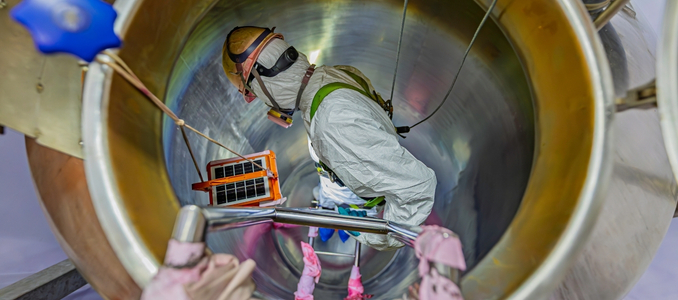
Confined space entry has long been categorized as one of the most dangerous tasks in industrial maintenance. Regulations set by the Occupational Safety and Health Administration (OSHA) dictate stringent requirements for entering permit-required confined spaces, including atmospheric testing, ventilation protocols, the presence of standby attendants, and specialized rescue equipment. Despite these regulations, the risk of oxygen deficiency, toxic gas exposure, fire, explosion, and engulfment remains high.
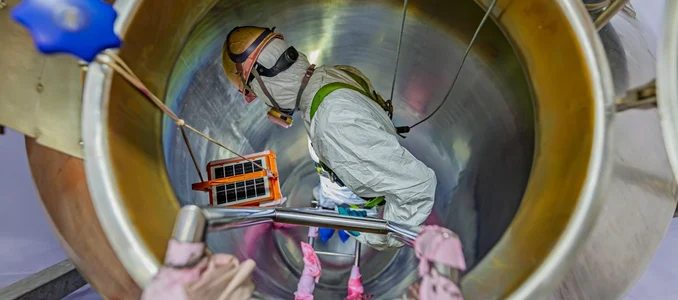
Historically, the inspection of large-scale storage tanks—often containing crude oil, chemical solvents, or other volatile liquids—required workers to don respirators, chemical-resistant suits, and fall protection harnesses to manually inspect the interior surfaces for corrosion, cracks, or structural integrity issues. This process was not only time-intensive, necessitating the draining, cleaning, and degassing of the tank, but it also placed human lives at the mercy of mechanical failure or human error.
Square Robot’s solution represents a fundamental shift in this operational chronology. By developing an autonomous, submersible robot capable of navigating the interior of a tank while it remains filled with product, the company has bypassed the "entry" requirement altogether. The robot is deployed through existing ports, operating in environments that would otherwise be lethal to human personnel.

Data-Driven Safety Improvements
The impact of the technology is best measured through its performance metrics, which played a decisive role in the PtD Award selection. Over the course of 385 separate tank inspections, the robotic system achieved a zero-entry record. This is not merely an operational success but a critical safety achievement, as it translates to the total mitigation of potential workplace fatalities or injuries associated with those 385 specific maintenance events.
Beyond the physical safety of personnel, the technology has demonstrated significant environmental benefits. During the inspection process, the system operates within sealed tanks, which prevents the release of hazardous vapors. Reports indicate that the implementation of this technology has helped contain more than 695 tons of volatile organic compound (VOC) emissions that would have otherwise been released into the atmosphere during the traditional cleaning and degassing phases of manual inspection.
This data underscores the "dual benefit" nature of modern Prevention through Design initiatives: what is safer for the worker is frequently safer for the environment and more efficient for the corporation. By eliminating the need to drain, ventilate, and treat the tanks, operators reduce the duration of equipment downtime, thereby increasing throughput and reducing the carbon footprint of maintenance cycles.

Contextualizing Prevention through Design
The Prevention through Design initiative, spearheaded by NIOSH, serves as a proactive strategy to address occupational hazards at the source. The concept posits that the most effective way to protect workers is to "design out" the hazard. When hazards are managed through design, the reliance on human vigilance—which is inherently fallible—is minimized.
The 2026 NSC Safety Congress & Expo served as an ideal backdrop for this award. The event, which gathers thousands of safety professionals, engineers, and industrial hygienists, provides a platform to disseminate best practices. The recognition of Square Robot Inc. signals a broader industry trend where stakeholders are increasingly seeking technological alternatives to high-risk manual tasks. Industry analysts suggest that this shift is being accelerated by more stringent environmental, social, and governance (ESG) reporting requirements, which compel companies to demonstrate verifiable reductions in workplace risk.
Industry Implications and Future Outlook
The success of the Square Robot inspection system carries profound implications for the future of industrial maintenance. As the workforce ages and the demand for high-skilled labor increases, the ability to automate hazardous tasks becomes an economic necessity.

First, the economic impact of removing human entry from tank inspections is substantial. The reduction in downtime alone provides a compelling Return on Investment (ROI) for facility managers. By bypassing the multi-day process of tank preparation, companies can maintain continuous production schedules, which, in high-volume industries like petrochemical refining, can result in millions of dollars in recovered productivity per year.
Second, the regulatory landscape is likely to evolve in response to these technological capabilities. As the "state-of-the-art" in inspection technology improves, regulatory bodies like OSHA and international counterparts may eventually re-evaluate what constitutes "necessary" entry. If a task can be performed by a robot, the legal and ethical justification for sending a human into a high-risk environment diminishes significantly.
Third, the broader adoption of robotics in hazardous environments will likely drive innovation in sensing technology. The Square Robot system currently utilizes sophisticated imaging and ultrasonic sensors to map the interior of tanks and detect structural anomalies. As AI integration increases, these systems will become capable of real-time diagnostic reporting, allowing for predictive maintenance that stops failures before they occur, rather than simply identifying them after they have begun.

Official Reactions and Industry Reception
While the award ceremony in Indianapolis focused on the technical ingenuity of the system, the underlying message was one of institutional change. Representatives from NIOSH have previously emphasized that the goal of the PtD Award is not just to highlight one company, but to inspire an entire ecosystem of innovation. By validating Square Robot’s approach, the committee has effectively endorsed the transition toward "human-out-of-the-loop" maintenance strategies.
Industry observers note that the reception to this technology has been overwhelmingly positive, particularly among safety directors who face the constant pressure of lowering Total Recordable Incident Rates (TRIR). The ability to provide empirical evidence—such as the 695 tons of captured VOCs and the 385 avoided entries—makes a persuasive case to boardrooms that are often hesitant to adopt new, capital-intensive technology.
Conclusion
The 2026 Prevention through Design Award recognizes a pivotal moment in industrial safety history. By merging robotics, environmental engineering, and safety advocacy, Square Robot Inc. has provided a blueprint for how modern industry can transcend the limitations of traditional, risk-heavy maintenance. As these technologies continue to mature and decrease in cost, the expectation for "zero-entry" maintenance is likely to move from a benchmark of excellence to a standard industry requirement.

The success of this initiative serves as a reminder that occupational safety is not a static endeavor; it is a discipline of constant, iterative improvement. Through the lens of Prevention through Design, the hazard of the tank entry is no longer an inevitable reality of industrial life, but a relic of an era that is being rapidly superseded by human ingenuity. As the industry looks toward the next decade, the challenge will remain in scaling these solutions, ensuring that the benefits of robotic safety are accessible across the global supply chain, and continuing the mission of NIOSH to protect the most valuable asset in any facility: the worker.