The Critical Need for Early Intervention in Parkinson’s Disease
Parkinson’s disease is the second most common neurodegenerative disorder globally, trailing only Alzheimer’s disease. It is characterized by the progressive loss of dopaminergic neurons in the substantia nigra, a region of the brain responsible for motor control. Current estimates suggest that by the time a patient presents with classic motor symptoms—such as tremors, bradykinesia (slowness of movement), and postural instability—up to 60% to 80% of these critical neurons may already have been destroyed.
Because most existing treatments for PD are symptomatic rather than curative, focusing on managing dopamine levels or slowing the progression of physical decline, the window for effective intervention is narrow. Early diagnosis is the linchpin of modern geriatric and neurological care, yet it remains elusive. Traditional diagnostic pathways rely heavily on clinical rating scales, such as the Unified Parkinson’s Disease Rating Scale (UPDRS), which are inherently subjective and dependent on the expertise of the physician. While advanced neuroimaging techniques like DaTscans (dopamine transporter scans) provide objective data, they are prohibitively expensive, involve exposure to radioactive tracers, and are not accessible to the general population for routine screening.
The Science of Sebum and the Search for Volatile Biomarkers
The concept of "smelling" a disease is not new to medical science, but its application to Parkinson’s disease gained significant traction following observations that the skin of PD patients undergoes distinct physiological changes. Research has shown that individuals with PD often exhibit seborrheic dermatitis or increased sebum production. Sebum is an oily, waxy substance secreted by the sebaceous glands to lubricate and waterproof the skin.
Previous studies suggested that the composition of sebum is altered by the underlying biological stressors of Parkinson’s, including systemic inflammation, oxidative stress, and neurodegeneration. These metabolic shifts lead to the release of specific Volatile Organic Compounds (VOCs)—gaseous molecules that carry a distinct odor. However, testing sebum from the forehead or back proved problematic. Skin-surface sebum is constantly exposed to the environment, where it can be contaminated or altered by air pollution, humidity, topical skincare products, and varying temperatures, rendering it an inconsistent medium for high-precision diagnostic testing.
To circumvent these environmental variables, the research team turned their attention to the ear canal. The skin inside the ear is protected from the elements, and the earwax (cerumen) produced there consists largely of sebum and shed skin cells. This makes earwax a stable, biological "time capsule" that can be easily and non-invasively sampled without the need for specialized clinical environments.
Methodology: From Ear Canal Swabs to Mass Spectrometry
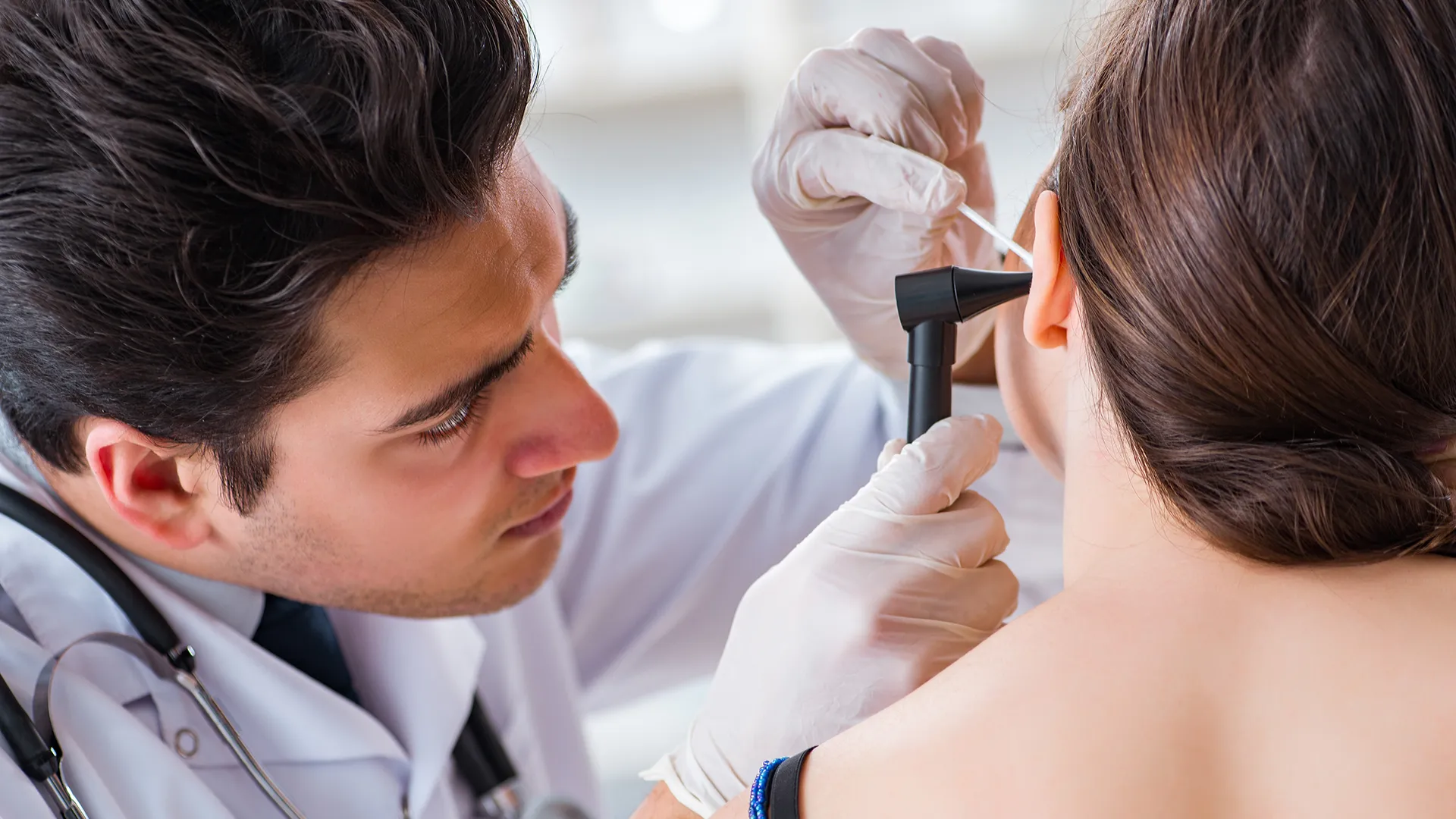
The study conducted by Dong, Zhu, and colleagues involved a robust cohort of 209 human subjects. This group included 108 individuals who had already been diagnosed with Parkinson’s disease and 101 healthy controls. To ensure the integrity of the data, the researchers utilized a standardized collection process, swabbing the ear canals of participants to collect secretions.
The collected samples were then subjected to rigorous chemical analysis using gas chromatography-mass spectrometry (GC-MS). This technique allows scientists to separate, identify, and quantify the various chemical components within a complex mixture. The analysis revealed that while hundreds of compounds are present in human earwax, four specific VOCs showed significant deviations in concentration between the PD group and the control group. These four compounds were identified as:
- Ethylbenzene: An aromatic hydrocarbon often associated with metabolic processes.
- 4-ethyltoluene: A compound related to oxidative pathways.
- Pentanal: An aldehyde that can be a byproduct of lipid peroxidation.
- 2-pentadecyl-1,3-dioxolane: A complex acetal whose presence in increased amounts suggests specific alterations in the skin’s lipid metabolism.
The identification of these four biomarkers provided the "chemical fingerprint" necessary to build an automated diagnostic model.
The Role of Artificial Intelligence in Olfactory Detection
Identifying biomarkers is only the first step; creating a tool that can be used in a clinical setting requires a way to interpret that data rapidly and accurately. To achieve this, the researchers developed and trained an Artificial Intelligence Olfactory (AIO) system.
The AIO system functions similarly to an "electronic nose." By training machine learning algorithms on the VOC profiles of the 209 participants, the system learned to recognize the subtle patterns and ratios of the four key biomarkers that indicate the presence of Parkinson’s. When the model was tested against blinded samples, it categorized the earwax with an impressive 94% accuracy.
This high degree of sensitivity and specificity is crucial for a screening tool. In a medical context, a "first-line" screening tool must be reliable enough to minimize false negatives (missing someone who has the disease) while being accurate enough to avoid the psychological and financial burden of false positives. The AIO system’s performance suggests it could potentially serve as a preliminary filter, identifying high-risk individuals who should then be referred for more intensive neurological evaluations.
A Chronology of Discovery: The Path to Earwax Screening
The development of this earwax-based test is the culmination of several years of evolving research into the "smell of Parkinson’s."
- 2019–2020: Initial interest in PD odors was sparked by anecdotal evidence of "super-smellers" who could detect a musky scent on PD patients years before symptoms appeared. This led to preliminary studies focusing on skin sebum.
- 2021: Researchers identified that VOCs in sebum were indeed altered in PD patients, but they noted the "environmental interference" factor that made forehead swabs unreliable for mass-market testing.
- 2022–2023: The focus shifted toward more stable bio-reservoirs. The ear canal was identified as a candidate due to its protected nature and the high concentration of sebaceous glands.
- 2024: The current study in Analytical Chemistry formalizes the use of earwax and integrates AI to create a high-accuracy, scalable screening model.
Implications for Global Healthcare and Patient Outcomes
The implications of an inexpensive, 94%-accurate earwax test are profound, particularly for global health systems. Currently, the "diagnostic gap" for Parkinson’s is a major issue in rural and underserved areas where access to neurologists and expensive imaging equipment is limited.
1. Accessibility and Cost:
An earwax swab is a low-tech procedure that can be performed by a nurse or even the patient at home. The subsequent analysis using an AI-integrated GC-MS system could be centralized, allowing for a "mail-in" diagnostic service that costs a fraction of current imaging-based methods.
2. Early Intervention and Clinical Trials:
The ability to detect PD in its prodromal (pre-symptomatic) stage is a "holy grail" for pharmaceutical companies. Many failed PD drugs were tested on patients whose disease was already too advanced. Identifying patients earlier through earwax screening could allow for more effective clinical trials of neuroprotective therapies.
3. Personalized Medicine:
As the researchers expand their study, they hope to determine if the VOC profile changes as the disease progresses. If so, this tool could be used not just for diagnosis, but for monitoring the efficacy of treatments and the rate of disease progression in individual patients.
Perspectives from the Scientific and Medical Community
While the results are promising, the medical community maintains a stance of "cautious optimism." Experts in the field of neurology note that while the 94% accuracy rate is stellar, the study was a single-center experiment conducted in China.
"The next step is to conduct further research at different stages of the disease, in multiple research centers and among multiple ethnic groups," says lead researcher Hao Dong. This is particularly important because earwax type (wet vs. dry) and chemical composition can vary significantly based on genetics and diet. For the test to be a global standard, it must be validated across diverse populations.
Furthermore, some clinicians argue that while screening is beneficial, it must be accompanied by a robust support system for patients who receive an early diagnosis. If a patient is told they have biomarkers for Parkinson’s but there is no immediate cure, the psychological impact must be managed through comprehensive care strategies.
Conclusion and Future Outlook
The research conducted by Dong, Zhu, and their colleagues represents a significant leap forward in the application of metabolomics and artificial intelligence to neurology. By identifying ethylbenzene, 4-ethyltoluene, pentanal, and 2-pentadecyl-1,3-dioxolane as key indicators in a stable medium like earwax, they have provided a blueprint for the future of Parkinson’s screening.
The project received support from several prestigious institutions, including the National Natural Sciences Foundation of China and the Pioneer and Leading Goose R&D Program of Zhejiang Province. This backing underscores the importance that national health organizations are placing on non-invasive diagnostic innovation.
As the research moves into its next phase—multi-center trials and longitudinal studies—the hope is that an earwax swab will one day be as routine as a blood pressure check, providing the early warning necessary to change the trajectory of life for millions of people living with Parkinson’s disease. For now, the "electronic nose" trained on the humble earwax swab stands as a testament to the power of looking—and smelling—for answers in the most unexpected places.