By utilizing a groundbreaking neuroimaging methodology, researchers have moved beyond traditional models of auditory perception. The study indicates that every tone, beep, and rhythmic pulse travels from the ear to the brain not just to be registered, but to act as a catalyst for a dynamic shift in neural connectivity. This research provides a new lens through which scientists can view the "symphony" of the human mind, offering profound implications for our understanding of consciousness, music cognition, and the diagnostic future of neurology.
The Technological Breakthrough: Introducing FREQ-NESS
At the heart of this discovery is a novel neuroimaging analysis method developed by the research team, titled FREQ-NESS, an acronym for Frequency-resolved Network Estimation via Source Separation. Led by Dr. Mattia Rosso and Associate Professor Leonardo Bonetti from the Center for Music in the Brain at Aarhus University, in conjunction with experts from Oxford’s Centre for Eudaimonia and Human Flourishing, this method represents a paradigm shift in how neural data is interpreted.
Traditional neuroimaging techniques often struggle to differentiate between overlapping signals. The brain is an incredibly "noisy" environment where billions of neurons fire simultaneously across various frequencies. Conventional methods typically rely on predefined frequency bands—such as alpha, beta, and gamma waves—or focus on specific regions of interest (ROIs) within the brain’s anatomy. While useful, these approaches can miss the fluid, interconnected nature of neural activity.
FREQ-NESS solves this by using advanced algorithms to disentangle overlapping brain networks based on their dominant frequency. Once a specific network is identified by its unique "signature" frequency, the method can trace how that network propagates across the brain’s physical space. This allows researchers to see not just where the brain is active, but how different frequencies of activity travel and interact across the entire neural landscape.
A Chronological Evolution of Auditory Neuroscience
To understand the significance of this study, one must look at the timeline of auditory research over the last century. For decades, the prevailing "modular" theory of the brain suggested that specific functions were localized in distinct areas. The primary auditory cortex was seen as the "input terminal" for sound, which then sent data to other regions for interpretation.
In the early 2000s, the advent of functional Magnetic Resonance Imaging (fMRI) allowed scientists to see which areas "lit up" during music or speech. However, fMRI has a significant limitation: it measures blood flow, which is a slow process, making it difficult to capture the millisecond-by-millisecond changes that occur when we listen to a fast-paced rhythm.
By the 2010s, researchers began focusing more on "neural entrainment"—the idea that brainwaves synchronize with the rhythm of external stimuli. While this explained how we keep time with a beat, it still didn’t fully capture how the entire brain reorganizes its internal communication networks to facilitate this synchronization.
The 2024 publication of the FREQ-NESS study marks the latest milestone in this chronology. It moves the field from observing "synchronization" to observing "reconfiguration." It provides the first data-driven evidence that the brain’s large-scale internal organization is a fluid, frequency-dependent process that adapts in real time to the external world.
Supporting Data: Mapping the Brain’s Internal Symphony
The data gathered through the FREQ-NESS method reveals a level of spectral and spatial precision previously thought unattainable. In the study, participants were exposed to continuous streams of auditory stimuli while their brain activity was monitored using Magnetoencephalography (MEG), a technique that records the magnetic fields produced by electrical activity in the brain.
The findings showed that the brain’s response to sound is not confined to the auditory cortex. Instead, the researchers identified multiple "frequency-resolved" networks that span the frontal, parietal, and temporal lobes.
Key data points from the research include:
- Frequency Disentanglement: The FREQ-NESS algorithm successfully isolated distinct neural networks operating at different hertz (Hz) levels, showing that the brain uses specific frequencies to "tag" and process different aspects of sound.
- Spatial Propagation: The study mapped the exact path of these signals, showing that a rhythmic tone triggers a wave of reorganization that moves from sensory input areas to higher-order cognitive regions involved in attention and prediction.
- Network Reliability: The researchers noted a high level of consistency in these network patterns across different experimental conditions and different participants. This reliability is crucial, as it suggests that FREQ-NESS could be used to create "individualized brain maps."
Dr. Mattia Rosso emphasized that this richness of data changes the fundamental metaphor of brain activity. "We’re used to thinking of brainwaves like fixed stations—alpha, beta, gamma—and of brain anatomy as a set of distinct regions," Rosso explained. "But what we see with FREQ-NESS is much richer. It is long known that brain activity is organized through activity in different frequencies, tuned both internally and to the environment. Starting from this fundamental principle, we’ve designed a method that finds how each frequency is expressed across the brain."
Official Responses and Scientific Perspectives
The announcement of the FREQ-NESS method has garnered significant interest from the international neuroscience community. While the study was led by Aarhus and Oxford, it has sparked a wider conversation about the future of "dynamic mapping."
Professor Leonardo Bonetti, a co-author of the study, noted the profound philosophical and clinical implications of the findings. "The brain doesn’t just react: it reconfigures. And now we can see it," Bonetti stated. He suggested that this discovery could fundamentally change how we study not just music, but the very nature of human consciousness. "This could change how we study brain responses to music and beyond, including consciousness, mind-wandering, and broader interactions with the external world."
Other experts in the field of neuroimaging have reacted to the study with cautious optimism, noting that the "data-driven" nature of FREQ-NESS—meaning it doesn’t rely on human-defined assumptions—makes it a powerful tool for discovering previously hidden neural patterns. By removing the bias of "predefined regions," the method allows the data to speak for itself, potentially revealing networks that traditional analysis would have ignored.
Broader Impact: From Clinical Diagnostics to AI
The implications of the Aarhus-Oxford study extend far beyond the laboratory. The ability to see the brain reorganize in real time opens several new frontiers in medicine and technology.
1. Clinical Diagnostics and Personalized Medicine
Because FREQ-NESS has shown high reliability across individuals, it could lead to the development of "neural signatures" for various conditions. Disorders such as Alzheimer’s disease, schizophrenia, and ADHD are often characterized by disruptions in how brain networks communicate. If clinicians can map a patient’s "healthy" reorganization pattern versus their "symptomatic" pattern, they may be able to diagnose neurological conditions much earlier or tailor treatments to an individual’s specific neural architecture.
2. Brain-Computer Interfaces (BCI)
In the realm of technology, BCIs rely on the ability to "read" a user’s brainwaves to control external devices, such as prosthetic limbs or computers. The precision of the FREQ-NESS method could significantly improve the speed and accuracy of these interfaces. By understanding how frequencies propagate across the brain, engineers can design systems that are more responsive to the user’s intent.
3. Music Therapy and Cognitive Enhancement
The study reinforces the scientific basis for music therapy. If a specific rhythm can force the brain to reconfigure itself into a more organized or attentive state, music can be used as a precision tool for cognitive rehabilitation. This could be particularly beneficial for patients recovering from strokes or those with sensory processing disorders.
4. Understanding Consciousness
One of the most elusive questions in science is how the physical brain gives rise to the subjective experience of consciousness. By showing how the brain integrates external stimuli into its internal "dynamic organization," the researchers are providing a new framework for studying "altered states of consciousness"—whether through meditation, sleep, or pharmacological intervention.
The Future of the Research Program
As of late 2024, a large-scale research program is already underway to expand on the findings of the FREQ-NESS study. Supported by an international network of neuroscientists, the team at Aarhus and Oxford aims to apply this methodology to even more complex datasets, including those involving social interaction and complex emotional processing.
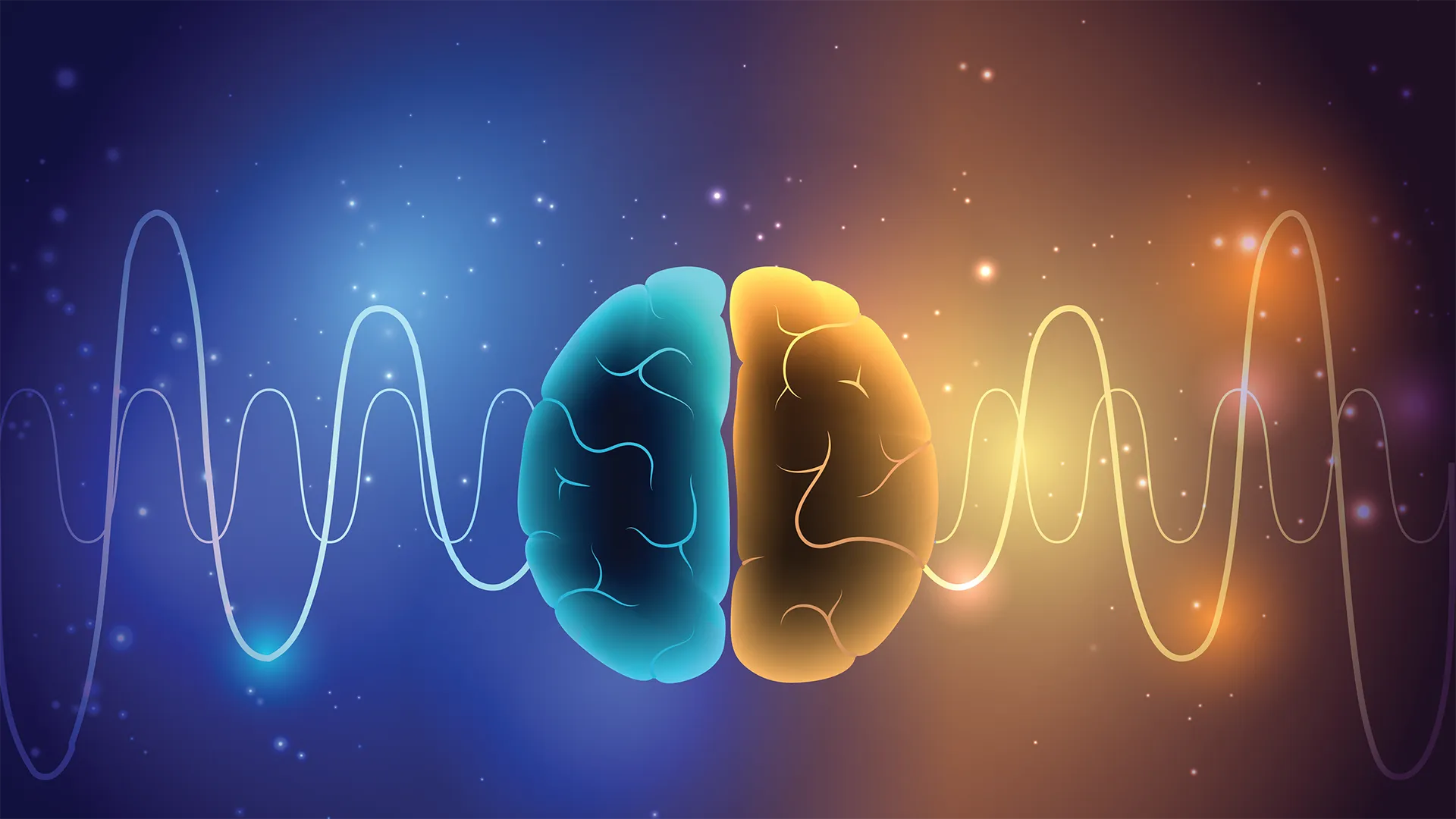
The ultimate goal is to create a comprehensive atlas of the human brain that is not just a map of "where things are," but a manual of "how things move and change." The discovery that the brain dynamically reshapes itself in response to rhythm is merely the first chapter in a new era of neuroscience—one where the mind is viewed not as a static organ, but as a living, breathing symphony of light and sound.
As Professor Bonetti concluded, the reliability of this method might soon pave the way for individualized brain mapping, allowing us to understand the unique "rhythm" of every human mind. This transition from general models to personalized neural insights represents the next great leap in our quest to understand the most complex structure in the known universe.