The transition process is a pivotal moment for the NAD, an organization with a history spanning over a century. As the primary advocate for the rights of the deaf and hard-of-hearing community in the United States, the NAD’s choice of CEO carries significant weight for the millions of people who rely on its legal, legislative, and social support.
The Search Timeline and Selection Process
The search for a new CEO began following the announcement of a planned leadership change, triggering a comprehensive search led by the NAD Board of Directors. In late 2025, the Board established a search committee tasked with evaluating internal and external candidates who possess not only the required administrative expertise but also a deep, lived understanding of the cultural and linguistic nuances of the deaf community.
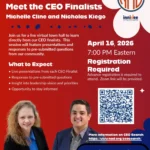
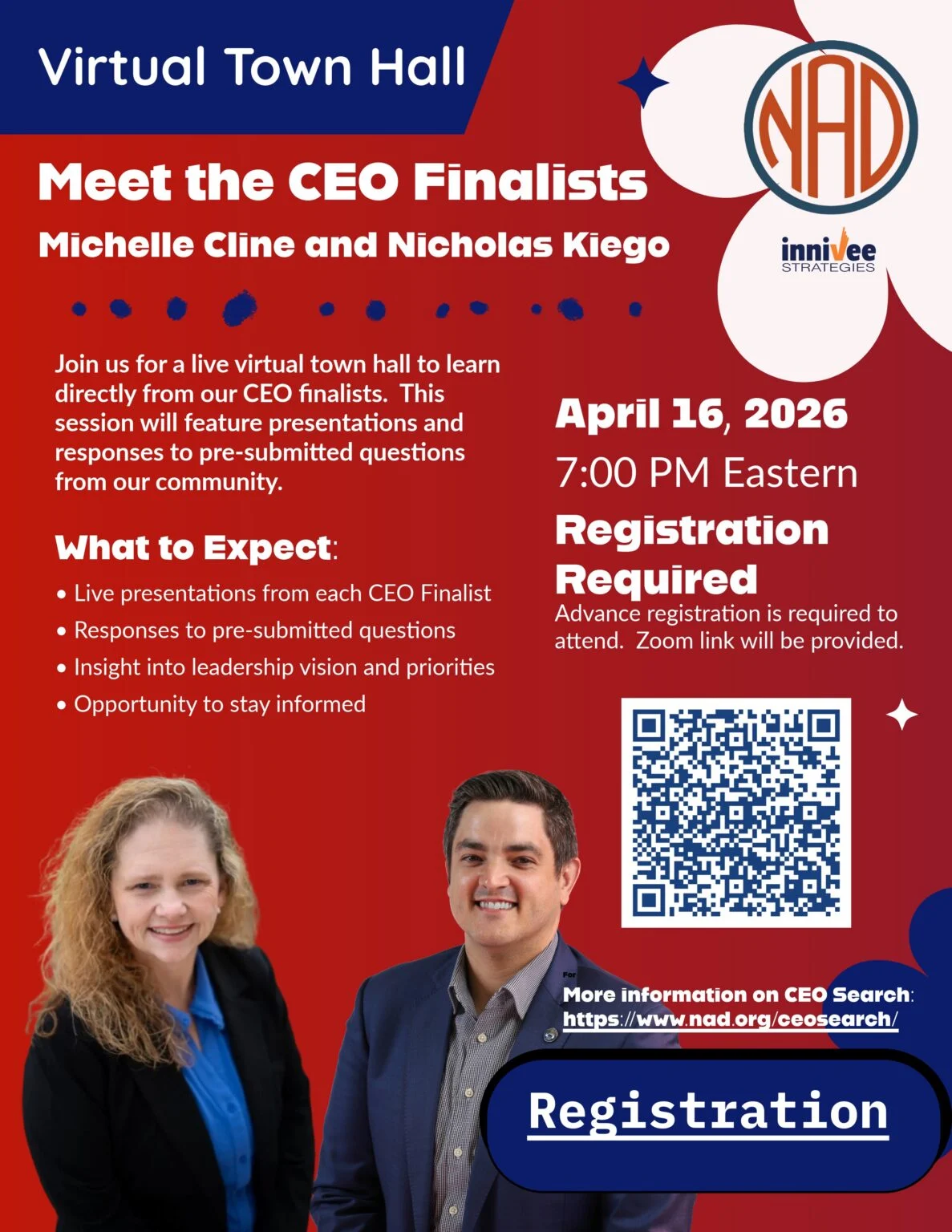
The selection process was structured to ensure transparency and inclusivity. Throughout the early months of 2026, the committee conducted multiple rounds of interviews, vetting applicants based on their track records in policy advocacy, fundraising, organizational management, and public engagement. By early April 2026, the field was narrowed down to two finalists: Michelle Cline and Nicholas Kiego.
To facilitate community engagement, the NAD scheduled a virtual town hall for April 16, 2026, at 7:00 PM Eastern. This event was designed to move beyond the traditional interview format, allowing the candidates to present their platforms directly to the constituents they would serve. The town hall included a structured Q&A segment featuring questions submitted by the community in the weeks leading up to the event, ensuring that the finalists addressed the concerns most relevant to the diverse membership of the organization.
Profiles of the Finalists
The selection of Michelle Cline and Nicholas Kiego reflects the board’s emphasis on diverse professional backgrounds.
Michelle Cline enters the final stage with a robust background in non-profit management and advocacy. Her career has been marked by a focus on systemic change, particularly regarding accessibility in public education and corporate sectors. Her proponents point to her success in coalition building and her ability to navigate federal legislative channels as key assets that would serve the NAD well in its mission to lobby for stronger civil rights protections.
Nicholas Kiego brings a different, yet equally compelling, set of experiences. Known for his work in community development and grassroots advocacy, Kiego has consistently championed the importance of regional engagement and the empowerment of local affiliates. His leadership style is often characterized by a bottom-up approach, emphasizing that the strength of the NAD lies in the grassroots participation of its local chapters and individual members.
The juxtaposition of these two candidates presents the NAD membership and its board with a distinct choice: a leader focused on broad-scale, national-level legislative advocacy versus one prioritizing the strengthening of organizational infrastructure and grassroots engagement.
The Significance of the Virtual Town Hall
The decision to host a virtual town hall signifies a commitment to the "nothing about us without us" principle that defines the deaf rights movement. By providing a platform for the finalists to respond to pre-submitted questions, the NAD sought to minimize the distance between the executive search committee and the general public.
During the event, attendees were provided with insight into the leadership vision and specific priorities of both candidates. These presentations touched on critical issues such as the preservation of American Sign Language (ASL) in educational settings, the advancement of video relay service (VRS) standards, and the integration of emerging technologies to improve accessibility. The format allowed for a side-by-side comparison of how each candidate would handle the challenges of sustaining a high-impact non-profit in a rapidly shifting economic and political landscape.
Contextualizing the Role of the NAD
The National Association of the Deaf functions as the primary defender of the rights of deaf and hard-of-hearing people in the United States. Founded in 1880, the organization has consistently played a critical role in the fight for the Americans with Disabilities Act (ADA) and subsequent legislation designed to eliminate barriers in the workplace, school, and government.
As of 2026, the organization faces a unique set of challenges. The rapid evolution of artificial intelligence, particularly in the realm of automated captioning and sign language recognition, presents both opportunities for increased accessibility and risks to the quality of services. Furthermore, the NAD must manage the needs of an increasingly diverse membership that includes people with varying levels of hearing loss, different communication preferences, and a wide array of intersectional identities.
The next CEO will be responsible for balancing these competing interests while maintaining the financial health of the organization. With a reliance on both membership dues and philanthropic funding, the CEO must be a capable fundraiser and a skilled diplomat who can navigate the corridors of Washington, D.C., while remaining grounded in the needs of the community.
Analysis of Organizational Impact
Industry observers and stakeholders have noted that the current search is more than just a personnel change; it is a signal of the organization’s future strategic direction. The board’s selection will inevitably influence how the NAD allocates its resources over the next five to ten years.
An analysis of the organization’s current trajectory suggests that the board is looking for a leader who can modernize the NAD’s digital presence and expand its influence among younger generations. Both finalists have signaled a willingness to embrace new media strategies and engage with the deaf community through digital platforms, which is essential for maintaining relevance in an era of rapid information exchange.
Furthermore, the emphasis on a "virtual" town hall is a testament to the organization’s dedication to remote accessibility. By hosting the event online, the NAD ensured that members from all 50 states, as well as international observers, could participate equally, regardless of geographic constraints. This format is increasingly becoming the gold standard for democratic participation within advocacy organizations.
Official Statements and Community Feedback
While the board has maintained a neutral stance during the final interview phase, the public discourse within the community has been active. Members have utilized social media and local chapter meetings to discuss the implications of the search. Many have expressed a desire for a candidate who is not only a visionary but also a consensus-builder.
"The selection of the next CEO is the most important decision the board will make this decade," noted an anonymous representative from a prominent state-level deaf advocacy group. "We need someone who understands that the fight for ASL rights is not just a legal battle—it is a cultural one. We need a leader who can speak for us in the halls of Congress and still listen to the student in a classroom who is fighting for an interpreter."
The NAD Board of Directors has underscored that the process is designed to be as objective as possible. Every step of the search, from the initial screening of applicants to the final interview, has been guided by a set of core competencies established at the start of the year. This structured approach is intended to provide the membership with confidence that the final decision will be based on merit and suitability for the organization’s long-term goals.
Broader Implications and Future Outlook
As the NAD moves toward the final selection, the broader community remains attentive. The implications of this search extend beyond the walls of the organization. The NAD is a model for other disability rights groups, and its internal governance processes are often viewed as a benchmark for the non-profit sector.
The successful candidate will inherit an organization with a strong reputation for litigation and legislative advocacy. However, the changing landscape of civil rights law, particularly regarding the interpretation of the ADA in digital spaces, will require a CEO who is prepared to engage in complex, high-stakes legal battles.
Looking forward, the NAD’s future will be defined by its ability to secure funding, its effectiveness in influencing policy, and its capacity to remain a unified voice for a diverse community. By prioritizing a transparent selection process and providing the membership with a direct look at the finalists, the board has taken significant steps to ensure that the eventual transition is marked by continuity and widespread support.
The conclusion of the CEO search will mark the end of a long and deliberate process, but it will also signify the beginning of a new chapter for the National Association of the Deaf. As the organization prepares to announce its final choice, the community remains focused on the central question: which of these two leaders is best positioned to ensure that the rights and the voices of the deaf and hard-of-hearing continue to be protected and amplified on the national stage?
For those wishing to review the materials provided during the town hall or to learn more about the board’s ongoing commitment to this transition, the NAD has maintained a centralized repository of information on their website at https://www.nad.org/ceosearch/. This site serves as a historical record of the search and provides ongoing updates as the board nears its final decision.