
Methodology and Scope of the Longitudinal Study
The research involved a cohort of 1,939 older adults, with an average age of 80 at the beginning of the observation period. To ensure the integrity of the findings, none of the participants had a diagnosis of dementia when the study commenced. These individuals were tracked for an average of eight years, during which they underwent annual clinical evaluations and cognitive testing.
The primary objective of the study was to quantify "cognitive enrichment" across the lifespan. Unlike many studies that focus solely on the habits of the elderly, this research took a multi-generational approach, examining mental stimulation at three distinct life stages: early life (childhood and adolescence), middle age (approximately age 40), and later life (age 80 and beyond). By calculating an enrichment score for each participant based on their access to resources and their engagement in specific activities, researchers were able to categorize the cohort into different levels of lifelong intellectual stimulation.
The Three Stages of Lifelong Cognitive Enrichment
To capture a holistic view of mental engagement, the research team at Rush University utilized detailed questionnaires to reconstruct the participants’ intellectual histories.
Early Life Enrichment (Birth to Age 18)
The study examined factors that contribute to a "foundational" cognitive reserve. This included how frequently participants were read to by parents or guardians, their personal reading habits as children, and the availability of intellectual resources in the home, such as newspapers, books, and atlases. Notably, the study also measured whether participants had studied a foreign language for five years or more during their formative years, a factor increasingly recognized for its role in enhancing neural plasticity.
Middle Age Enrichment (Age 40)
During the mid-life stage, the researchers looked at socioeconomic and environmental factors that facilitate mental stimulation. This included household income levels at age 40, which often correlates with access to educational resources and leisure time. Specific indicators of enrichment included subscriptions to magazines or journals, the ownership of dictionaries, and the possession of a library card. Furthermore, the frequency of "cultural excursions"—visits to museums, theaters, or libraries—was factored into the mid-life enrichment score.
Later Life Enrichment (Age 80 and Older)
In the final stage of the study, researchers focused on the active maintenance of cognitive health. Participants were surveyed on their current engagement with activities such as reading books or newspapers, writing letters or journals, and playing games like cards, checkers, or crosswords. Socioeconomic status in later life, including income from Social Security and retirement funds, was also monitored to account for any correlations between financial security and the ability to pursue enriching hobbies.
Statistical Findings: Risk Reduction and Symptom Delay
Over the eight-year follow-up period, 551 participants (approximately 28%) were diagnosed with Alzheimer’s disease, and 719 participants (37%) developed mild cognitive impairment (MCI). When the researchers compared the participants in the top 10% of enrichment scores with those in the bottom 10%, the disparity in health outcomes was stark.
Among the group with the highest lifelong enrichment, only 21% developed Alzheimer’s disease during the study. In contrast, 34% of those with the lowest enrichment scores developed the disease. After adjusting for variables including age, biological sex, and formal education level, the researchers concluded that high lifetime enrichment is linked to a 38% lower risk of developing Alzheimer’s disease and a 36% lower risk of developing mild cognitive impairment.
The most significant finding for public health, however, concerns the timing of the disease. On average, individuals with the highest enrichment scores did not develop Alzheimer’s symptoms until age 94. Those with the lowest scores reached the same clinical stage at age 88—a five-year difference. For mild cognitive impairment, the delay was even more pronounced: high-enrichment individuals developed symptoms at an average age of 85, compared to age 78 for the low-enrichment group, representing a seven-year delay.
Biological Resilience and the Role of Cognitive Reserve
One of the most profound aspects of the study involved a sub-group of 498 participants who passed away during the research period and had consented to brain autopsies. This allowed researchers to examine the physical state of the brain and compare it to the participants’ cognitive performance shortly before death.
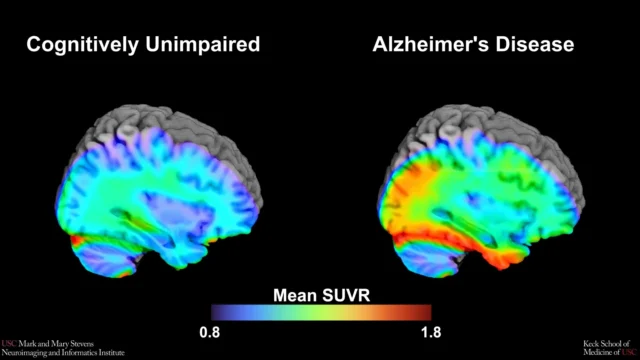
In many cases, the brains of those with high lifelong enrichment showed the physical hallmarks of Alzheimer’s disease, such as the accumulation of amyloid-beta plaques and tau protein tangles. However, despite these pathological changes, these individuals had maintained significantly stronger memory and thinking abilities and showed a slower rate of cognitive decline than their peers with similar brain pathology but lower enrichment scores.
This phenomenon is often referred to by neurologists as "cognitive reserve." The theory suggests that lifelong learning and mental stimulation help the brain develop more efficient neural networks or utilize alternative pathways to maintain function, even as the physical structures of the brain begin to fail. This finding is particularly encouraging because it suggests that while we may not yet be able to prevent the biological onset of Alzheimer’s, we can significantly bolster the brain’s ability to resist the clinical symptoms of the disease.
Expert Analysis and Official Responses
"Our study looked at cognitive enrichment from childhood to later life, focusing on activities and resources that stimulate the mind," stated study author Andrea Zammit, PhD, of Rush University Medical Center. "Our findings suggest that cognitive health in later life is strongly influenced by lifelong exposure to intellectually stimulating environments."
Dr. Zammit emphasized that the results should serve as a call to action for policymakers. "The findings are encouraging, suggesting that consistently engaging in a variety of mentally stimulating activities throughout life may make a difference in cognition. Public investments that expand access to enriching environments, like libraries and early education programs designed to spark a lifelong love of learning, may help reduce the incidence of dementia."
Gerontologists and public health experts have reacted to the study by highlighting the socioeconomic implications. The data suggests that cognitive health is not merely a matter of individual choice but is heavily influenced by the "intellectual infrastructure" available to a person from birth. Experts suggest that if a five-year delay in Alzheimer’s onset could be achieved across the general population, it would drastically reduce the global burden of the disease and significantly lower healthcare costs associated with long-term care.
Contextualizing the Global Impact of Alzheimer’s
To understand the weight of a five-year delay in symptom onset, one must look at the current global landscape of dementia. According to the World Health Organization (WHO), more than 55 million people worldwide are currently living with dementia, with Alzheimer’s accounting for 60% to 70% of those cases. This number is projected to rise to 139 million by 2050 as the global population ages.
Current pharmacological treatments, such as recently FDA-approved monoclonal antibodies, focus on clearing amyloid from the brain. However, these treatments are often expensive, carry risks of side effects, and are most effective only in the very early stages of the disease. In this context, lifestyle interventions and "cognitive enrichment" represent a non-invasive, cost-effective, and highly accessible strategy for managing the pending public health crisis.
Study Limitations and Future Research
Despite the robust data, the researchers acknowledged certain limitations. Because the study relied on participants recalling their early life and mid-life experiences while they were in their 80s, there is a potential for "recall bias," where participants might not accurately remember the frequency of certain activities from decades prior. Furthermore, the study population, while large, was predominantly composed of older adults who were healthy enough to participate in a long-term study at age 80, which may not perfectly reflect the broader, more diverse global population.
Future research is expected to look more closely at the specific types of mental stimulation that offer the most protection. For example, researchers are interested in whether digital literacy and modern technology provide the same cognitive benefits as traditional reading and writing. Additionally, more work is needed to determine if starting cognitive enrichment programs in late-life can "catch up" to the benefits of lifelong stimulation.
Conclusion: A Lifetime of Learning as Preventive Medicine
The Rush University study reinforces a growing body of evidence that the brain is a highly adaptable organ that responds to use. By documenting the benefits of early-life education, mid-life resource access, and late-life mental activity, the research provides a roadmap for "cognitive longevity."
The five-to-seven-year delay in symptom onset discovered in this study represents more than just a statistic; for patients and their families, it represents years of maintained independence, preserved memories, and a higher quality of life. As the medical community continues to seek a cure for Alzheimer’s, the promotion of lifelong learning and the expansion of access to intellectually stimulating environments remain among the most powerful tools available in the fight against cognitive decline.