
The Magnitude of the Cognitive Delay
The implications of the study are particularly striking when viewed through the lens of aging populations. According to the data, participants with the highest levels of lifelong mental stimulation did not develop Alzheimer’s dementia until an average age of 94. In contrast, those with the lowest levels of intellectual engagement reached that same clinical milestone at an average age of 88. This five-year delay represents a significant portion of a person’s final decade, potentially allowing for several more years of independent living and high-quality interaction with family and community.
The disparity was even more pronounced in cases of mild cognitive impairment (MCI), often considered a precursor to full-blown dementia. Individuals in the highest enrichment tier developed MCI at an average age of 85, while those in the lowest tier showed symptoms by age 78. This seven-year difference suggests that intellectual engagement may be one of the most potent modifiable factors in the fight against neurodegenerative decline.
Study Methodology and Participant Tracking
To reach these conclusions, researchers followed 1,939 adults with an average age of 80. At the outset of the study, none of the participants showed signs of dementia. The cohort was tracked for an average of eight years, during which time they underwent regular cognitive assessments and reported on their lifestyle habits across three distinct phases of life: childhood, middle age, and late life.
The longitudinal nature of the study allowed the team to calculate "enrichment scores" for each participant. These scores were not based on a single point in time but were a cumulative reflection of a person’s environment and choices over many decades. Over the course of the observation period, 551 participants were eventually diagnosed with Alzheimer’s disease, and 719 were diagnosed with mild cognitive impairment. By comparing the cognitive trajectories of these individuals against their enrichment scores, researchers were able to isolate the impact of mental stimulation from other variables.
Defining Lifelong Enrichment: From Childhood to Age 80
The study’s framework for "cognitive enrichment" was comprehensive, looking at resources and activities across a lifespan. This approach acknowledges that brain health is not merely the result of activities taken up in retirement, but rather a structural foundation built from a very young age.
Early Life (Before Age 18)
In the formative years, researchers looked at the availability of intellectual resources in the home. Key factors included:
- The frequency with which parents or guardians read to the child.
- The child’s own reading habits regarding books and periodicals.
- The presence of reference materials, such as encyclopedias, atlases, and newspapers, within the household.
- The formal study of a foreign language for a duration of five years or more.
Middle Age (Around Age 40)
Middle-age enrichment focused on both socioeconomic status and active engagement with the world. Factors included:
- Income levels, which often correlate with access to healthcare and reduced chronic stress.
- The maintenance of resources such as magazine subscriptions, library cards, and dictionaries.
- The frequency of cultural excursions, such as visiting museums, attending theater performances, or utilizing public libraries.
Later Life (Starting Around Age 80)
The final stage focused on the immediate habits of the elderly participants. Researchers monitored:
- Daily cognitive activities, including reading books or newspapers, writing letters or journals, and playing games like cards, checkers, or puzzles.
- Financial stability, measured through income from Social Security, retirement funds, and other investments, which serves as a proxy for the ability to afford a stimulating lifestyle.
The Biological Mystery: Cognitive Reserve and Brain Autopsies
One of the most significant aspects of the study involved a sub-group of participants who died during the follow-up period and had previously consented to brain autopsies. These post-mortem examinations allowed researchers to look past clinical symptoms and examine the physical state of the brain.
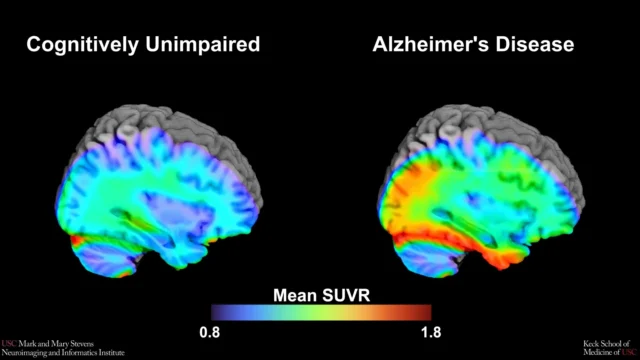
In many cases of Alzheimer’s, the brain is characterized by the buildup of amyloid-beta plaques and tau protein tangles. Conventionally, the presence of these proteins is synonymous with cognitive decline. However, the study found that participants with high lifelong enrichment scores maintained stronger memory and thinking abilities even when their brains showed significant levels of amyloid and tau.
This phenomenon is known in the medical community as "cognitive reserve." It suggests that a lifetime of learning builds more complex neural networks or more efficient pathways, allowing the brain to "bypass" or compensate for the physical damage caused by Alzheimer’s pathology. Essentially, while the disease may still be present in the brain tissue, the individual remains functionally intact for much longer.
Statistical Breakdown of Risk Reduction
When the researchers adjusted the data to account for variables such as age, sex, and formal education levels, the protective association of lifelong learning remained robust. The study found that:
- The top 10% of participants (those with the highest enrichment) had a 38% lower risk of developing Alzheimer’s disease compared to the bottom 10%.
- The same high-enrichment group saw a 36% lower risk of developing mild cognitive impairment.
- Only 21% of those in the highest enrichment category developed Alzheimer’s during the study, compared to 34% of those in the lowest category.
These figures highlight that while education is a significant factor, "enrichment" is a broader and more continuous process. A person with less formal schooling who remains a voracious reader and a frequent library visitor throughout their life may have better cognitive outcomes than a highly educated person who ceases intellectual engagement after graduation.
Expert Reactions and Public Health Implications
Dr. Andrea Zammit, the study’s lead author from Rush University Medical Center, emphasized the encouraging nature of these findings. "Our findings suggest that consistently engaging in a variety of mentally stimulating activities throughout life may make a difference in cognition," she stated.
Dr. Zammit also pointed to the societal responsibility of fostering these environments. She argued that the responsibility for brain health should not fall solely on the individual but should be supported by public policy. "Public investments that expand access to enriching environments, like libraries and early education programs designed to spark a lifelong love of learning, may help reduce the incidence of dementia," Zammit noted.
Health economists suggest that delaying the onset of Alzheimer’s by five years could have a transformative effect on the global healthcare system. With the number of people living with dementia worldwide expected to triple to 153 million by 2050, the financial and emotional burden on caregivers and state resources is immense. A five-year delay would significantly reduce the total number of "years lived with disability," potentially saving billions of dollars in long-term care costs.
Contextualizing the Findings: The Global Search for Prevention
The Rush University study adds to a growing body of evidence regarding modifiable risk factors for dementia. In 2020, the Lancet Commission on dementia prevention, intervention, and care identified 12 modifiable risk factors—including education, hearing loss, and social isolation—that could potentially prevent or delay up to 40% of dementia cases.
The current study reinforces the "use it or lose it" hypothesis but adds a crucial temporal dimension: the "use it" phase must ideally begin in childhood and continue through the senior years. It also highlights that enrichment is not a luxury but a biological necessity for long-term neurological resilience.
Limitations and Future Research
Despite the promising results, the researchers acknowledged certain limitations. Because participants were asked to recall details about their early and midlife experiences while they were in their 80s, there is a risk of "recall bias." Those who were already experiencing very subtle, undiagnosed cognitive decline might have had more difficulty accurately remembering the frequency of their activities decades earlier.
Furthermore, while the study controlled for income and education, it is difficult to completely decouple "intellectual enrichment" from the broader advantages of a high socioeconomic status, such as better nutrition, lower environmental toxin exposure, and superior healthcare.
Future research is expected to look more closely at specific types of mental stimulation. For instance, does learning a musical instrument provide a different type of "reserve" than learning a new language? Additionally, researchers hope to investigate whether intensive cognitive interventions started later in life—such as "brain training" programs—can provide the same benefits as the lifelong exposure documented in this study.
Conclusion
The study published in Neurology provides a roadmap for what a "brain-healthy" life might look like across the decades. From the bedtime stories of childhood to the museum visits of middle age and the puzzles and reading of the golden years, every intellectual endeavor appears to contribute to a cumulative shield against cognitive decline. By potentially delaying Alzheimer’s symptoms by half a decade, lifelong learning offers more than just knowledge—it offers time.