
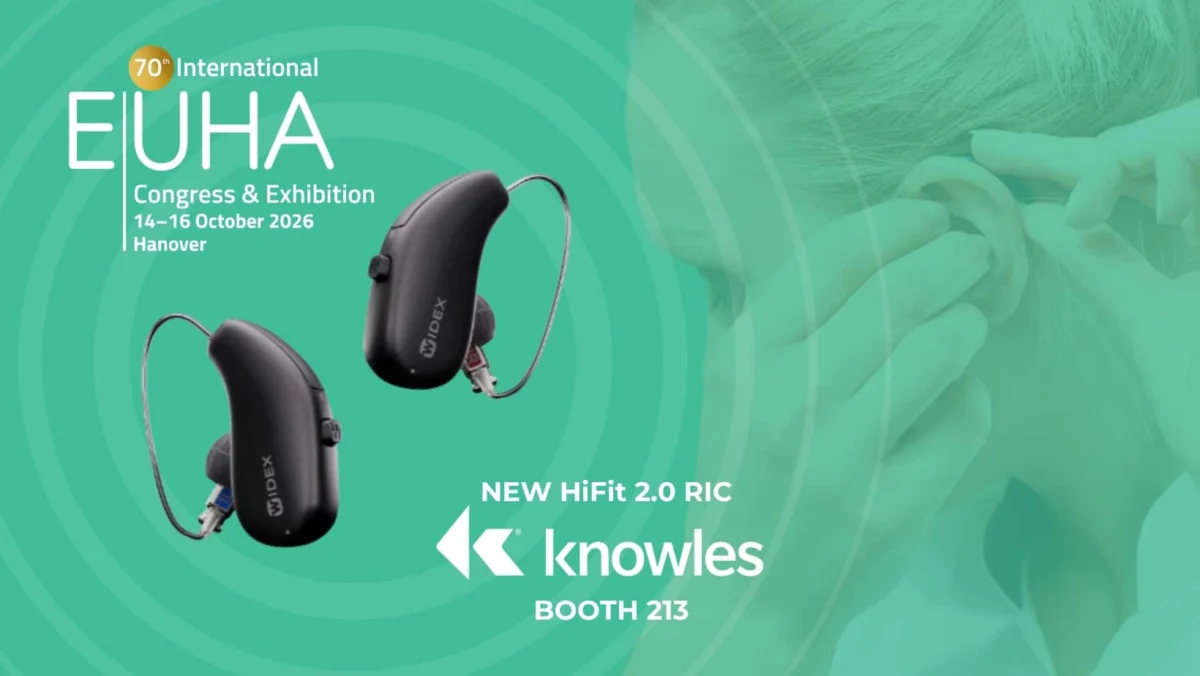
The Significance of EUHA 2026 in the Global Hearing Health Landscape
The European Union of Hearing Aid Acousticians Congress (EUHA) stands as the preeminent international platform for hearing care professionals, manufacturers, and researchers. Held annually, EUHA consistently attracts thousands of attendees from across the globe, serving as a critical forum for the exchange of scientific knowledge, the presentation of cutting-edge research, and the unveiling of the latest technological advancements in audiology and hearing aid technology. For companies like Knowles, exhibiting at EUHA provides an unparalleled opportunity to engage directly with key stakeholders, including audiologists, hearing aid dispensers, product developers, and regulatory bodies, gathering invaluable industry insights and demonstrating how their component-level innovations translate into tangible improvements for end-users. The congress is not merely a trade show but a definitive barometer for the future direction of hearing health, where emerging trends in digital signal processing, advanced connectivity, artificial intelligence (AI) integration, and user-centric design are often first highlighted and rigorously discussed. Its influence extends far beyond Europe, shaping product development strategies and clinical practices worldwide. The 2026 iteration in Hanover is anticipated to continue this tradition, focusing on increasingly sophisticated solutions for an aging global population and individuals seeking more discreet, effective, and personalized hearing experiences amidst complex sound environments. The sheer volume of expertise and innovation concentrated at EUHA underscores its pivotal role in advancing the entire hearing health ecosystem.
Knowles Corporation: A Legacy of Micro-Acoustic Innovation
Knowles Corporation boasts a rich and storied history spanning decades, establishing itself as a pioneer and dominant force in the design and manufacture of advanced micro-acoustic components. From its foundational work in the very first miniature transducers for hearing aids in the 1940s to its expansion into consumer electronics, aerospace, and defense, Knowles has consistently been at the forefront of miniaturization and precision audio engineering. The company’s core expertise lies in developing highly compact, low-power microphones and high-performance balanced armature receivers, components that are indispensable in the modern hearing health landscape. These tiny, yet powerful, components are the fundamental building blocks that enable hearing aid manufacturers to create devices that are not only incredibly small and energy-efficient but also capable of delivering superior sound quality and facilitating advanced features. Knowles’s strategic focus on hearing health applications underscores its profound commitment to improving the quality of life for millions worldwide, providing the foundational technologies that empower manufacturers to navigate the complex challenges of balancing robust acoustic performance with the ever-present demands for smaller form factors, extended battery life, and enhanced user comfort and discretion. This legacy of continuous innovation positions Knowles as a critical partner in the evolution of hearing technology.
HiFit 2.0: Redefining Receiver-in-Canal Performance and Anatomical Fit
At the heart of Knowles’s EUHA 2026 presentation is the new HiFit 2.0 receiver-in-canal (RIC) solution, an advancement poised to significantly impact the design, performance, and user experience of next-generation hearing aids. The development of HiFit 2.0 directly addresses a long-standing and critical challenge in the hearing aid industry: the inherent trade-off between achieving a comfortable, discreet physical fit within the diverse anatomies of the human ear canal and delivering the necessary acoustic output to effectively compensate for an individual’s specific hearing loss. Historically, smaller receivers, while offering superior discretion and accommodating a wider range of ear-canal anatomies, often compromised on acoustic power, limiting their suitability for more severe hearing losses. Conversely, higher-output receivers, essential for profound hearing impairments, typically required larger form factors, potentially leading to discomfort, reduced discretion, and limited anatomical compatibility, thereby restricting fitting options for hearing care professionals (HCPs).
Knowles engineers approached this challenge with a comprehensive and innovative redesign, integrating several key advancements into HiFit 2.0. The solution meticulously combines high acoustic performance with the company’s smallest receiver form factor to date. A critical ergonomic and acoustic element of this design is the incorporation of an optimized straight nozzle and a side cable exit. This seemingly subtle modification is, in fact, a significant engineering achievement, specifically engineered to enhance placement flexibility within the ear canal and improve the overall physical fit across a broader spectrum of ear-canal anatomies. This optimized design aims to mitigate common issues such as physical discomfort, occlusive feelings, and acoustic feedback, all of which can significantly detract from a user’s experience and device adoption.
The reported testing results for HiFit 2.0 are compelling, indicating a dramatic and statistically significant improvement in fit rates. Knowles reports that on one testing platform, the rate of successful fits increased from 48% to an impressive 94%, while on another, it rose from 33% to 85%. These statistics represent a paradigm shift in receiver design and fitting capabilities, allowing hearing care professionals to fit a significantly larger proportion of patients with a single, high-performance receiver type. This improved versatility simplifies inventory management for clinics, reduces the need for extensive customization or alternative solutions, and potentially accelerates the initial fitting process, leading to greater efficiency and patient satisfaction from the outset. For patients, this translates directly to a higher likelihood of receiving a comfortable, acoustically effective device that is precisely tailored to their unique anatomical and audiological needs, without compromising on sound quality or aesthetic discretion.
Further enhancing its appeal and functional advantages, HiFit 2.0 features an integrated metal receiver casing and RIC housing. This robust, unitary construction contributes to an approximate 34% reduction in the overall form factor compared to previous generations, making the device even more discreet and comfortable for daily wear, appealing to users who prioritize aesthetics and minimal physical presence. Beyond miniaturization, this integrated design significantly bolsters the receiver’s durability, increasing its shock resistance by nearly 40%. This enhanced resilience is crucial for devices that are exposed to the inevitable rigors of daily use, including accidental drops, impacts, or exposure to environmental stresses, leading to improved longevity and reliability for the end-user. For hearing aid manufacturers, HiFit 2.0 offers unprecedented design flexibility, enabling them to develop sleeker, more durable, and more universally fitting devices. This innovation empowers them to better balance critical product attributes such as optimal acoustic output, precise physical fit, wearer comfort, and aesthetic discretion, ultimately leading to more competitive and patient-centric product offerings in a rapidly evolving market. Industry analysts suggest that such advancements are absolutely vital for driving patient adoption and long-term satisfaction, as comfort, discretion, and reliability remain significant barriers for many potential hearing aid users.
MM60 MEMS Microphone: Powering the AI Revolution in Hearing Aids
Knowles will also prominently highlight its MM60 MEMS (Micro-Electro-Mechanical System) microphone at EUHA 2026. While first introduced at EUHA 2025 and now widely shipping, the MM60 remains a critical and enabling component for the next generation of intelligent hearing devices, underscoring Knowles’s continuous impact on the market. The MM60 represents a significant leap forward in microphone technology, having been specifically engineered to meet the extremely demanding requirements of AI-enabled hearing aid chipsets. At its core, the MM60 integrates a novel MEMS motor with an advanced Application-Specific Integrated Circuit (ASIC). This sophisticated combination allows the microphone to capture high-quality audio input with exceptional fidelity, wide dynamic range, and low self-noise, all while operating within the stringent power and space constraints inherent in modern, miniaturized hearing aids.
The increasing sophistication of digital signal processing and the rapid integration of advanced AI-based features—such as real-time multi-channel noise reduction, adaptive speech enhancement, intelligent soundscape analysis, dynamic feedback cancellation, and personalized listening profiles—have placed an unprecedented emphasis on the quality and consistency of the audio input. These complex AI algorithms rely heavily on pristine audio data to accurately differentiate between speech and various types of noise, identify subtle environmental cues, and adapt processing strategies dynamically in milliseconds. A sub-optimal or noisy microphone can severely degrade the performance of even the most advanced AI algorithms, leading to a "garbage in, garbage out" scenario where the theoretical benefits of sophisticated processing are negated by poor initial data capture, resulting in a less effective and less natural listening experience for the user.
The MM60 directly addresses this challenge by providing a consistent, high-fidelity audio stream to the downstream processing units, ensuring that AI algorithms have the best possible data to work with. Its ultra-low power consumption is equally critical, as AI-enabled features, while powerful, often demand significant computational resources, which can directly impact battery life – a primary concern for hearing aid users. By minimizing the microphone’s power draw, the MM60 helps manufacturers extend the operational life of hearing aids, a key consideration for user convenience and device adoption. Furthermore, its exceptionally compact size facilitates the integration of multiple microphones into a single device, enabling advanced directional arrays and sophisticated beamforming techniques that are absolutely essential for isolating speech from distracting background noise in complex and challenging listening environments like crowded restaurants or busy streets. Experts in AI and audiology consistently emphasize that the evolution of hearing aids into truly "smart" and adaptive devices is intrinsically linked to the performance of their input sensors. As one leading hearing aid engineer might infer, "The MM60 is not just a microphone; it’s the critical sensory gateway for intelligent hearing. Its precision, efficiency, and robust performance are paramount for unlocking the full potential of AI in personal audio amplification, translating complex algorithms into tangible improvements for the user." The ongoing rollout and widespread adoption of the MM60 signify a growing industry trend towards components specifically optimized for advanced computational audio, marking a pivotal moment in the evolution of hearing aid technology from mere amplification tools to intelligent, context-aware sound processing systems.
Broader Specialty Audio Portfolio: Beyond Core Components
Beyond the headline-grabbing HiFit 2.0 and MM60, Knowles will also present its extensive and diverse portfolio of specialty audio components crucial to the broader hearing health ecosystem. This comprehensive offering includes an array of general hearing health microphones, subminiature electret microphones, and a wide range of industry-leading balanced armature receivers, along with their innovative multi-way balanced armature technology.
Balanced armature (BA) technology is a cornerstone of Knowles’s offerings for hearing health, renowned for its superior acoustic characteristics compared to traditional dynamic drivers. Unlike dynamic drivers, which use a direct diaphragm to produce sound through air displacement, balanced armatures employ a tiny, precision-engineered reed balanced between two magnets, vibrating to create sound. This design allows for extremely precise sound reproduction, higher efficiency in converting electrical signals to acoustic energy, and significantly smaller footprints—qualities that are indispensable in hearing aids where physical space and battery power are at an absolute premium. Knowles’s balanced armature receivers are celebrated throughout the industry for their ability to deliver clear, detailed sound across a broad frequency range, which is crucial for speech intelligibility, musical enjoyment, and overall sound awareness for hearing aid users. Their inherent efficiency also contributes to longer battery life, a critical factor for user convenience.
A particularly innovative aspect of Knowles’s display will be its multi-way balanced armature drivers, including the T202, T303, T404, and T408 series. These advanced modules are engineering marvels, combining multiple specialized balanced armature technologies—such as powerful dual-diaphragm woofers for rich, deep bass and crystal-clear supertweeters for crisp, extended highs—into preconfigured, remarkably compact packages. Crucially, these packages also integrate sophisticated passive crossover circuits, which efficiently direct specific frequency ranges to their respective drivers, optimizing sound quality, coherence, and overall acoustic performance. These multi-way drivers were originally developed for the demanding world of premium in-ear monitors (IEMs), where audiophiles and professional musicians require studio-grade sound reproduction, unparalleled clarity, and precise frequency separation in a miniature form factor for critical listening. Their direct application in hearing health devices demonstrates Knowles’s unique ability to seamlessly leverage its expertise from the high-fidelity consumer audio sector to elevate the performance of medical devices.
The transfer of this high-end audio technology to hearing aids has profound implications for patient experience. It allows hearing aid manufacturers to design devices that offer unparalleled sound fidelity, significantly improved clarity, and a more natural listening experience, even for individuals with complex or profound hearing loss profiles. The ability to integrate multiple specialized drivers, each acoustically optimized for a specific frequency range, means that hearing aids can reproduce a wider dynamic range and deliver a more nuanced, lifelike sound. This enhances the user’s ability to discern subtle speech cues in noisy environments, appreciate the richness and texture of music, and experience their acoustic world with greater detail and immersion. This cross-sector innovation exemplifies Knowles’s steadfast commitment to pushing the boundaries of what is acoustically possible within the stringent constraints of miniature medical devices, ultimately leading to more sophisticated, personalized, and profoundly user-satisfying hearing solutions.
Market Dynamics and Strategic Implications for the Hearing Health Sector
The global hearing aid market is experiencing robust and sustained growth, driven by a confluence of powerful macro trends. An aging global population, with a significant proportion experiencing age-related hearing loss (presbycusis), forms the largest demographic driver. Simultaneously, increasing public awareness about the profound benefits of early intervention for hearing loss, coupled with a significant decrease in the social stigma historically associated with wearing hearing aids, is expanding the addressable market. Furthermore, relentless technological advancements, particularly in digital processing, miniaturization, advanced connectivity, and AI integration, are making hearing aids more effective, comfortable, discreet, and desirable than ever before. Market research estimates project the global hearing aid market to continue expanding at a compound annual growth rate (CAGR) of over 6% through the next decade, potentially reaching upwards of $10 billion by the late 2020s.
In this dynamic and rapidly evolving landscape, specialized component suppliers like Knowles play a pivotal, albeit often behind-the-scenes, role. Their continuous innovations directly enable hearing aid manufacturers—the major brands familiar to consumers—to differentiate their products, innovate faster, and meet the increasingly sophisticated demands of both hearing care professionals and end-users. Knowles’s expanded portfolio, particularly the HiFit 2.0 receiver and the MM60 MEMS microphone, strategically positions the company at the forefront of two critical and intertwined industry trends: the escalating demand for smaller, more comfortable, aesthetically pleasing, and durable devices, and the transformative integration of advanced artificial intelligence for unprecedented performance enhancements.
For hearing aid manufacturers, the benefits of adopting these Knowles technologies are multi-faceted and significant. HiFit 2.0 offers a clear path to creating more universally fitting RIC devices with superior acoustic output and enhanced durability, potentially streamlining their product lines, reducing inventory complexities, and mitigating costly returns due to poor fit. The MM60 provides the essential high-quality audio input needed to fully capitalize on their significant research and development investments in AI and advanced signal processing. The broader balanced armature portfolio allows for greater flexibility in tuning and customizing sound profiles across various product tiers, from advanced entry-level devices to premium, feature-rich solutions. This translates into substantial competitive advantages, faster time-to-market for new innovations, and the ability to offer a wider, more effective range of solutions to hearing care professionals and their diverse patient populations.
From the perspective of hearing care professionals (HCPs), these advancements mean better tools and greater confidence in achieving optimal patient outcomes. Improved fit rates with HiFit 2.0 can significantly reduce valuable chair time, minimize follow-up adjustments, and improve initial patient satisfaction and comfort. Enhanced audio quality and the powerful AI capabilities enabled by the MM60 and advanced balanced armatures lead directly to more effective noise reduction, clearer speech understanding in challenging environments, and a more natural, less fatiguing listening experience—all of which are key drivers of patient adherence, long-term satisfaction, and overall quality of life. The increased durability and discretion also address common patient concerns, making it easier for HCPs to recommend and fit devices that meet a broader range of user needs, preferences, and lifestyle demands.
Ultimately, for the end-user, these technological leaps translate into a significantly improved quality of life. Better sound quality, enhanced physical comfort, greater aesthetic discretion, and more reliable, intelligent devices empower individuals with hearing loss to participate more fully and confidently in social, professional, and personal activities. This reduces the significant cognitive load often associated with listening with untreated hearing loss and fosters greater connection to their families, communities, and the world around them. Knowles’s continued innovation underscores the ongoing evolution of hearing aids from mere amplification tools to sophisticated, intelligent, and personalized companions for holistic hearing health.
Looking Ahead: The Future of Hearing Health Technology
The advancements showcased by Knowles at EUHA 2026 are highly indicative of the broader trajectory of hearing health technology. The industry