The investigation, which spanned multiple weeks of field observation, culminated in a cascade of citations that highlight ongoing challenges in enforcing safety standards within the residential construction sector. According to official documents, the agency issued two willful violations—the most serious classification—for the employer’s failure to provide adequate fall protection systems. The total financial burden of $265,868 reflects both the severity of the identified hazards and the agency’s policy of increasing penalties for repeat offenders who disregard established safety protocols.
Chronology of Inspections and Findings
The regulatory action against Araujo Construction Corp. was not the result of a single site visit but rather the outcome of two distinct investigations into the company’s work practices. OSHA inspectors conducted these visits after observing apparent hazards that violated federal safety regulations designed to prevent the construction industry’s most common killer: falls.
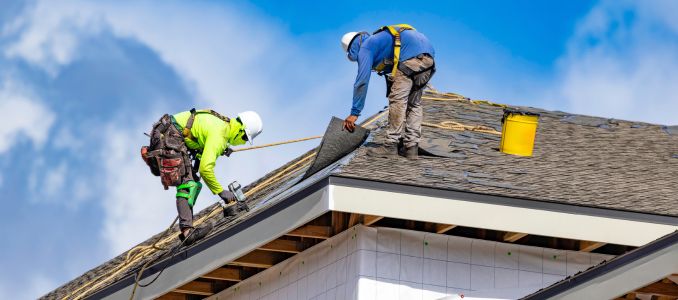
During the inspections, federal safety officers witnessed carpenters and general laborers operating at elevated heights. In residential construction, the reliance on roof rafters and sheathing requires precise balance and secure footing. At both Calumet City-area locations, workers were observed traversing roof structures without harnesses, guardrails, or safety nets. When OSHA inspectors documented these scenes, they noted that a fall from the heights observed—up to 25 feet—would almost certainly result in permanent disability or death.
Following the on-site assessments, the agency issued a formal notice of violations. In addition to the two willful violations for fall protection, OSHA documented nine repeat violations. These repeat offenses suggest that the company had been previously warned or cited for similar failures, yet failed to integrate the necessary safety improvements into its daily operations. The specific repeat citations focused on the following:

- Inadequate Personal Protective Equipment (PPE): Missing or improper head and eye protection for workers on the site.
- Stairway and Ladder Deficiencies: Stairway handrails were found to be missing or inadequate, and ladders utilized by employees did not meet the mandatory extension requirement—that they must extend at least 3 feet above the access level to ensure safe transition between elevations.
- Platform Access: A serious violation was recorded regarding the lack of safe access to elevated working platforms, creating a secondary risk for workers attempting to reach their designated task areas.
- Documentation Failures: An "other-than-serious" violation was issued for a lack of required training certifications, indicating that the employer could not verify that employees had received the mandatory safety training required by law.
The Broader Context of Residential Construction Hazards
To understand the gravity of these penalties, it is necessary to examine the broader context of occupational safety in the United States. According to the Bureau of Labor Statistics (BLS), construction remains one of the most dangerous industries in the nation. Falls, slips, and trips consistently account for the highest number of workplace fatalities in the sector.
For residential roofing specifically, the danger is amplified by the nature of the work surface. Unlike large-scale commercial projects that often utilize sophisticated scaffolding and perimeter monitoring, small-scale residential construction—often performed by smaller subcontractors—frequently lacks the oversight necessary to maintain strict compliance with the Occupational Safety and Health Act of 1970.
OSHA’s "Focus Four" hazards in construction include falls, caught-in or between hazards, struck-by hazards, and electrocution. Falls alone account for approximately one-third of all construction-related deaths. By issuing penalties of this magnitude, OSHA is attempting to move beyond mere "cost-of-doing-business" fines and toward a deterrent model. The agency maintains that willful violations represent an intentional disregard for or plain indifference to employee safety, which justifies the heightened financial penalty structure.

Analysis of Enforcement and Financial Penalties
The $265,868 penalty is categorized as a significant enforcement action for a small residential construction firm. OSHA’s ability to impose such fines is governed by federal statute, with maximum penalty amounts adjusted annually for inflation.
"The penalties proposed in this case are designed to reflect the gravity of the hazards and the repeat nature of the violations," noted a safety consultant familiar with regional OSHA enforcement. "When an employer is cited repeatedly for items like missing eye protection or improper ladder usage, it suggests a lack of a ‘culture of safety’ within the organization. OSHA inspectors look for whether an employer is merely correcting a violation after being caught, or if they are proactively training their staff and inspecting their sites to prevent those violations from occurring in the first place."
The repeat nature of the citations is particularly problematic for the employer. In the eyes of federal regulators, a repeat violation is an admission that the company had notice of the hazard but chose not to remediate it permanently. This often leads to increased scrutiny from OSHA, including potential placement in the Severe Violator Enforcement Program (SVEP), which subjects companies to mandatory follow-up inspections and nationwide press releases aimed at publicizing their safety records.

Official Responses and Industry Implications
While Araujo Construction Corp. has the right to contest these findings before the independent Occupational Safety and Health Review Commission, the evidence gathered by inspectors—including photographic documentation of workers at height without protection—typically presents a high evidentiary hurdle for the employer to clear.
Industry associations, such as the National Association of Home Builders (NAHB), generally advocate for safety training as the primary tool for reducing these types of incidents. However, they also emphasize the financial strain that aggressive enforcement can place on small, family-owned construction businesses.
"Safety is a priority, but the regulatory landscape is complex," said a representative from a construction trade group, speaking on condition of anonymity. "The challenge for small firms is that they often don’t have a dedicated safety officer. They are focused on the project timeline, and that is where corners get cut. When OSHA steps in, the cost of those shortcuts becomes immediately apparent."

The implications of this enforcement action extend beyond the financial penalty. Companies facing high-profile OSHA citations often find it more difficult to secure competitive insurance premiums, as workers’ compensation carriers view safety records as a primary metric for risk assessment. Furthermore, general contractors may be hesitant to hire subcontractors with a history of willful violations, fearing that their own reputations and site safety ratings could be tarnished by the subcontractor’s negligence.
The Human Element and Future Safety Mandates
At the heart of the OSHA regulatory framework is the mandate that "each employer shall furnish to each of his employees employment and a place of employment which are free from recognized hazards that are causing or are likely to cause death or serious physical harm."
For the employees working for Araujo Construction Corp., the failure to provide basic safety gear—such as a simple harness and anchor point—represented a direct violation of this foundational principle. The fact that the violations included missing head and eye protection further underscores a general lack of personal protective equipment oversight.

As the construction industry continues to face labor shortages and increasing pressure to complete projects on tight schedules, the temptation to bypass safety procedures remains high. OSHA’s current enforcement strategy—increasing the dollar amount of fines for repeat offenders—is intended to make the cost of non-compliance exceed the cost of implementing a robust safety program.
Looking forward, construction employers in the Chicago area and beyond are likely to see continued rigorous enforcement regarding fall protection. OSHA has signaled that residential construction will remain a focal point for the agency’s regional inspectors. For small businesses, the lesson from the Araujo case is clear: documentation, training, and the consistent application of fall protection equipment are not optional components of a project, but legal and ethical requirements.
The resolution of this case will serve as a bellwether for how federal regulators intend to treat small-firm safety negligence in the coming years. By prioritizing the prevention of falls, OSHA aims to reduce the annual toll of construction-related fatalities and ensure that every worker returns home safely at the end of their shift. As the industry moves forward, the integration of safety technology—such as modern harness systems and user-friendly guardrails—must be accompanied by a cultural shift that prioritizes worker well-being over project velocity.