
As global industrialization continues to expand across the ASEAN region, the demand for sophisticated safety protocols has reached an all-time high. CIOSH Thailand serves as a specialized platform designed to bridge the gap between cutting-edge innovation and practical industrial application. By consolidating a vast array of safety solutions—ranging from advanced fire suppression systems to high-visibility smart fabrics—under one roof, the event provides a comprehensive look at the future of worker protection.

A Strategic Partnership in Safety
The organization of this event is a testament to the power of international collaboration in the safety sector. The trade show is spearheaded by a consortium of industry leaders, including Messe Düsseldorf (Shanghai) Co., Ltd., Messe Düsseldorf Asia Pte Ltd., the China Textile Commerce Association, and the Beijing Safever Science & Technology Innovation Center.
This collective brings together decades of expertise in managing global trade fairs. The event is deeply rooted in the ecosystem of Messe Düsseldorf’s worldwide occupational health and safety (OHS) portfolio. Most notably, it draws its conceptual framework and strategic support from A+A, the world’s leading trade fair for safety and health at work, held biennially in Germany. By leveraging the prestige and technical standards of the A+A brand, CIOSH Thailand ensures that attendees are exposed to the same rigorous quality benchmarks and global best practices that define its European counterpart.
Evolution of the PPE Market: Smart Fabrics and Ergonomics
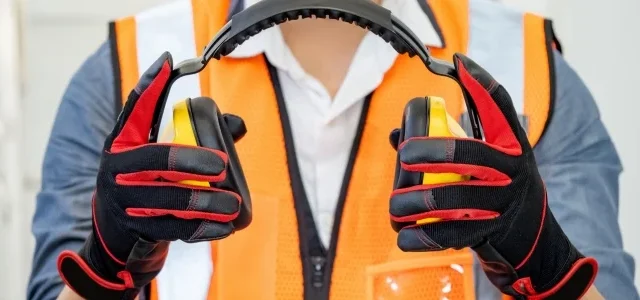
The 2027 edition of the expo is expected to place a heavy emphasis on the transition from passive to active protection. In the past, PPE was often viewed as a cumbersome, secondary necessity; however, the shift toward "smart" safety gear has revolutionized this perception.

Exhibitors are slated to showcase garments embedded with biometric sensors capable of monitoring worker fatigue, thermal stress, and proximity to hazardous machinery. These innovations are particularly relevant for industries such as manufacturing, construction, and oil and gas, where environmental variables can change in seconds. Alongside these high-tech solutions, the event will highlight the continued evolution of ergonomic design. Research from the International Labour Organization (ILO) suggests that musculoskeletal disorders remain one of the leading causes of workplace injury globally. Consequently, manufacturers are increasingly focusing on lightweight, breathable, and highly adaptable materials that prevent strain without compromising safety.
Chronology of Industry Advancement
To understand the significance of CIOSH Thailand’s return, one must view it within the broader timeline of the global OHS industry. The early 2020s marked a pivotal shift in the sector, necessitated largely by the global pandemic, which underscored the critical importance of supply chain resilience and high-quality PPE.
Following the pandemic, the industry saw a surge in interest regarding sustainable and durable protective materials. In 2025, regional safety expos began focusing heavily on digital integration—specifically the use of IoT (Internet of Things) devices to track equipment lifespan and maintenance schedules. By 2027, the focus at the Bangkok expo will shift toward the "Connected Worker," a concept where real-time data informs safety decisions, moving the industry from reactive response to predictive prevention. The 2027 event acts as a milestone in this progression, serving as the primary venue for stakeholders to evaluate how these technologies can be standardized across the diverse regulatory environments of Southeast Asia.

Data-Driven Safety Needs
The rationale for hosting such an event in Bangkok is supported by regional economic data. Southeast Asia has emerged as a global manufacturing hub, with substantial investments in infrastructure and factory automation. According to recent market analysis, the Asia-Pacific PPE market is projected to grow at a compound annual growth rate (CAGR) of approximately 6% to 8% through 2030.
This growth is driven by tightening labor regulations in countries like Thailand, Vietnam, and Indonesia, where governments are increasingly aligning their safety standards with international benchmarks like those set by the ISO and OSHA. The economic implication is clear: companies that fail to adopt modern safety equipment risk not only significant financial penalties and legal liability but also a loss of productivity due to workplace accidents. CIOSH Thailand provides the necessary forum for safety officers to navigate these regulatory shifts and source compliant equipment that meets the evolving legal requirements of the region.
Official Responses and Industry Sentiment
While specific individual statements from the organizing committee are currently being formalized, the broader sentiment within the industry is one of anticipation. Industry analysts note that trade fairs of this magnitude serve as "barometers" for the economic health of the manufacturing sector.

"The return of CIOSH to Bangkok signifies a renewed confidence in the region’s industrial capacity," says a spokesperson familiar with the organization’s strategic planning. "When companies invest in top-tier PPE, they are signaling a long-term commitment to their human capital. This event is not merely a showcase of products; it is a platform for education and policy discussion that elevates the safety culture across the entire supply chain."
The inclusion of conferences and workshops alongside the exhibition floor is a deliberate strategy to foster professional development. Attendees will have the opportunity to engage with safety engineers, government regulators, and product developers. These sessions are expected to cover critical topics such as the implementation of AI in workplace monitoring, the development of eco-friendly PPE, and strategies for improving safety compliance in small-to-medium-sized enterprises (SMEs).
Broader Implications for Global Trade
The implications of the 2027 CIOSH Thailand expo extend far beyond the borders of Thailand. As a regional hub, Bangkok attracts decision-makers from throughout the ASEAN economic bloc. By providing a centralized location for sourcing, the expo reduces the fragmentation of the PPE market, allowing for better standardization and quality control.

Furthermore, the participation of international organizations and German-affiliated entities underscores the globalization of safety standards. This cross-pollination of ideas is vital; it ensures that a factory in Thailand can operate with the same level of worker protection as a facility in Germany. For manufacturers, the challenge remains the cost-benefit analysis of adopting new technology. The 2027 expo will be a critical venue for vendors to demonstrate that high-tech safety gear—while potentially more expensive upfront—offers a significant return on investment through reduced insurance premiums, lower absenteeism, and improved employee retention.
Preparing for September 2027
For professionals looking to participate, the road to September 2027 involves rigorous planning. The organizers have already opened channels for prospective exhibitors to reserve booth space and for industry associations to partner on the event’s educational programming.
The event website remains the primary portal for updates, registration, and technical specifications regarding the various exhibition zones. Interested parties are encouraged to consult with Messe Düsseldorf North America or visit the official CIOSH Thailand web portal to stay informed about the specific conference agendas as they are finalized.

As the industry looks forward, the consensus is that the 2027 CIOSH Thailand trade show will be a landmark event. It represents the intersection of human-centric safety values and the relentless march of technological progress. For those tasked with protecting the workforce of tomorrow, the Bangkok exhibition will be an indispensable resource in the ongoing quest to ensure that every worker returns home safely at the end of their shift. In an era defined by rapid industrial change, the importance of such gatherings cannot be overstated; they are the bedrock upon which the future of global workplace safety is built.