The Growing Burden of Parkinson’s Disease
Parkinson’s disease is currently the fastest-growing neurological disorder worldwide. Characterized by the progressive loss of dopaminergic neurons in the substantia nigra region of the brain, the disease manifests through motor symptoms such as tremors, rigidity, and bradykinesia (slowness of movement), as well as non-motor symptoms including depression, sleep disorders, and cognitive decline. According to the Parkinson’s Foundation, more than 10 million people worldwide are living with the condition, a number expected to rise significantly as global populations age.
The primary hurdle in managing PD is the timing of diagnosis. Current clinical protocols rely heavily on the observation of motor symptoms, which typically do not appear until 60% to 80% of the relevant neurons have already been lost. Furthermore, traditional diagnostic tools—such as the Unified Parkinson’s Disease Rating Scale (UPDRS) and DaTscan imaging—can be subjective, expensive, and inaccessible to patients in rural or low-resource settings. The necessity for a biological "early warning system" has led scientists to explore the human body’s chemical signatures for reliable biomarkers.
From Sebum to the Ear Canal: The Evolution of Odor-Based Testing
The concept of "smelling" Parkinson’s disease is not entirely new. The field gained significant momentum following the case of Joy Milne, a "super-smeller" from Scotland who demonstrated the ability to detect a distinct musky odor on the skin of PD patients years before they were clinically diagnosed. Subsequent research identified that this odor originates from sebum, an oily substance produced by the sebaceous glands to lubricate and protect the skin.
Researchers discovered that the metabolic changes associated with PD—including systemic inflammation, oxidative stress, and neurodegeneration—alter the composition of VOCs released by sebum. However, utilizing skin sebum as a diagnostic medium presents practical challenges. Because sebum on the face and back is exposed to the environment, its chemical integrity can be compromised by air pollution, temperature fluctuations, humidity, and the use of personal care products.
To bypass these variables, the research team led by Hao Dong and Danhua Zhu turned their attention to the ear canal. The ear canal provides a unique microenvironment; it is relatively shielded from external pollutants and maintains a consistent level of humidity and temperature. Earwax, or cerumen, is primarily composed of sebum mixed with dead skin cells and sweat. By focusing on earwax, the researchers hypothesized they could capture a more stable and concentrated profile of the body’s internal VOCs.
Methodology and the Discovery of Key Biomarkers
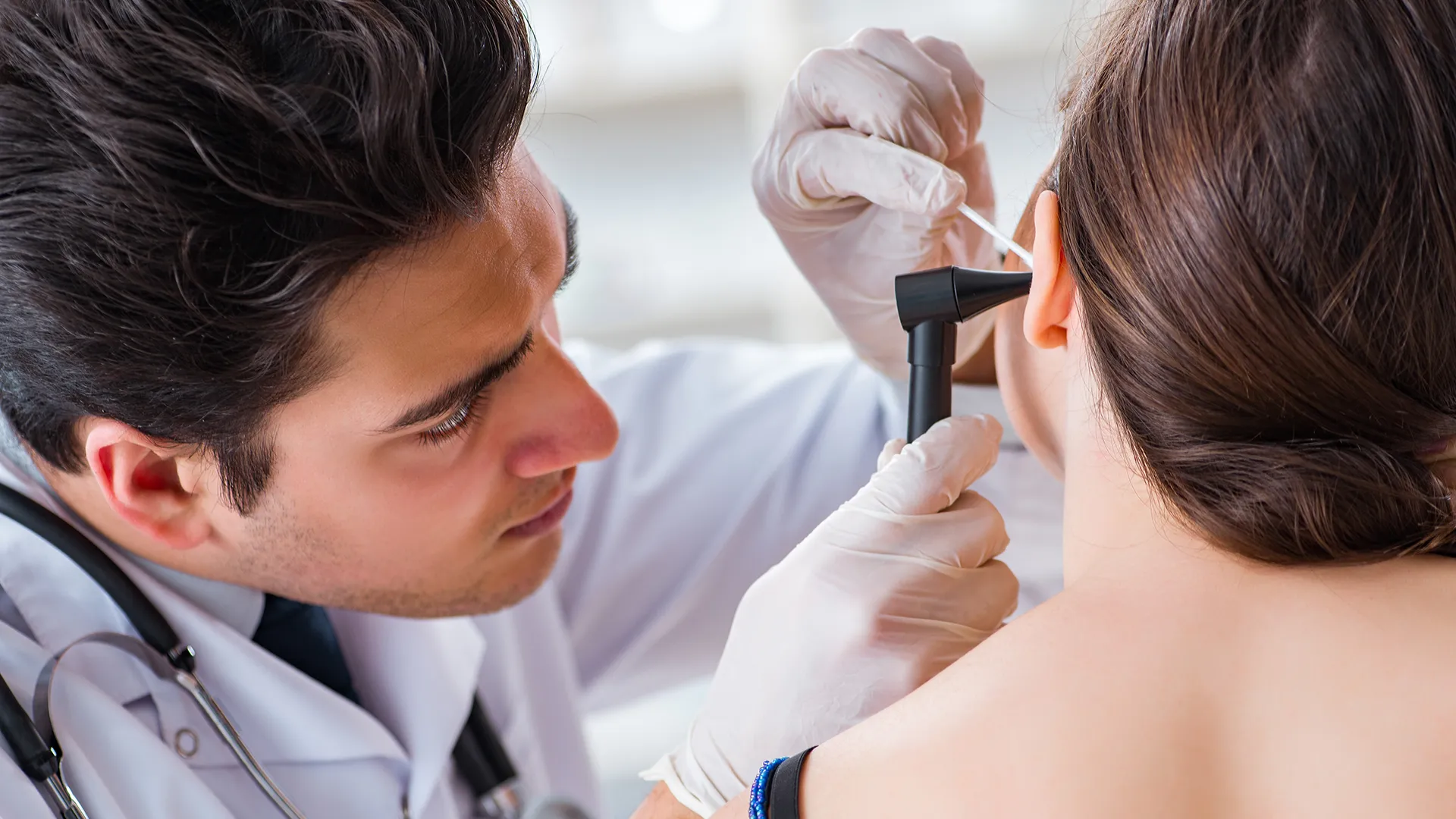
The study involved a cohort of 209 human subjects recruited in China. This group included 108 individuals previously diagnosed with Parkinson’s disease and 101 healthy control subjects. The researchers utilized a simple, non-invasive swabbing technique to collect earwax samples from the ear canals of all participants.
To analyze the complex mixture of chemicals within the samples, the team employed gas chromatography-mass spectrometry (GC-MS). This analytical technique allows for the separation, identification, and quantification of individual volatile molecules. After rigorous comparison between the PD and control groups, the researchers identified 11 potential VOC candidates. Further statistical refinement narrowed this list down to four specific compounds that showed significant deviation in PD patients:
- Ethylbenzene: Often associated with metabolic processes and environmental exposure, its elevation in the earwax of PD patients suggests a link to altered lipid metabolism.
- 4-ethyltoluene: A compound that may reflect changes in the body’s systemic oxidative stress levels.
- Pentanal: An aldehyde often produced during the peroxidation of fatty acids, a known byproduct of the cellular damage seen in neurodegenerative diseases.
- 2-pentadecyl-1,3-dioxolane: A complex organic molecule whose presence in significantly different concentrations provided a clear signature for the disease state.
These four compounds served as the chemical "fingerprint" of Parkinson’s disease, providing the objective data needed to move from general observation to automated screening.
The Role of Artificial Intelligence in Olfactory Diagnostics
Identifying biomarkers is only the first step; the second is creating a system that can interpret these markers quickly and accurately in a clinical setting. To achieve this, Dong and Zhu developed an Artificial Intelligence Olfactory (AIO) system.
The AIO system functions as an "electronic nose." Using machine learning algorithms, the system was trained on the VOC data extracted from the 209 subjects. The AI was taught to recognize the specific ratios and concentrations of the four key biomarkers that differentiate a PD patient from a healthy individual.
When tested on the samples, the AIO-based screening model achieved a 94% accuracy rate. This high level of precision is particularly notable when compared to the accuracy of early-stage clinical assessments, which can sometimes result in misdiagnosis or "wait-and-see" approaches. The AI’s ability to process complex chemical data removes human subjectivity from the initial screening process, providing a standardized metric for physician review.
Chronology of Research Development
The journey toward earwax-based PD testing follows a clear scientific timeline:
- 2012–2015: Anecdotal evidence from "super-smellers" suggests PD has a distinct odor.
- 2019: Major studies confirm that sebum on the upper back and neck contains VOCs related to PD, specifically identifying hippuric acid and eicosane.
- 2020–2021: Researchers begin investigating the limitations of skin-surface sebum, noting that environmental contamination reduces diagnostic reliability.
- 2022–2023: The team in China initiates the earwax study, focusing on the protected environment of the ear canal and recruiting over 200 participants.
- 2024: The results of the AIO system are published, confirming the viability of earwax as a medium and the high accuracy of AI-driven odor analysis.
Implications for Global Healthcare and Early Intervention
The implications of this research are profound, particularly regarding the democratization of healthcare. Because the collection of earwax is simple and does not require specialized medical training, this method could theoretically be implemented in primary care offices or even as a home-collection kit.
"This method is a small-scale single-center experiment in China," noted lead researcher Hao Dong. "The next step is to conduct further research at different stages of the disease, in multiple research centers and among multiple ethnic groups, in order to determine whether this method has greater practical application value."
One critical factor for future study is the genetic variation in earwax. The ABCC11 gene determines whether an individual has "wet" or "dry" earwax—a trait that varies significantly across different ethnicities. For the AIO system to be globally viable, it must be validated across these different biological archetypes to ensure that the VOC signatures remain consistent regardless of the physical consistency of the cerumen.
Furthermore, the low cost of the AIO system compared to MRI or PET scans could significantly reduce the financial burden on healthcare systems. In developing nations, where access to advanced neurology clinics is limited, an inexpensive odor-based screening tool could facilitate the early identification of patients who would benefit most from early-stage neuroprotective therapies.
Expert Analysis and Future Outlook
Neurologists and biomedical engineers view the AIO system as a harbinger of a new era in "painless diagnostics." While the current study focused on Parkinson’s, the success of the methodology suggests that other diseases with metabolic signatures—such as Alzheimer’s disease or certain types of metabolic disorders—could eventually be screened using similar olfactory AI systems.
The potential for early intervention cannot be overstated. While there is currently no cure for Parkinson’s, early diagnosis allows for the initiation of lifestyle changes, physical therapy, and medications like Levodopa at a stage where they can most effectively preserve quality of life. Moreover, early detection is essential for the success of clinical trials for new disease-modifying drugs; identifying patients in the "prodromal" (pre-symptomatic) phase allows researchers to test treatments before irreversible brain damage occurs.
The study received support and funding from the National Natural Sciences Foundation of Science, the Pioneer and Leading Goose R&D Program of Zhejiang Province, and the Fundamental Research Funds for the Central Universities. This institutional backing underscores the perceived importance of the research in the broader context of China’s public health strategy and the global fight against neurodegeneration.
As the research moves into multi-center trials, the scientific community will be watching closely to see if the 94% accuracy rate holds across larger, more diverse populations. If successful, the simple act of swabbing an ear could become the most powerful tool in the fight to detect Parkinson’s disease before it takes hold.