The Evolution of Core Vocabulary Instruction
The evolution of these resources began with the "Year of Core Vocabulary Words," which established the initial monthly templates. This was followed by a second, distinct set of vocabulary lists to ensure continued growth for long-term users. As the initiative matured, it became clear that a "one size fits all" approach was insufficient. Consequently, the project expanded to include specific, age-appropriate tracks: the "School Year of Core Vocabulary Words," launched in 2020, and the more recent "Older Student Lessons," developed between 2023 and 2024. These iterations reflect a shift in the field toward developmental appropriateness, acknowledging that a preschooler’s communicative needs differ significantly from those of a high school student navigating social and academic complexities.
Chronology of Collaborative Development
The development of these resources has been a multi-year, collaborative effort involving some of the most prominent names in the AAC field. The project history is structured as follows:

- Initial Phase (Foundational): The launch of the "Year of Core Vocabulary Words" established the baseline for monthly word lists. These materials introduced activity calendars designed to integrate AAC into daily classroom routines.
- Expansion Phase (Second Series): Following the success of the first set, a second series was published, offering new vocabulary targets to prevent learner stagnation and maintain instructional momentum.
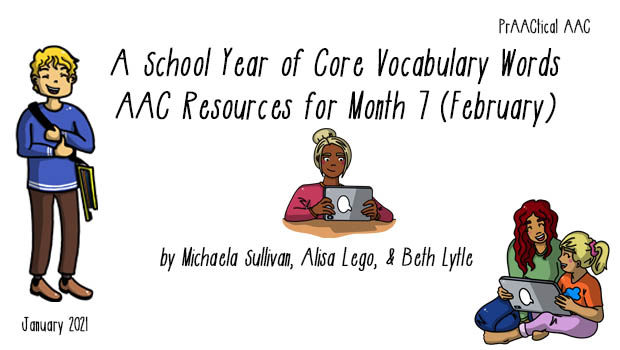
- The School-Aged Integration (2020): Recognizing the need for curriculum-aligned support, guest contributors Michaela Sullivan, Alisa Lego, and Beth Lytle authored "The School Year of Core Vocabulary Words." This project shifted the focus toward academic engagement, helping teachers integrate AAC into standard K-12 lesson planning.
- Adolescent-Centered Initiatives (2023–2024): To address the needs of older students, Michaela Sullivan and Lindsay Dougherty spearheaded the development of resources tailored for teenagers. This set emphasizes social interaction, self-advocacy, and vocational communication, reflecting the increased autonomy required at the secondary education level.
Data-Driven Approaches to AAC Intervention
The reliance on core vocabulary is supported by extensive research in the field of speech-language pathology. Data consistently indicates that core words make up approximately 80% of the words used by typically developing children and adults. For individuals who use AAC, mastering this foundational vocabulary is a critical milestone for achieving communicative competence.
According to industry reports and pedagogical studies, the implementation of structured vocabulary programs leads to increased user engagement and higher rates of expressive language growth. By providing "activity calendars," these resources offer a scaffolded approach: rather than overwhelming users with thousands of words, teachers and families focus on a specific, manageable set of words each month. This repetition allows for the "priming" of neural pathways and reinforces the functional utility of the words in diverse settings, ranging from the cafeteria to the classroom and the home.
Implications for Educators and Families
The availability of these resources carries significant implications for the landscape of special education and therapeutic intervention. Many educators report that the primary barrier to successful AAC integration is not the technology itself, but the lack of time to plan effective, consistent instruction.
"It takes time and effort to plan for comprehensive core vocabulary instruction," notes Dr. Carole Zangari, a leading expert in the field and the founder of the PrAACtical AAC initiative. By providing these ready-to-use materials, the initiative alleviates the planning burden, allowing practitioners to focus on the qualitative aspects of their interactions with students. The implications for families are equally profound; by utilizing these materials, parents can foster a language-rich environment at home that mirrors the goals being pursued in clinical and school settings, creating a cohesive, 24/7 learning ecosystem.
Official Perspectives and Expert Reactions
While the project remains a community-led endeavor rather than a top-down mandate, the response from the AAC community has been overwhelmingly positive. Professionals often cite the consistency of these resources as a key factor in their success. Guest contributors, such as Michaela Sullivan and Alisa Lego, have frequently noted that the transition from general core vocabulary to age-specific modules has been the most requested development in the history of the project.
By categorizing resources into "Set 1 & Set 2," "School Year," and "Older Student Lessons," the developers have successfully created a tiered system that allows for longitudinal growth. Experts in the field argue that this modularity is essential for long-term progress. If an individual masters the preschool-level core vocabulary, they are not forced to repeat the same lessons; instead, they move to the advanced modules designed for their specific developmental stage.
Broader Impact on Communication Access
The long-term impact of these February-focused resources extends beyond the classroom walls. Effective communication is a fundamental human right, and for individuals with complex communication needs, AAC is the bridge to social inclusion, academic achievement, and self-determination.
The systematic distribution of these materials during the month of February serves as a "re-energizing" period for many educators. By highlighting the availability of these resources at the midpoint of the academic year, the PrAACtical AAC initiative ensures that momentum is not lost during the winter months.
Furthermore, the integration of these materials into mainstream education settings promotes a more inclusive environment. When teachers have the tools to incorporate core vocabulary into lessons for all students—including those without communication disabilities—it fosters a culture of accessibility. This "Universal Design for Learning" (UDL) approach ensures that AAC users are not isolated in their communication but are instead part of a broader, language-conscious community.
Future Outlook and Sustainability
As the project enters its next phase, the focus remains on accessibility and digital transformation. With the advent of more sophisticated AAC devices and software, the ability to integrate these monthly vocabulary sets directly into digital communication platforms is a priority. The sustainability of this model relies on the ongoing participation of guest authors and the active feedback of the users themselves.
The structured nature of the "Year of Core Vocabulary" has set a gold standard for professional development in the AAC sector. By providing a clear, chronological roadmap, the initiative ensures that even novice educators or parents with little training in speech-language pathology can provide meaningful support to AAC users. As the field continues to evolve, the core principles of consistency, repetition, and intentionality—as exemplified by these February resources—will remain the essential pillars of effective communication intervention.
In summary, the ongoing accessibility of these resources represents a vital support system for the AAC community. By bridging the gap between theoretical knowledge and practical, day-to-day application, these materials empower users, educators, and families to continue their pursuit of effective and robust communication for all. As February approaches, the renewed focus on these curated lists serves as a reminder that consistency, even in the smallest words, leads to the largest outcomes in the lives of those who use augmentative communication.