The proposed regulatory shift, which would introduce Section 5204.1 to the state’s General Industry Safety Orders, seeks to mandate immediate compliance through strict material limitations, enhanced workplace notification requirements, and rigid exposure-control protocols. As the public comment period approaches its September 30 deadline, the industry is bracing for a transformation that could redefine the standards for countertop installation and manufacturing across the United States.
The Anatomy of the Crisis: Why Engineered Stone?
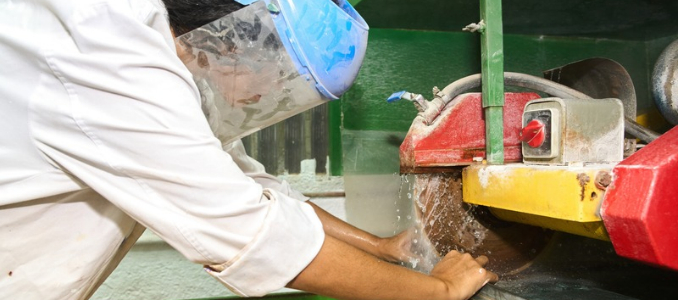
Engineered stone—a composite material made of crushed stone bound by polymer resins—has become a staple in modern kitchen and bathroom design due to its durability and aesthetic versatility. However, the manufacturing process, which involves cutting, grinding, and polishing these slabs, releases fine particles of respirable crystalline silica (RCS) into the air.
While natural stone like granite or marble contains varying levels of silica, engineered stone can contain upwards of 90% crystalline silica. When inhaled, these microscopic particles penetrate deep into the lungs, causing inflammation and scarring known as silicosis. The condition is progressive, disabling, and currently has no cure. Because engineered stone is harder and requires more intensive fabrication than traditional materials, the concentration of silica dust generated in fabrication shops has been documented at levels far exceeding safe exposure limits, particularly in facilities that fail to utilize water-fed cutting tools or industrial-grade ventilation systems.
A Chronology of Regulatory Intervention
The path toward these emergency regulations was not instantaneous. It follows years of advocacy from medical professionals and labor organizations who witnessed a cluster of silicosis cases emerging among previously healthy, young workers.

- 2019-2020: Public health researchers in California began identifying a disproportionate number of silicosis cases linked to the engineered stone industry. Studies published in medical journals began highlighting the aggressive nature of the disease in these specific occupational settings.
- 2023: Advocacy groups formally petitioned the California Occupational Safety and Health Standards Board (Petition 609), demanding immediate, emergency action to curb exposure.
- May 2024: Following a series of emotional testimonies from affected workers and their families, the Standards Board officially approved the petition, directing Cal/OSHA to commence the emergency rulemaking process.
- September 2024: Cal/OSHA released the current discussion draft, outlining the technical framework for a ban on high-silica engineered stone and establishing new, lower action levels for silica exposure.
Technical Requirements and Compliance Mandates
The proposed regulation is comprehensive in its scope, applying to the fabrication of any artificial stone used for countertops, backsplashes, wall cladding, and flooring. The crux of the regulation is the "1% by weight" threshold. Any material exceeding this concentration of crystalline silica will effectively be prohibited for fabrication 60 days after the regulation’s effective date.
To ensure transparency, the draft mandates that employers maintain strict documentation proving that the materials being processed fall within the allowable limits. If such documentation is unavailable, the material will be presumed to be in violation of the regulation. This shift places a significant burden of proof on the employer, necessitating a closer supply-chain verification process.
Furthermore, for tasks identified as high-exposure, the draft introduces a new "artificial-stone action level" of 3 micrograms of respirable crystalline silica per cubic meter of air over an eight-hour time-weighted average. This is significantly lower than existing federal standards, signaling California’s intent to set a new national benchmark. Employers failing to keep levels below this threshold will be required to provide high-level respiratory protection, specifically full-face, tight-fitting powered air-purifying respirators (PAPRs) or equipment with an assigned protection factor (APF) of at least 1,000.

Workplace Safety and Enforcement
Under the proposed rules, violation of the fabrication ban will be classified as an "imminent hazard." Cal/OSHA is empowered to issue an Order Prohibiting Use, effectively shutting down operations until compliance is verified.
Education is another cornerstone of the proposal. Employers will be required to conduct both verbal and written training in the native language of their employees, ensuring that the health risks associated with silica are clearly understood. Warning signs, written in both English and Spanish, will be mandatory at all facility entrances to ensure that workers and visitors are aware of the risks involved in the fabrication process.
For businesses currently holding inventory of high-silica materials, the draft provides a narrow window of relief. A limited exception allows for the fabrication of previously purchased materials, provided that the employer strictly adheres to existing, non-emergency silica standards. However, this exception is short-lived; all fabrication of such materials must cease 180 days after the regulation’s effective date, forcing an industry-wide transition to safer, low-silica alternatives.

Implications for the Construction and Design Industry
The move by Cal/OSHA has sent ripples through the construction and interior design sectors. For fabricators, the immediate challenge is the procurement of alternative materials that meet the new 1% threshold. While manufacturers have begun producing low-silica engineered stones, the transition requires retooling and supply-chain adjustments that could impact project timelines and costs.
Architects and designers, who play a key role in specifying materials for high-end residential and commercial projects, may also face new liability risks. The move toward stricter regulations implies that the industry is moving away from the "wild west" of uncontrolled silica dust and toward a model of rigorous, transparent, and documented safety.
Labor advocates have praised the proposal as a long-overdue victory for worker safety. Many argue that the cost of compliance is negligible when weighed against the lifetime costs of chronic, fatal illness and the immense human toll on families and communities. On the other hand, small business owners have expressed concern regarding the administrative burden of testing, documentation, and the potential for increased costs to lead to a decrease in the availability of affordable countertop materials.

The Broader Path Forward
While the current draft represents a significant victory for public health, it is not yet the final word. The discussion draft is subject to potential modifications based on the feedback gathered during the ongoing comment period. Cal/OSHA’s Research and Standards Branch remains the central clearinghouse for this input, with stakeholders ranging from industrial hygienists to manufacturing conglomerates submitting data-driven critiques.
The California approach is likely to serve as a bellwether for other states and the federal government. The Occupational Safety and Health Administration (OSHA) at the federal level has been under increasing pressure to follow California’s lead and address the silica-related health crisis on a national scale. If California successfully implements and enforces these restrictions, it will provide a proof-of-concept that will be difficult for other regulatory bodies to ignore.
In the final analysis, the push to regulate engineered stone is a test of the efficacy of the modern occupational health system. It highlights the tension between industrial innovation and the fundamental right of every worker to return home at the end of the day with their health intact. As the effective date for these new regulations approaches, the fabrication industry will face a defining moment: to adapt to a standard of safety that prioritizes human life above all else, or to risk the consequences of an obsolete and dangerous manufacturing model. The outcome will surely resonate far beyond the borders of California, setting the tone for the future of industrial safety in the built environment.