The Evolution of Hazardous Atmosphere Monitoring
Historically, firefighting and industrial rescue operations relied on localized gas detection. A firefighter entering a hazardous environment would carry a personal monitor that provided audible and visual alerts only to the individual wearer. If the wearer were incapacitated, rendered unconscious by toxic gases, or overwhelmed by heat, the critical data regarding the atmosphere—and the firefighter’s location—often remained isolated.
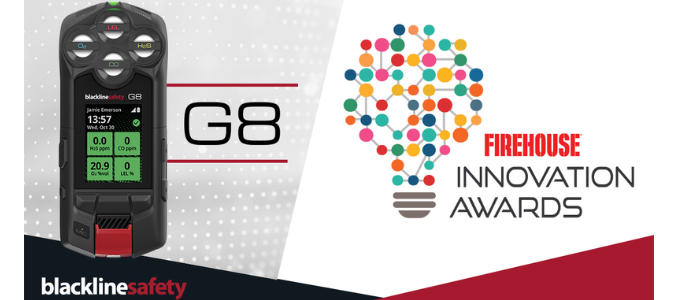
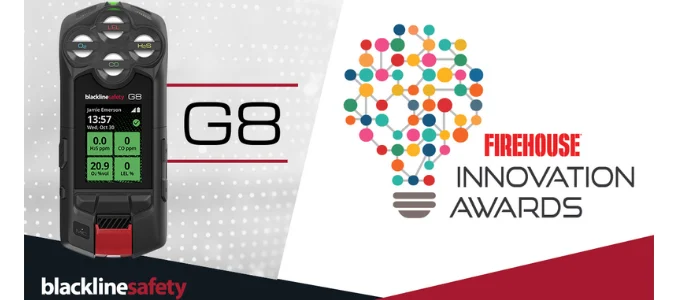
The G8 wearable fundamentally changes this dynamic by acting as a node in a broader communication network. By leveraging Blackline Live software, the device synthesizes four critical capabilities: personal gas detection, lone worker safety monitoring, two-way voice communication, and real-time field telemetry. This ensures that incident commanders are no longer operating in a vacuum. Instead, they receive a constant stream of data, including specific gas concentration levels, the precise GPS or indoor location of the firefighter, and immediate "man-down" alerts if a responder stops moving or experiences an impact.
Technical Specifications and Connectivity
The G8 platform is designed to operate in the most demanding environments, ranging from chemical spills to structural fires. The device is built to meet the rigorous durability standards required for emergency services, featuring high-impact resistance and ingress protection against water and dust.
Beyond its physical resilience, the G8’s primary advantage lies in its connectivity. Using a combination of cellular and satellite links, the device relays information to the Blackline Live dashboard. This allows commanders to visualize the entire incident scene on a digital map, monitor individual exposure levels, and coordinate personnel movements based on actual atmospheric readings rather than assumptions. The inclusion of two-way communication allows for voice commands to be transmitted directly to the firefighter’s device, reducing the need for cumbersome radio traffic in high-pressure situations.

A Chronology of Innovation: The Road to 2026
The recognition of the G8 is part of a broader trajectory for Blackline Safety, which has spent the last decade positioning itself at the intersection of Industrial Internet of Things (IIoT) technology and occupational safety.
- 2023: Blackline increases its focus on the "connected firefighter" initiative, identifying the gap between sensor data and decision-making during emergency response.
- 2025: The company launches the EXO 8 area monitor, a portable, ruggedized device that secures the 2025 Firehouse Innovation Award. The success of the EXO 8 provided the proof-of-concept for larger-scale integration.
- Early 2026: The G8 wearable enters widespread field testing with select municipal fire departments and industrial response teams across North America.
- October 2026: The Firehouse Innovation Awards committee formally recognizes the G8, citing its ability to improve responder safety and decision-making speed.
This rapid succession of awards reflects a growing industry demand for data-driven safety equipment. In addition to the Firehouse award, the G8 and the accompanying Blackline Live software have also been acknowledged in the 2026 OH&S Industrial Hygiene Awards, specifically within the IoT Connected Devices and Software categories.
Industry Implications: The Shift Toward Proactive Safety
The adoption of connected wearables like the G8 has profound implications for Occupational Health and Safety (OH&S) standards. For decades, the industry standard was "passive" safety—equipment that alerted the user to danger. The current trend is toward "active" and "collaborative" safety.

Data analysis suggests that the implementation of real-time monitoring can reduce incident response times by as much as 20% to 30%. When a command center can see exactly where a gas leak is localized and which responders are at risk, they can redeploy teams more efficiently, provide remote guidance, and initiate emergency extraction protocols before a minor incident escalates into a casualty event.
Furthermore, the data harvested by these devices provides organizations with a retrospective tool for safety training. After an incident, departments can analyze the movement patterns, gas exposure history, and communication logs to identify bottlenecks in their response protocols, enabling continuous improvement in training and equipment deployment.
Official Perspectives and Market Response
While official comments from the award committee highlighted the "user-centric design and unparalleled connectivity" of the G8, the broader market impact is equally significant. Industry analysts note that municipal budgets are increasingly prioritizing technology that lowers liability and enhances responder survivability.

By integrating gas detection with two-way communication, Blackline Safety has effectively streamlined the gear loadout for firefighters. Instead of carrying separate devices for gas monitoring, radio communication, and personal alert systems, the G8 acts as a centralized hub. This reduction in "gear creep"—the tendency for responders to become burdened by an ever-increasing number of devices—is a critical factor in the adoption of this technology.
Analyzing the Connected Safety Ecosystem
The success of the G8 is not merely a result of the hardware, but the ecosystem that supports it. The software component, Blackline Live, allows for seamless integration into existing command software platforms. This interoperability is essential for large-scale operations where multiple agencies may be responding to a single incident.
The software utilizes sophisticated algorithms to interpret sensor data, filtering out "noise" that might otherwise lead to false positives, while ensuring that life-critical alerts take precedence. This level of reliability is the "gold standard" for public safety technology, where a system failure is not just an inconvenience but a potential hazard.

Looking Ahead: The Future of Emergency Response
As the 2026 Firehouse Innovation Award suggests, the industry is moving toward a future where every responder is a data point in a real-time safety network. The G8 serves as a flagship for this movement. Looking forward, the focus will likely shift toward the integration of Artificial Intelligence (AI) to provide predictive analytics. Future iterations of such devices might not only report current gas concentrations but also forecast the spread of a chemical plume based on environmental conditions and building layout, further empowering commanders to make preemptive decisions.
The dual recognition of the G8 by both fire services and industrial hygiene organizations underscores the universality of the technology. Whether the setting is an industrial manufacturing facility, a hazardous materials transport incident, or a high-rise fire, the fundamental need for situational awareness remains constant.
Conclusion: A New Standard for Operational Readiness
The recognition of the Blackline Safety G8 is more than a corporate accolade; it is a signal of a paradigm shift in how we approach the safety of those who work in the most dangerous environments. By providing command staff with the tools to see what their teams see, and to communicate in real-time, the industry is significantly narrowing the margin for human error and environmental uncertainty.

As departments move to upgrade their equipment in the coming fiscal years, the standard set by the G8—where connectivity is not an "add-on" but a foundational element of the device—will likely become the benchmark. With the G8, Blackline Safety has demonstrated that the future of fire and industrial safety is not just about detecting danger, but about managing it with precision, intelligence, and immediate, actionable communication. The 2026 Firehouse Innovation Award serves as an affirmation that the technology is ready, the industry is listening, and the safety of the field responder has taken a measurable step forward.